

At a glance
Akigawa Valley is a scenic river gorge in western Tokyo's Akiruno city offering outdoor recreation year-round. The valley features a suspension bridge spanning the clear Akigawa River, with hiking trails, fishing areas, and camping facilities along its banks. Visitors can enjoy barbecuing, soaking in nearby hot springs including Seoto no Yu, and exploring the natural landscape while remaining easily accessible from central Tokyo.
Photographs
Akigawa Valley
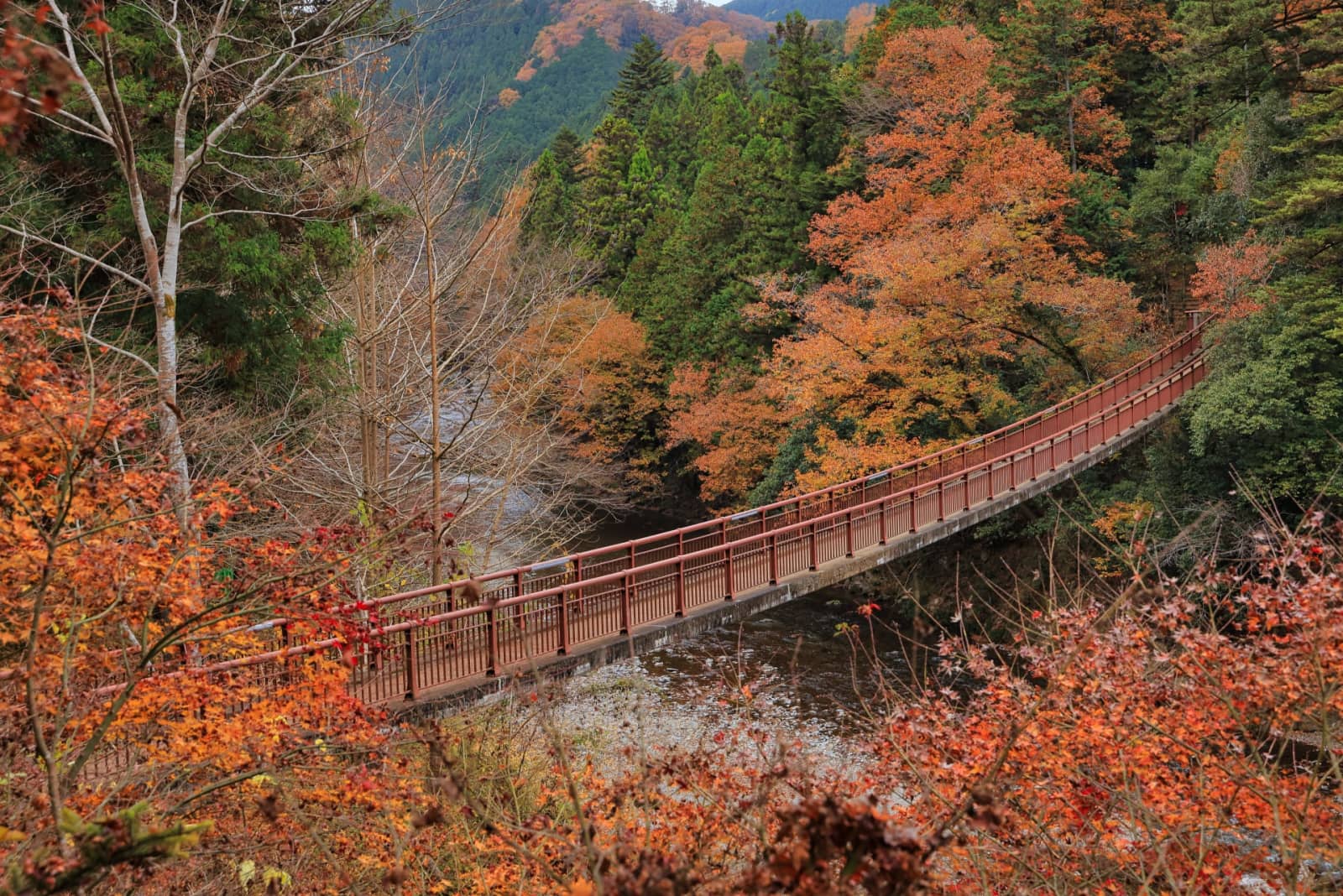
Akigawa Valley offers a refreshing escape into nature just within Tokyo’s borders, featuring clear river waters popular for water play and riverside activities. The valley is renowned for its scenic river, making it popular with anglers and families alike. Several managed camping and BBQ facilities line the riverbanks, many providing rental equipment for fishing and grilling. The iconic Ishibunebashi suspension bridge spans the gorge, offering scenic views of the river and surrounding forest.


The area provides excellent hiking and walking trails through lush forests, with the sound of flowing water creating a peaceful atmosphere. Seoto no Yu, a nearby hot spring facility, complements outdoor activities with relaxing baths and an ashiyu footbath. The valley is accessible via the JR Itsukaichi Line to Musashi-Itsukaichi Station, followed by a bus ride to Jūriki, with Ishibunebashi about a 2-minute walk from the bus stop. Free parking is available at Jūriki, with approximately 20 spaces.


The natural setting provides forest bathing opportunities and a peaceful mountain atmosphere. Despite being in Tokyo, the deep greenery and mountain stream environment create a true getaway atmosphere perfect for day trips from the city center.
Seasonal and Event Highlights
- Spring: Cherry blossoms, purple azaleas, and fresh greenery appear across the wider valley from late March through April, making this a particularly pleasant season for walking.
- Summer: One of the liveliest seasons for river play, fishing, BBQs, camping, and hiking. Fireflies can also be seen in parts of the valley around early summer, though timing varies each year.
- Autumn: Mid-November to early December is generally the main foliage period, with Ishibunebashi especially photogenic among red maples and yellow leaves.
- Winter: Much quieter and colder, so it is less suited to river activities, but Seoto no Yu makes the area worthwhile for a hot spring visit and peaceful walk.
- Ishibunebashi Illumination: A winter illumination has been held around Ishibunebashi and Seoto no Yu in recent years. Dates should be checked before visiting.
Before you go
Akigawa Valley itself has no general entry fee, although individual campsites, BBQ areas, fishing facilities, parking lots, and Seoto no Yu charge their own fees. Wear comfortable shoes with good grip, especially around rocky riverbanks and hiking paths. Toilets and vending machines are available around developed facilities, but amenities become limited away from the main recreation areas. River conditions can change after heavy rain, so avoid entering the water when levels are high or currents are strong. Tripods are generally practical in open public areas but should not obstruct bridges, trails, or other visitors.
Akigawa Valley is a natural outdoor area and has no general opening hours or regular closing days. Individual facilities, including Seoto no Yu, campsites, BBQ grounds, fishing areas, and parking facilities, operate their own schedules and may close temporarily due to weather, river conditions, maintenance, or seasonal operations.
When to go
Akigawa Valley truly shines during autumn when vibrant foliage transforms the gorge into a canvas of reds, oranges, and golden yellows, creating picture-perfect scenery along the pristine river. Summer draws visitors seeking refreshment in the cool, clear waters, while spring's fresh greenery offers equally stunning natural beauty against the backdrop of the suspension bridge. Weekdays provide a more tranquil experience with fewer crowds, allowing you to fully appreciate the sound of the flowing river and abundant nature. The valley is accessible 24 hours daily, though most visitors arrive during daylight hours to enjoy hiking trails and riverside activities.
Public review summary
Visitors consistently praise the pristine river water and abundant natural beauty found surprisingly close to Tokyo. Many appreciate the peaceful atmosphere, accessible hiking trails, and nearby hot spring facilities. Some note difficulty locating parking and river access points. Summer visitors especially enjoy water activities, though traffic congestion can be an issue during peak seasons and holidays.
What you'll find here
Location & access
- DirectionsAddress
1420 Tokura, Akiruno, Tokyo 190-0173, Japan
- How to get there
By Public Transportation:
Take the JR Itsukaichi Line to Musashi-Itsukaichi Station. For the Ishibunebashi and Seoto no Yu area, take a bus toward Kamiyozawa or Hinohara and get off at Jūriki. Ishibunebashi is approximately a 2-minute walk from the bus stop, while other parts of Akigawa Valley are served by different stops along the valley.
By Car:
Akigawa Valley is accessible from central Tokyo via the Chuo Expressway and Ken-O Expressway, using Akiruno IC as a convenient approach. Parking is available at various recreation facilities throughout the valley. The Jūriki parking area has around 20 free spaces, but availability can be limited during summer weekends and the autumn foliage season.
Common questions
What activities can I do at Akigawa Valley?
Akigawa Valley offers hiking trails, water activities including playing in the clean river, and BBQ facilities at designated campgrounds. Rental fishing equipment is available at the International Trout Fishing Ground, a managed fishing area. You can also explore the suspension bridge and enjoy the scenic natural surroundings.
How do I get to Akigawa Valley from Tokyo?
Take the JR Itsukaichi Line to Musashi-Itsukaichi Station. From there, main spots in Akigawa Valley are reachable on foot (about 30 minutes) or by a short bus ride. Be aware that buses and public transportation are infrequent, so plan your trip with plenty of time.
Is Akigawa Valley free to visit?
Yes, Akigawa Valley itself is free to visit and open 24 hours. However, some facilities within the area may charge fees, such as the managed fishing grounds for equipment rental and certain BBQ campgrounds. Parking at private lots typically costs around 1000 yen if free parking is full.
What facilities are available at Akigawa Valley?
Akigawa Valley has barbecue areas, campgrounds, restrooms, and a suspension bridge. Nearby you'll find Seoto no Yu hot spring facility with footbath (ashiyu) available. There are also cafes selling drinks and ice cream, plus souvenir shops with local cosmetics and handmade goods.
Can I go swimming or play in the water at Akigawa Valley?
Yes, the Akigawa River has clean water where visitors can play and wade. The river is particularly popular during hot summer months for cooling off. However, access to the riverbank may be limited in certain areas, with some spots accessible through paid campsites.
Bring this spot to life with a local photographer
Book a vetted local photographer who knows the best light, angles, and timing for this location.