

At a glance
Located in Nakagawa, Fukuoka Prefecture, Arahito Shrine is a historic Shinto sanctuary known as the origin of Japan's Sumiyoshi shrines. This intimate shrine features seasonal decorations like wind chimes and lanterns, offering visitors a peaceful atmosphere for prayers focused on career success and relationships.
Photographs
Arahito Shrine
Arahito Shrine, the ancestral home of Japan's Sumiyoshi Sanjin deities, offers visitors a uniquely intimate shrine experience. The shrine grounds feature seasonal decorations that transform throughout the year, from delicate wind chimes (fūrin) in summer to romantic lanterns in autumn, creating perfect photo opportunities for visitors.
Step inside during the summer months and you’ll find the shrine’s winding paths lined with colorful wind chimes, swaying gently in the breeze, each one catching sunlight and sending tinkling sounds dancing across the air. It’s more than decoration. It’s a moment that feels suspended in time, almost like you’re breathing in a live song.

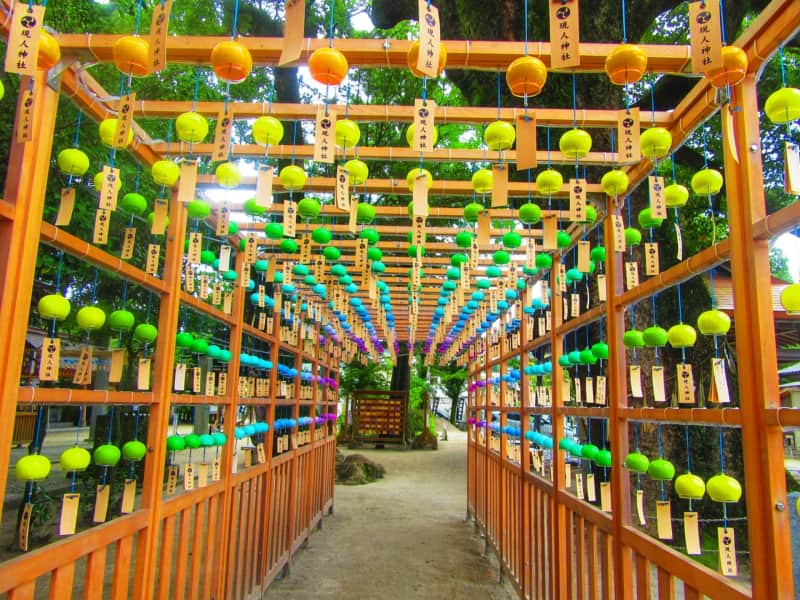

That link between seasonal expression and spiritual space is what lends Arahito such peaceful magic. In autumn, the mood shifts as soft lantern light and other thoughtful décor create a sense of warmth in the crisp air, perfect for photos and reflection alike.
This shrine is known for blessings related to career success, business prosperity, even new job beginnings, so it’s common to spot suit‑clad professionals and hopeful students alike there, offering prayers with quiet determination.



Inside the grounds, the granite torii gate stands with dignified simplicity, an 18th‑century landmark and a cultural touchstone for the city. Nearby, a majestic camphor tree, maybe centuries old, grounds the space literally and metaphorically as it has witnessed quiet devotion through generations.
Some endearing touches lighten the mood, too. You’ll find cute omamori (charms) or love-themed “koi” fortunes, a nod to the shrine’s modern appeal and why it resonates on Instagram as both spiritual haven and photogenic spot.
Before you go
This shrine is open every day from 9 AM to 5 PM and is free to enter. Staff are available to assist with a couple of steps near the torii if needed. Light footwear is best, as the gentle pathways and seasonal displays invite lingering. Tripods are fine, discreet photography is appreciated, and of course, respectful, quiet presence always feels right here.
The shrine doesn’t close for public holidays, it’s open daily from 9 AM to 5 PM. The highlight festival is the Miyabi Festival (Okunchi), celebrated annually on the third Sunday of October, bringing yabusame (horseback archery), children’s sumo, and spirited crowds.
When to go
Summer brings a spectacular display of wind chimes (fūrin) that create both visual and auditory charm throughout the shrine grounds. The shrine's seasonal decorations change throughout the year, with spring featuring colorful windmills and autumn showcasing romantic lanterns. Early morning visits between 9AM and 10AM provide the most serene atmosphere for prayers and photography. Weekday afternoons tend to be quieter than weekends, making them ideal for a more contemplative shrine experience.
Average crowd levels throughout the day, based on historical data.
Public review summary
Visitors praise the serene atmosphere and seasonal decorations, particularly highlighting the wind chimes and lantern displays. The shrine receives positive feedback for its photogenic spots and Instagram-worthy settings. Staff interactions vary, with some noting unfriendly encounters at the shrine office. The grounds maintenance and cleanliness earn consistent praise, though some mention limited parking space and difficulty finding the location.
What you'll find here
Location & access
- DirectionsAddress
3 Chome-6-20 Chu, Nakagawa, Fukuoka 811-1253, Japan
- How to get there
By Public Transportation: From Hakata Station take the JR Kagoshima Main Line north to Nakagawa Station (about 20 minutes). Then either walk or take a Nishitetsu bus to the Arahito Shrine stop, followed by a short walk.
By Car: From central Fukuoka, follow Prefectural Route 200 into Nakagawa, then onto Route 3. Parking is available, though weekends and holidays can fill up.
Common questions
Can I visit Arahito Shrine with my pet?
While pets were previously allowed if held, starting recently the shrine asks that pets not be brought into the sacred grounds. This policy reflects traditional Japanese customs regarding sacred spaces. The shrine grounds are considered a sacred area where pets are not permitted.
Is Arahito Shrine wheelchair accessible?
Yes, the shrine is wheelchair accessible with some assistance. While there are a few steps at certain points, you can drive into the shrine grounds and access the main worship area by wheelchair. The shrine has both front and back parking areas for convenience.
What are the unique features of this shrine?
Arahito Shrine is known for its beautiful seasonal decorations including wind chimes (furin), love-themed lanterns (chochin), and windmills. The shrine also features a unique chozuya (water purification basin) decorated with flowers and is particularly photogenic.
Are goshuin (shrine stamps) available here?
Yes, goshuin stamps are available at the shrine office. The shrine offers both regular goshuin and special seasonal designs. Goshuin books (goshuincho) are also sold on site. Note that stamps are considered offerings rather than purchases.
How do I get to Arahito Shrine by public transport?
Take the Nishitetsu Omuta Line to Ohashi Station, then catch a bus to Nakagawa. The shrine is within walking distance from there. There's also a local community bus called Kawasemi that serves the area, though service is limited.

Bring this spot to life with a local photographer
Book a vetted local photographer who knows the best light, angles, and timing for this location.