
At a glance
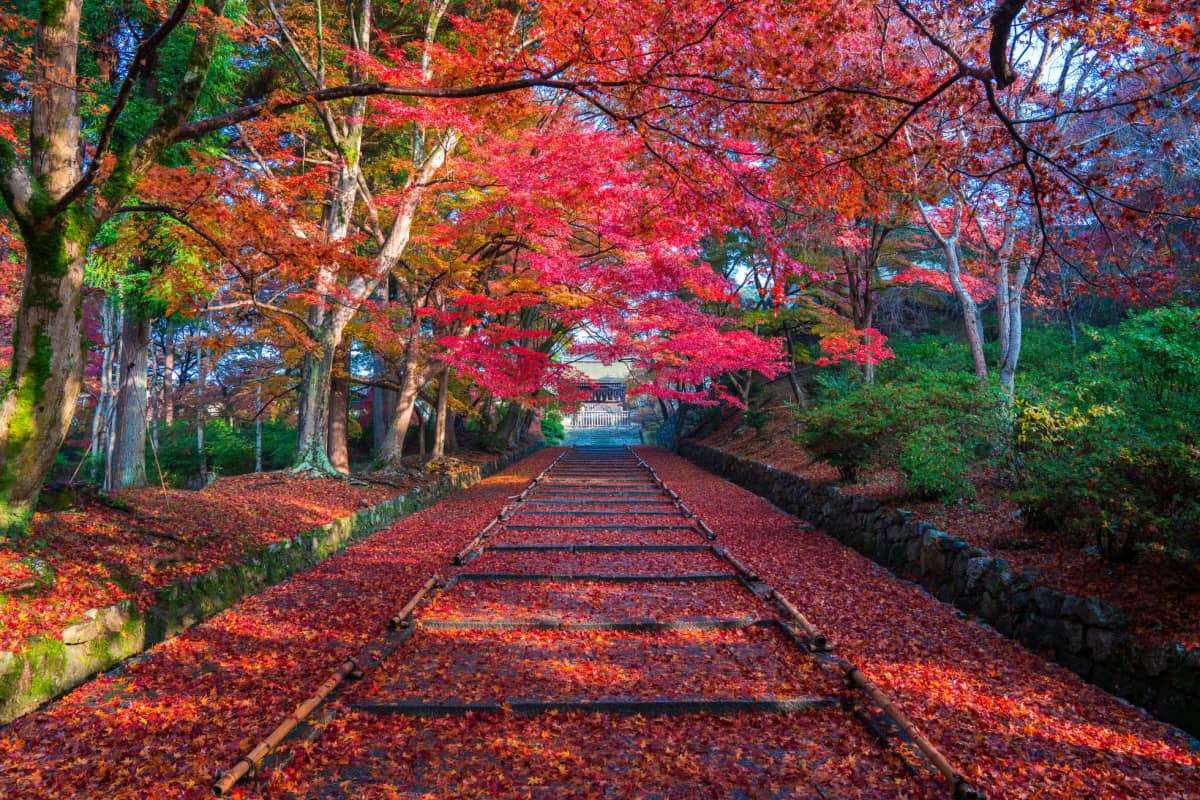
Bishamondo Temple is a historic Tendai sect Buddhist temple founded in the 8th century, renowned for its spectacular autumn foliage display along the approach stairs. Located in Yamashina Ward, the temple features traditional Edo-period architecture including a main hall with ornate ceiling dragons and innovative sliding door paintings using reverse perspective techniques. The grounds showcase seasonal beauty with weeping cherry blossoms in spring and vibrant maple leaves cascading down stone steps in autumn.
Photographs
Bishamondo Temple
Bishamondo Temple is a distinguished Tendai sect temple in Yamashina ward Kyoto, originally founded in 703 by imperial decree of Emperor Monmu. As one of Kyoto’s five Tendai Monzeki temples, it holds special prestige as a temple historically led by members of the imperial family. The temple relocated to its current hillside location in 1665 after overcoming wars and fires, preserving magnificent 17th-century architecture including the ornate main hall and karamon gate that showcase influences from Nikko Toshogu Shrine.

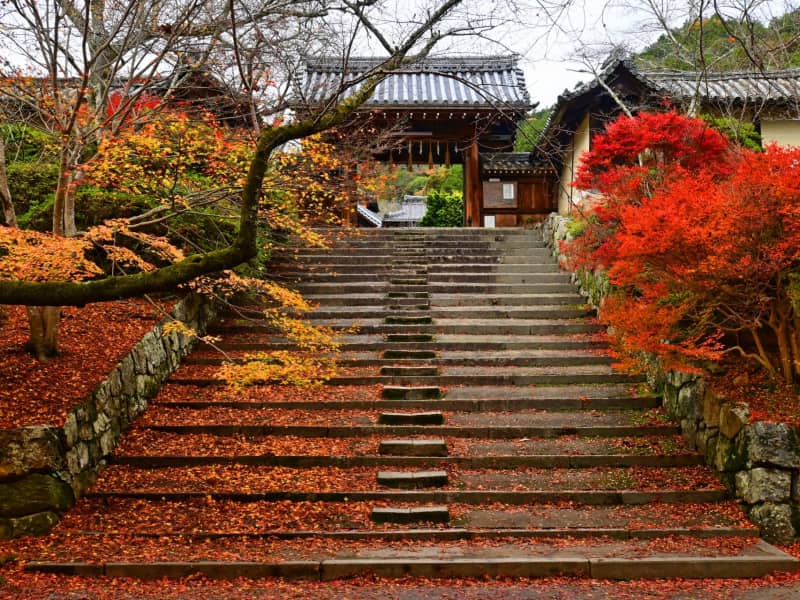
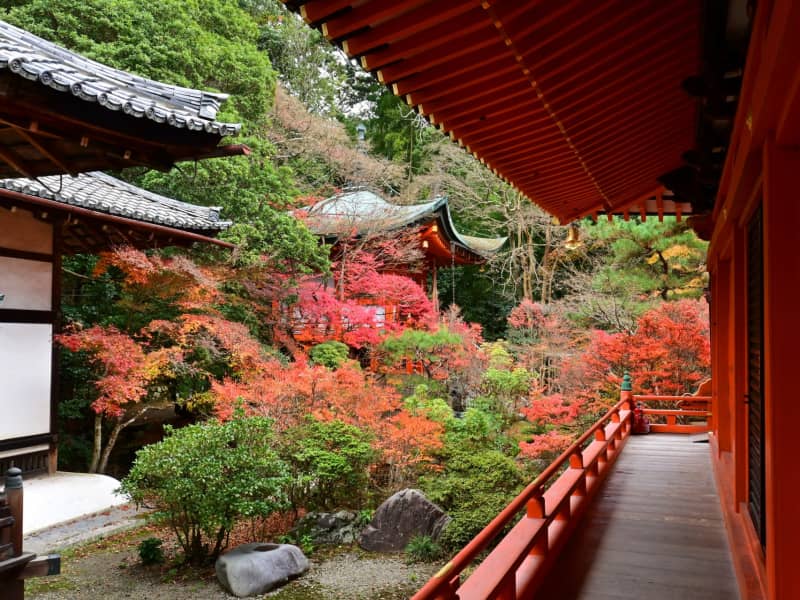
The temple’s interior houses remarkable cultural treasures, particularly the moving fusuma paintings by Kano Masunobu that employ reverse perspective to create an optical illusion where images appear to shift as visitors change viewing angles. The ceiling dragon in the main hall captures attention from every position, while the principal image of Bishamonten, carved by Saicho, remains a hidden Buddha rarely displayed. Visitors can explore the peaceful Bansui-en garden with its borrowed scenery and admire the detailed sliding door paintings throughout the buildings.


Located approximately 15 minutes uphill from Yamashina Station through residential neighborhoods, the temple features steep stone steps leading through forested grounds. The famous Bishamon Shidare weeping cherry tree blooms magnificently in spring, while autumn transforms the approach into a crimson carpet of fallen maple leaves. The temple maintains a contemplative atmosphere outside peak seasons, offering visitors a serene escape with restroom facilities available.
Seasonal and Event Highlights
- Spring: The celebrated Bishamon Shidare weeping cherry tree blooms in late March to early April.
- Autumn: Brilliant maple foliage and the iconic carpet of fallen red leaves along the stone approach make this one of Yamashina’s best autumn viewing spots.
- Event: Autumn foliage special viewing period is held annually during the peak koyo season, when visitor numbers are highest.
Before you go
Admission is 700 yen for adults (junior high school students and older) and 400 yen for elementary school students. The temple is open to walk-in visitors during normal opening hours. Expect a short uphill walk from Yamashina Station and several stone steps within the grounds, so comfortable footwear is recommended. Toilets are available, and a small temple shop sells charms and souvenirs. English signage is limited but the grounds are easy to explore. Tripods are generally discouraged inside temple buildings and during busy seasons to avoid disturbing other visitors.
Open daily from 8:30 AM to 5:00 PM (last admission around 4:30 PM). The temple is generally open throughout the year, although hours may vary slightly during special events or holidays.
When to go
Bishamondo Temple shines brightest during autumn when vibrant maple leaves carpet the famous Chokushizaka stone steps in crimson, creating one of Kyoto's most photogenic scenes. Spring brings the magnificent Bishamon Shidare weeping cherry tree into full bloom, while summer and winter offer peaceful temple grounds with fewer visitors and contemplative garden views. Weekday mornings right at opening provide the most tranquil experience for appreciating the temple's architecture and gardens without crowds. Afternoon light filters beautifully through the trees, particularly enhancing photography between 2PM and closing, though weekends from late morning through early afternoon see significantly higher visitor numbers.
Average crowd levels throughout the day, based on historical data.
Public review summary
Visitors consistently praise the temples peaceful atmosphere and stunning seasonal beauty, particularly during autumn foliage and spring cherry blossoms. Many appreciate the lack of crowds compared to central Kyoto attractions, though some note the steep uphill walk from the station can be challenging. The moving fusuma paintings and cultural artifacts receive high marks, while a few mention concerns about entrance fee increases and occasional service issues.
What you'll find here
Location & access
- DirectionsAddress
18 Anshuinariyamacho, Yamashina Ward, Kyoto, 607-8003, Japan
- How to get there
By Public Transportation:
Take the JR Biwako Line, JR Kosei Line, Keihan Keishin Line, or Kyoto Municipal Subway Tozai Line to Yamashina Station. From the station, it is about a 15 to 20-minute uphill walk through a residential neighborhood to the temple entrance.
By Car:
Bishamondo Temple is around 20 to 30 minutes from central Kyoto depending on traffic. Limited parking is available near the temple, but spaces fill quickly during the cherry blossom and autumn foliage seasons, so public transportation is recommended during peak periods.
Common questions
What is Bishamondo Temple known for?
Bishamondo Temple is renowned for its spectacular autumn foliage, particularly the famous red maple leaves that carpet the stone staircase approach. The Tendai sect temple, dating to the 8th century, also features stunning spring cherry blossoms including the celebrated weeping cherry tree, and houses remarkable Kano school sliding door paintings inside.
How do I get to Bishamondo Temple from Yamashina Station?
Bishamondo Temple is approximately a 15-minute walk from Yamashina Station, accessible via JR Tokaido Line, Kosei Line, Kyoto Subway Tozai Line, or Keihan Keishin Line. The walk involves a continuous gentle uphill climb through residential areas, followed by steep stone steps at the temple approach. Comfortable walking shoes are recommended.
Is there an entrance fee for Bishamondo Temple?
The temple grounds and garden are free to enter. However, there is an admission fee to access the interior buildings including the main hall with its ceiling dragon, sliding door paintings, and Bansuien garden. The fee is cash only, and restroom facilities are available near the entrance.
How much time should I spend at Bishamondo Temple?
Most visitors spend approximately one hour exploring Bishamondo Temple. This allows time to walk the stone staircase approach, appreciate the gardens, and view the interior buildings with their historic artwork. During peak cherry blossom or autumn foliage seasons, you may want to allocate additional time for photography.
Can I take photos inside Bishamondo Temple?
Photography is prohibited inside the temple buildings, including the main hall with its famous ceiling dragon and Kano Masunobu sliding door paintings. However, visitors are free to photograph the exterior grounds, gardens, approach stairs, and seasonal foliage throughout the temple property.
Bring this spot to life with a local photographer
Book a vetted local photographer who knows the best light, angles, and timing for this location.