
At a glance
Eikando Temple, known for its unique looking-back Amida Buddha statue, offers visitors a profound Buddhist experience in Kyoto. This historic temple complex features ancient art, traditional architecture, and meticulously maintained gardens, providing a peaceful retreat along the eastern mountains of Kyoto.
Photographs
Eikando Temple
Eikandō Temple, gracefully nestled on Kyoto’s eastern hillside, is an architectural delight where wooden halls and covered corridors connect buildings as they meander up the slope, creating a peaceful, maze‑like layout that invites quiet exploration. Its most cherished treasure, the Mikaeri Amida, a Buddha statue glancing over his shoulder, is said to symbolize boundless compassion, waiting gently even for those late to the path.


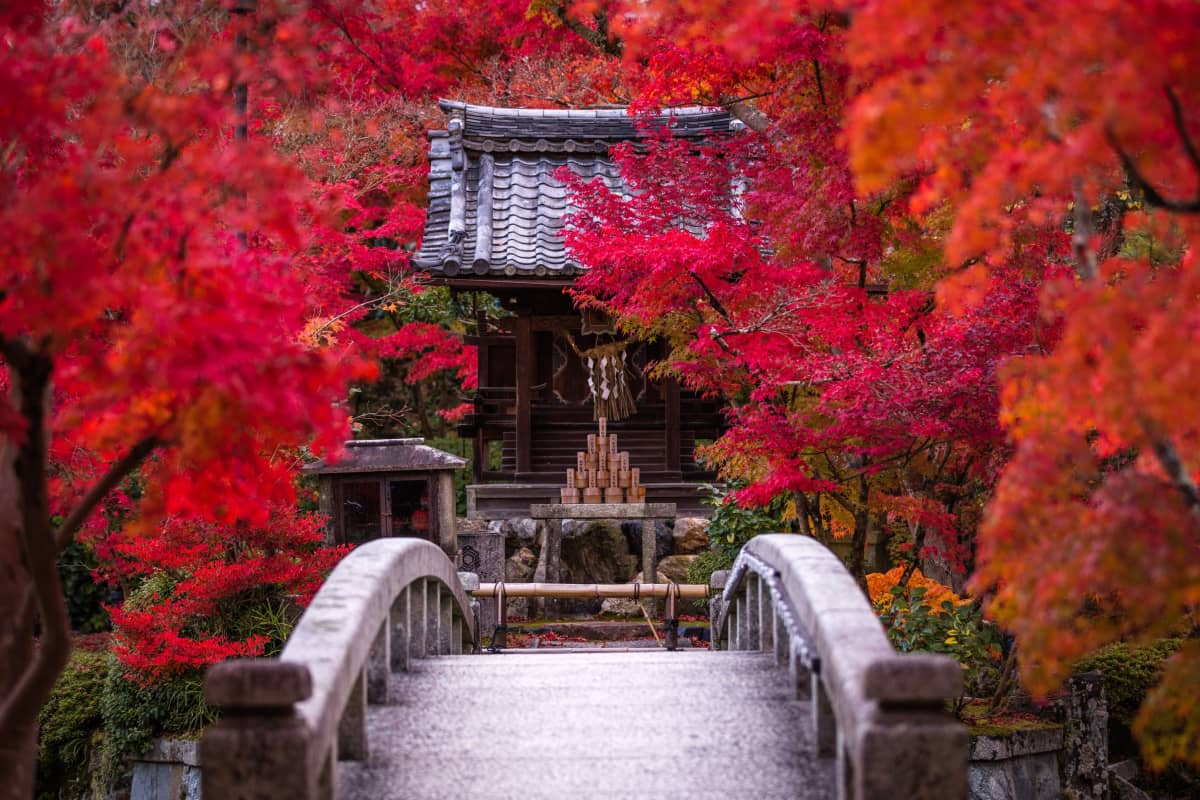
The grounds include a reflective garden centered around a pond, often called the “mirror‑like” or Hosho Pond, where the water mirrors the changing seasons, from lush spring greens to vibrant autumn reds and golds. The Tahōtō Pagoda, perched at the highest point, rewards visitors with sweeping views of Kyoto, especially stunning during fall foliage.
One of the most memorable features is the Garyu‑ro, the “Winding Dragon Corridor,” a gently curving, roofed walkway that winds through the hills, guiding you on a contemplative ascent through mossy trees and light‑dappled wood.


Through its thoughtful integration of natural landscape and sacred architecture, Eikandō offers countless vantage points, quiet corners, garden bridges, elevated halls, where visitors can pause, breathe, and photograph the serene beauty unfolding in each season.
Before you go
During peak autumn season, daytime admission for adults is around ¥1,000, and ¥600 for the evening illumination. Outside of fall, adult admission is ¥600 (kids roughly ¥400). Crowds swell in fall, and tripods are not allowed during the illumination events due to congestion. Bring comfortable shoes, the grounds are hilly and covered walkways link buildings. There’s also good accessibility: some areas offer elevators or stairlifts for easier access. And while photos are welcome, quiet reverence helps maintain the serene vibe.
The temple is open every day, with no regular closing days, except during annual foliage exhibitions (when extended hours or illumination apply). Illumination events are usually scheduled between November 11-December 5, but it’s good to check the official site each year for exact dates.
When to go
Autumn is undoubtedly the prime season at Eikando Temple, when over 3,000 maple trees burst into brilliant reds and golds. The temple's gardens are equally captivating in spring when fresh greenery emerges and during summer's peaceful moments. Early morning visits, especially before 10 AM, offer the most serene experience with minimal crowds and optimal lighting for photography. Weekday mornings generally provide a more peaceful atmosphere compared to afternoons when tour groups are more prevalent. For the most tranquil experience, arrive right at opening time to enjoy the morning stillness and avoid the midday rush. The temple's wooden corridors and garden paths are particularly atmospheric during these quiet morning hours.
Average crowd levels throughout the day, based on historical data.
Public review summary
Visitors praise Eikandos tranquil gardens and unique architectural elements, particularly highlighting the serene atmosphere during off-peak hours. The temple receives high marks for its well-maintained grounds and distinctive features like the Looking Back Amida Buddha. Some note concerns about overcrowding during peak seasons and occasional disruptions from visitors who ignore temple etiquette rules. Summer visitors appreciate the cooling shade, while autumn visitors emphasize the spectacular foliage displays.
What you'll find here
Location & access
- DirectionsAddress
48 Eikandocho, Sakyo Ward, Kyoto, 606-8445, Japan
- How to get there
By Public Transport: From Kyoto Station, take Subway Karasuma Line → transfer at Karasuma‑Oike → Tozai Line to Keage Station, then walk about 10-15 minutes. Or hop on City Bus #5 to Nanzenji‑Eikando‑michi, then a 3-minute walk.
By Car: No on-site parking available, park in nearby paid lots, aware that during autumn it gets crowded. Once parked, walk along Philosopher’s Path toward the temple’s southern entrance.
Common questions
Is photography allowed inside Eikando Temple?
Photography is restricted inside the temple buildings, particularly in rooms with religious artifacts. You can take photos freely in the outdoor areas and gardens, but be mindful of posted signs and respect the temple's status as an active place of worship.
What makes the Amida Buddha statue at Eikando special?
The temple's famous Amida Buddha statue is unique in Japan for its unusual posture - looking back over its shoulder. According to temple legend, this pose was inspired when the statue turned to look back at a devoted monk named Eikan who was late to prayers.
When is the autumn foliage season at Eikando?
The peak autumn foliage season at Eikando typically runs from early November through early December. The temple offers special evening illuminations during this period from November 3rd to December 2nd, creating a magical atmosphere.
Are there restrooms available at the temple?
Yes, Eikando Temple has restroom facilities available for visitors within the temple grounds. These amenities are maintained for visitors throughout regular operating hours from 9 AM to 4 PM daily.
Can I visit the temple's pagoda?
Yes, visitors can access the Tahoto Pagoda during regular temple hours. The pagoda requires climbing several stairs as it's built on the mountainside, offering scenic views. Be prepared for a moderate uphill walk to reach this area.
Bring this spot to life with a local photographer
Book a vetted local photographer who knows the best light, angles, and timing for this location.