

At a glance
Step away from the bustle at Former Oshi Station, a preserved slice of railway history in Gunma Prefecture. This nostalgic site features vintage freight cars, a small museum housed in the original station building, and remnants of industrial heritage from Japan's iron ore transportation era.
Photographs
Former Oshi Station
Deep in the mountains of Nakanojo, the Former Oshi Station [太子駅跡] is a rare industrial relic that tells the story of Japan’s wartime infrastructure and postwar recovery. Originally constructed in 1945 during the final stages of World War II, the station was built to serve the now-defunct Gunma Iron Mine, a key resource for steel production. Though it was only in operation for about two decades, the site played a pivotal role in transporting raw materials to the Keihin industrial zone, powering Japan’s heavy industry during a turbulent period.


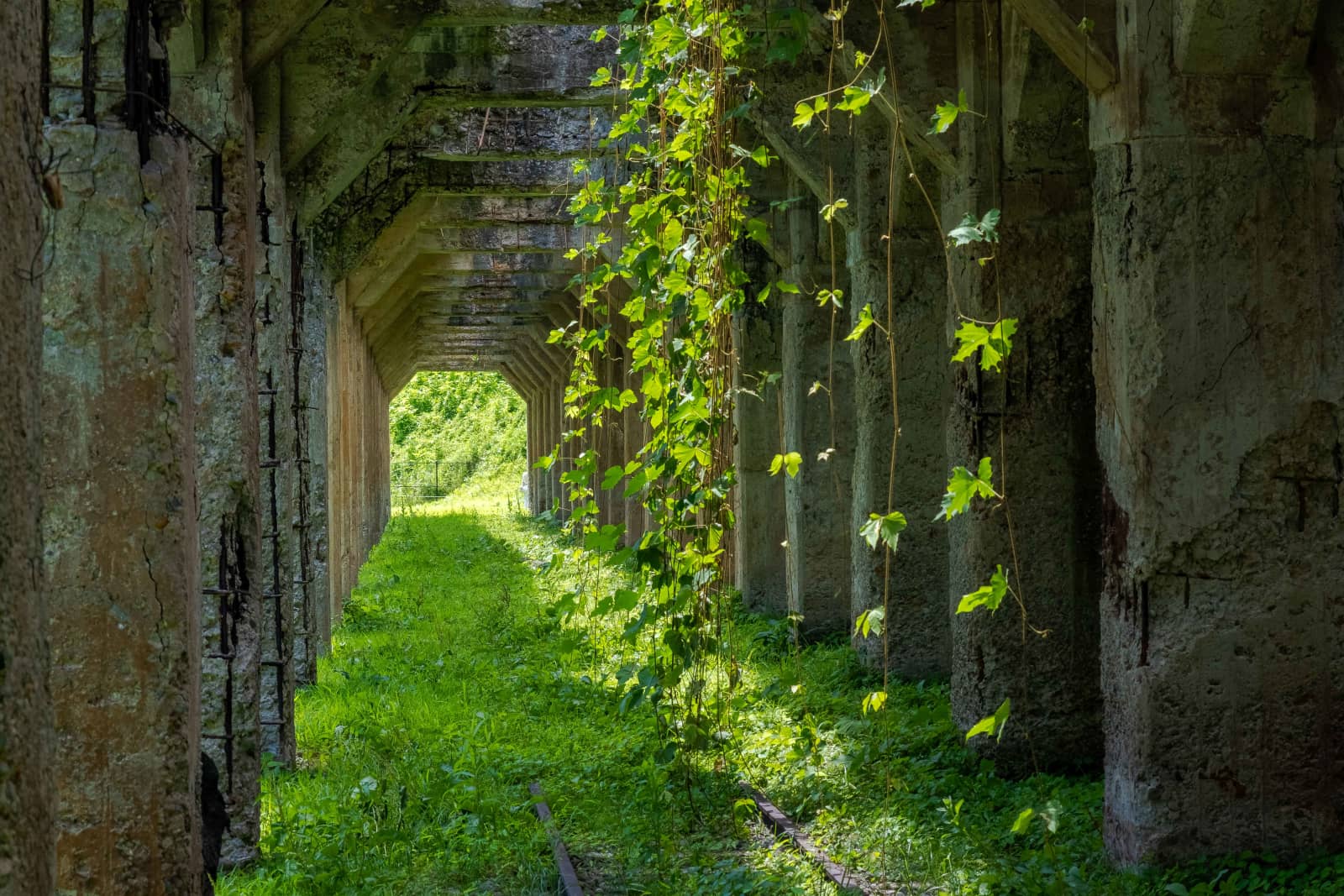
What makes Oshi Station so compelling today is how much of it still stands. You’ll find a surprising amount preserved, from authentic freight tracks and weathered railway cars to the station building itself, now serving as a small but thoughtful museum. One of the most striking remnants is the towering concrete hopper, once used to load iron ore directly into waiting freight cars. Its skeletal structure has aged dramatically over the decades, with ivy creeping across its surface and shafts of sunlight piercing through the openings, a hauntingly photogenic symbol of Japan’s industrial past.
Beyond the visual appeal, there’s real substance here. Inside the former station building, you’ll find black-and-white photographs, shipping ledgers, railway tools, and exhibits that explain how ore was transported from the nearby mountains down to Yokohama and Tokyo. There’s a quiet dignity to the place. It doesn’t overwhelm you with information, but it invites you to slow down and absorb the atmosphere. History feels tactile here: the crunch of gravel underfoot, the rusted bolts along the tracks, the way the breeze moves through the exposed framework of the hopper.


For railway buffs, history lovers, or anyone with a soft spot for forgotten places, the Former Oshi Station offers a unique look into a side of Japan that doesn’t often make it into travel brochures. The site is easy to navigate and thoughtfully maintained, with clean restrooms, drink vending machines, and a peaceful, open layout. While parts of the original structures are off-limits for safety reasons, there are plenty of great vantage points for photography, especially in the early morning or late afternoon when the light adds drama to the decaying architecture.
Before you go
Admission is about ¥200 for adults, while junior high school students and younger can enter for free. There’s a free parking lot with stair access down to the station. English signage is limited, but the site is easy to navigate. While you can’t go underneath the hopper structure, you can view it clearly from both ends and along the outer perimeter, making it easy to photograph. Restrooms and vending machines are available onsite, and tripods are allowed in the open areas.
Open daily 10 AM-4 PM, except the following: December 29-January 3 year-end break; and from December to March it’s closed Tuesday through Friday, though it remains open on weekends and public holidays.
When to go
Spring and autumn offer the most picturesque views of the Former Oshi Station, with cherry blossoms creating stunning photo opportunities in April. Winter brings a nostalgic atmosphere with occasional snow, though some areas may have limited accessibility during inclement weather. Early morning visits provide the best natural lighting for photography of the historic structures and vintage freight cars. Weekday mornings tend to be quieter, allowing for unhurried exploration of the station house museum and grounds.
Public review summary
Visitors praise the nostalgic atmosphere and historical significance of this preserved railway station. The well-maintained exhibits and vintage freight cars receive positive mentions, along with clean facilities and ample parking. Photographers particularly enjoy the aesthetic appeal of the concrete structures and abandoned railway elements. Some note that explanatory materials could be more detailed, and a few mention the site may have limited appeal for those not interested in railway history or industrial heritage.
What you'll find here
Location & access
- DirectionsAddress
251番地4 Oshi, Nakanojo, Agatsuma District, Gunma 377-1703, Japan
- How to get there
By Public Transportation: Take the JR Agatsuma Line to Naganohara-Kusatsuguchi Station. From there, board the Kuni District route bus and get off at the stop marked “Oshi [太子]”. The ride takes about 15 minutes. Bus services are limited in frequency, so it’s best to check the timetable in advance and plan accordingly.
By Car: From the Shibukawa-Ikaho Interchange on the Kan-Etsu Expressway, follow Route 353, then Route 145, and finally Route 292 toward Kuni. Use the designated parking lot next to the Kuni Heliport, accessible directly from Route 292. The drive takes approximately 90 minutes.
Common questions
Is there an entrance fee for Former Oshi Station?
The entrance fee is about 200 yen for non-locals and visitors above junior high school age. The facility includes access to the station building, exhibition area, and grounds where vintage freight cars are displayed.
What historical significance does this station have?
The station opened in 1945 to transport iron ore from Gunma Iron Mine to steelworks. It played a crucial role during post-war reconstruction before being discontinued in 1971. The site is now preserved as a historical landmark with its original hopper building registered as a national tangible cultural property.
Can I go inside the concrete hopper building?
No, for safety it’s barricaded. But you can walk close and photograph from outside.
What facilities are available on site?
The site features clean flush toilets, vending machines for drinks, a small shop selling postcards and merchandise, and free Wi-Fi. There's also a large paved parking lot and basic amenities for visitors.
Can visitors take photographs inside?
Photography is permitted throughout the facility, with many visitors noting it's an excellent spot for photos, particularly on sunny days. The concrete structures, vintage freight cars, and historical buildings make popular photography subjects.
Bring this spot to life with a local photographer
Book a vetted local photographer who knows the best light, angles, and timing for this location.