

At a glance
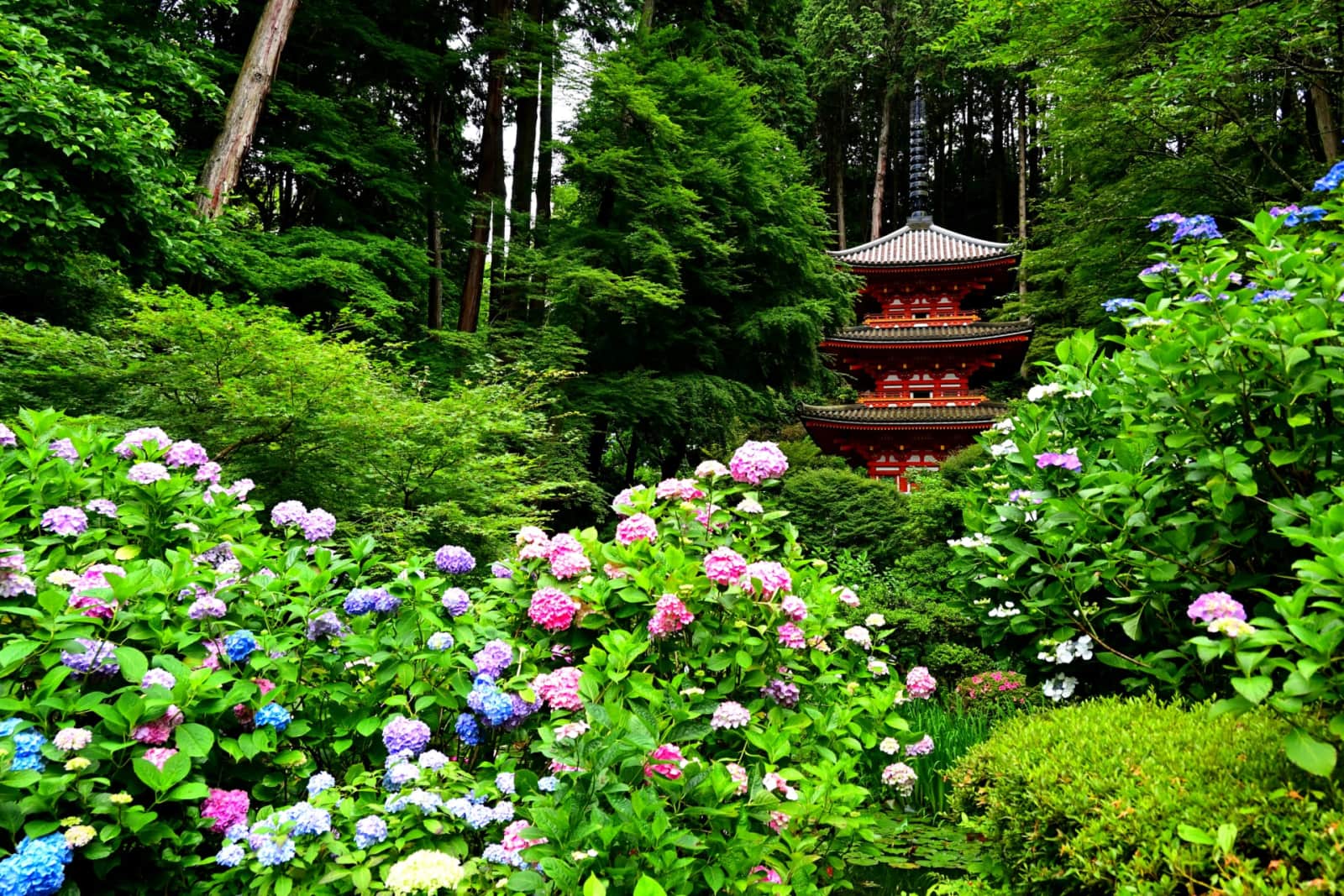
Located in Kizugawa, Kyoto Prefecture, Gansenji Temple is renowned for its spectacular hydrangea gardens with over 5,000 blooms and an ancient three-story pagoda. This historic Buddhist temple features a magnificent 3-meter tall Amida Buddha statue carved from a single keyaki tree and offers tranquil mountain views.
Photographs
Gansenji
Imagine strolling up a mossy path, entering a quiet clearing in the woods, and being greeted by vibrant hydrangeas at eye level. The red pagoda soars above, its guardian figures whispering stories from centuries past. Inside, the gentle gaze of Amida Nyorai invites reflection. Every step feels like a blend of art, worship, and nature.
This is Gansenji Temple, founded around 729 CE by the revered priest Gyōki under imperial order, sits nestled in the wooded hills of Kizugawa, Kyoto Prefecture. Once flourishing with nearly 39 sub-temples at its peak, much of it was lost to war fires in 1221 and again in 1311, before being restored in the Muromachi era with generous support from the Tokugawa shogunate.


At its heart stands a three-storied pagoda, painted striking vermilion, built in 1442 and now a nationally designated Important Cultural Property. A winding pathway allows you to circle and rise around the structure. Unusually, you can view it from above and admire the gracefully carved sumi-ki guardian figures at each tier’s corners up close.
Inside the temple sits the main image, a nearly 3-meter-tall seated wooden statue of Amida Nyorai, carved in 946 CE from a single block of zelkova wood. This Heian period masterpiece is revered as one of Japan’s oldest and most serene Buddhist sculptures.


In spring through summer, the temple is surrounded by seasonal blooms, ume, sakura, camellia, water lilies, and especially hydrangeas. Over 5,000 plants across 30-plus varieties erupt in color, framing the pagoda in soft purples and pinks, earning it the affectionate nickname “Hydrangea Temple”. Even the temple’s gate plaque is adorned with hydrangea carvings.
Inside the halls and grounds, you’ll also find other treasured artifacts: a thirteen-story stone pagoda, an ancient gorintō (five-ringed memorial tower), and a stone chamber housing a Fudō Myōō relief, all dating from the Kamakura period and each officially protected as Important Cultural Properties.
Before you go
Entrance is 500 yen for adults, with discounted rates for students and children. The paths include stone steps and uneven terrain, so comfortable shoes are recommended. There are toilets on-site and a small café near the entrance. Tripods are generally permitted outdoors but may be discouraged during special events, check with the gate staff. English signage is limited, and guided talks are available free for groups of ten or more by reservation.
Gansenji is open year-round with no fixed holidays. Standard hours: March through November from 8:30 a.m. to 5:00 p.m. (last entry at 4:45 p.m.), and December through February from 9:00 a.m. to 4:00 p.m. (last entry at 3:45 p.m.)
When to go
Gansenji Temple is most spectacular during June when over 5,000 hydrangeas burst into bloom, creating a stunning backdrop for the vermillion three-story pagoda. Spring and autumn also offer unique beauty with cherry blossoms and vibrant fall foliage enhancing the temple's ancient architecture. Visit early on weekday mornings between 8:30 AM and 10:00 AM for the most serene temple experience. The temple grounds are particularly photogenic during the golden morning light, and you'll have a better chance of receiving detailed explanations from the temple priests.
Average crowd levels throughout the day, based on historical data.
Public review summary
Visitors praise the serene atmosphere and impressive historical artifacts, particularly the ancient Amida Buddha statue and vermillion three-story pagoda. The hydrangea gardens receive high marks during blooming season, with staff noted for providing thoughtful explanations. Some mention challenging access due to narrow roads and limited parking, while the community bus schedule requires careful planning. Temple grounds maintain a peaceful ambiance even during peak flower viewing periods.
What you'll find here
Location & access
- DirectionsAddress
Kaminomon-43 Kamocho Iwafune, Kizugawa, Kyoto 619-1133, Japan
- How to get there
By Public Transportation: From JR Kamo Station on the Kansai Main Line, take the Kizugawa City community bus bound for “Kamo Yama-no-Ie” and get off at the “Gansenji” stop. Travel time is about 16 minutes. From Osaka, the JR Yamatoji Line (rapid) takes around 65 minutes to Kamo. From Kyoto, take the JR Nara Line to Kizu and transfer to the JR Kansai Main Line to Kamo, total travel time around 60 minutes. From Nara, it’s just 16 minutes by JR to Kamo Station.
Alternatively, from JR or Kintetsu Nara Station, take the Nara Kotsu Bus (Hirooka-bound) for about 18 minutes, get off at “Gansenji-guchi” and walk 25 minutes uphill. A seasonal pilgrimage bus also runs directly to the temple in spring and autumn.
By Car: From Osaka, take the Hanshin Expressway to the Daini-Hanna Road, then connect to Prefectural Route 44 toward Kamo (about 60 minutes). From Kyoto, take Route 24 and the Keinawa Expressway to the Kizugawa IC, then follow Route 44. From Nara, it’s roughly 20 minutes via Route 44 toward Kamo and Joruriji-mae.
Common questions
What is the best way to get to Gansenji Temple from Kamo Station?
Take the community bus that departs from Kamo Station at 14 minutes past each hour. The journey takes about 20 minutes, with the last bus departing at 16:14. Return buses run at 51 minutes past each hour. Plan your visit carefully around the bus schedule.
Is Gansenji Temple famous for any particular flowers?
Gansenji is renowned for its hydrangeas, with approximately 5,000 plants blooming throughout the temple grounds. The temple is often called the 'Hydrangea Temple' and is particularly spectacular in June when the flowers create a stunning backdrop to the vermillion three-story pagoda.
What are the main Buddhist statues to see at Gansenji?
The temple's principal image is a magnificent 3-meter tall Amida Buddha statue, carved from a single piece of keyaki (Japanese zelkova) wood during the mid-10th century. The statue is accompanied by Four Heavenly Kings and represents a significant example of Heian period Buddhist sculpture.
How far is Gansenji from Joruriji Temple?
The distance between Gansenji and Joruriji temples is about a 50-minute walk or less than 10 minutes by car. The path from Joruriji to Gansenji involves an uphill climb, so comfortable walking shoes are recommended if traveling on foot.
Does the temple offer any special viewing opportunities?
The temple features several hidden Buddha statues (hibutsu) including Nyoirin Kannon, Benzaiten, and Rakshasten, which are only open to the public on specific days throughout the year. These special viewings occur approximately one-quarter of the year.
Bring this spot to life with a local photographer
Book a vetted local photographer who knows the best light, angles, and timing for this location.