

At a glance
Gyoko-dori Avenue is a grand 190-meter pedestrian boulevard connecting Tokyo Station's Marunouchi exit directly to the Imperial Palace. This 73-meter-wide street, lined with ginkgo trees, serves as a ceremonial route occasionally used by the Imperial Family and hosts seasonal events including Christmas markets. The avenue is wheelchair accessible and popular for photography, particularly capturing illuminated Tokyo Station at night.
Photographs
Gyoko-dori Avenue
Gyoko-dori Avenue stretches 190 meters from Tokyo Station’s Marunouchi Central Exit toward the Imperial Palace, forming one of Tokyo’s most photogenic boulevards. This grand 73-meter-wide thoroughfare features a central pedestrian walkway flanked by ginkgo trees, creating a striking tree-lined corridor that transforms dramatically with the seasons. The avenue serves as a ceremonial route occasionally used for Imperial ceremonies and horse-drawn carriage processions for newly appointed foreign ambassadors, reflecting its historical significance in connecting modern Tokyo with Japan’s imperial heritage.

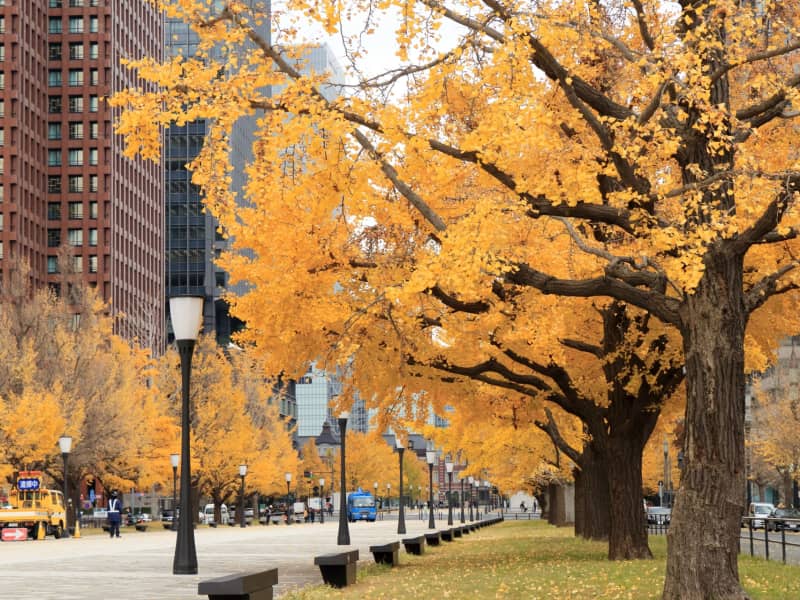
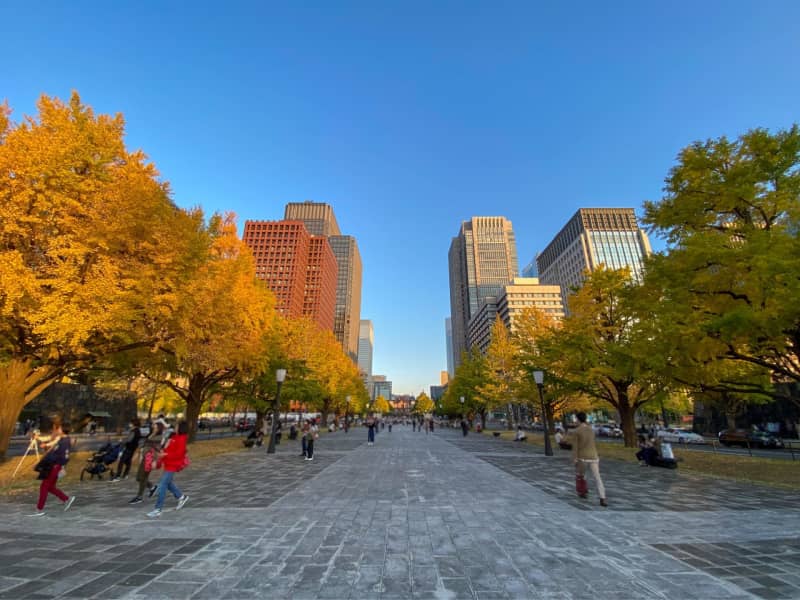
The location has become a beloved spot for wedding photography, with couples posing against the backdrop of Tokyo Station’s restored historic red-brick Marunouchi facade. During autumn, typically from mid-November to early December, the ginkgo trees turn brilliant golden yellow, creating spectacular fall colors that rival any in the city. In 2025, Gyoko-dori hosted a Christmas market and Christmas tree as part of Marunouchi Street Park Winter for the first time, while the avenue is also occasionally used for temporary cultural exhibitions and special events.


Night visits offer particularly striking views, with the illuminated Tokyo Station building visible in one direction and the modern Marunouchi skyscrapers providing a dramatic urban skyline. The avenue is wheelchair accessible and provides a peaceful respite from Tokyo’s bustling commercial districts, despite its central location in the Marunouchi business area.
Seasonal and Event Highlights
- Autumn: The ginkgo-lined avenue turns golden, generally around mid-November to early December, making this one of the best periods for photography.
- Winter: Evening visits pair the historic Tokyo Station facade with seasonal lighting around the wider Marunouchi district.
- Ceremonial Carriage Processions: On selected dates, horse-drawn carriages carrying newly appointed foreign ambassadors travel along Gyoko-dori between Tokyo Station and the Imperial Palace.
- Special Events: The avenue occasionally hosts cultural and public-space events; in 2025 it hosted a Christmas market and Christmas tree for the first time as part of Marunouchi Street Park Winter.
Before you go
Entry is free, and Gyoko-dori Avenue can be visited freely as a public outdoor space. The broad, level pedestrian areas make it wheelchair and stroller friendly, and no special footwear is required. There are no dedicated visitor facilities on the avenue itself, but toilets, cafés, shops, and other amenities are readily available around Tokyo Station and Marunouchi. Photography is easy from the public pedestrian areas, though visitors should avoid obstructing foot traffic, especially with tripods or during professional shoots. Temporary restrictions may apply during Imperial ceremonies, official processions, filming, or special events.
Gyoko-dori is an outdoor public avenue and has no regular closing days or holiday schedule. It can generally be visited at any time, although access may occasionally be restricted for Imperial ceremonies, official events, filming, or other temporary uses.
When to go
Late autumn to early December showcases Gyoko-dori Avenue at its finest, when the iconic ginkgo trees lining this grand boulevard transform into brilliant golden yellow, creating one of Tokyo's most photographed seasonal displays. Winter brings festive Christmas markets and illuminations that transform the avenue into a glowing urban wonderland, particularly stunning against the backdrop of Tokyo Station's historic red-brick facade. Evening visits from dusk until late night offer the most magical atmosphere, with illuminated buildings and fewer crowds than midday, making photography easier. Weekday mornings provide the quietest experience for those seeking a peaceful stroll along this wide pedestrian path.
Average crowd levels throughout the day, based on historical data.
Public review summary
Visitors consistently praise the magnificent nighttime views of Tokyo Station framed by modern skyscrapers, calling it one of Tokyos most photogenic spots. The ginkgo trees during autumn draw particular acclaim, while the Christmas market adds festive charm in winter. Many appreciate the spacious pedestrian walkway and wheelchair accessibility. Some note the avenue can feel exposed during hot summer days and windy winter months, though the seasonal beauty and popular wedding photo opportunities keep drawing crowds throughout the year.
What you'll find here
Location & access
- DirectionsAddress
Japan, 〒100-0004 Tokyo, Chiyoda City, Ōtemachi, 2 Chome−1−1 大手町駅
- How to get there
By Public Transportation:
From Tokyo Station, use the Marunouchi Central Exit and walk about 1 minute toward the Imperial Palace. The avenue begins directly in front of the Marunouchi side of the station. Nijubashimae Station on the Tokyo Metro Chiyoda Line is also convenient, approximately a 3-minute walk away.
By Car:
Gyoko-dori itself is not a practical destination for visitor parking, so use one of the paid parking facilities in the Marunouchi or Tokyo Station area and continue on foot. Public transportation is considerably easier for this location.
Common questions
What is Gyoko-dori Avenue?
Gyoko-dori Avenue is a 190-meter long, 73-meter wide pedestrian boulevard connecting Tokyo Station's Marunouchi Central Exit to the Imperial Palace. This tree-lined street features ginkgo trees and serves as a ceremonial route, occasionally used by Imperial Family horse-drawn carriages during special events.
Is Gyoko-dori Avenue accessible for wheelchair users?
Yes, Gyoko-dori Avenue features wheelchair accessible entrances and pathways. The wide, flat pedestrian street makes it easy to navigate for visitors with mobility challenges, providing barrier-free access throughout the boulevard.
What seasonal events occur at Gyoko-dori Avenue?
Gyoko-dori Avenue hosts a popular Christmas market in December with food stalls and festive decorations. The avenue also features special exhibitions throughout the year, including Japanese umbrella displays and drone shows, along with various seasonal cultural events.
Why is Gyoko-dori Avenue popular for photography?
The avenue offers stunning views of Tokyo Station's restored building framed by modern skyscrapers and ginkgo trees. It's particularly famous as a wedding photography spot and becomes especially photogenic during autumn foliage season and at night when illuminated.
How long does it take to walk Gyoko-dori Avenue?
Walking the full length of Gyoko-dori Avenue from Tokyo Station to the Imperial Palace typically takes about one hour at a leisurely pace. Visitors often spend additional time taking photographs, especially during ginkgo season or evening illuminations.
Bring this spot to life with a local photographer
Book a vetted local photographer who knows the best light, angles, and timing for this location.