
At a glance
A thrilling 181-meter suspension bridge spanning Lake Hatanagi's upper reaches in Shizuoka Prefecture. Famous for its dramatic swaying motion and stunning mountain views, the bridge offers both an adventurous crossing and breathtaking natural scenery, especially during autumn's vibrant foliage display.
Photographs
Hatanagi Suspension Bridge
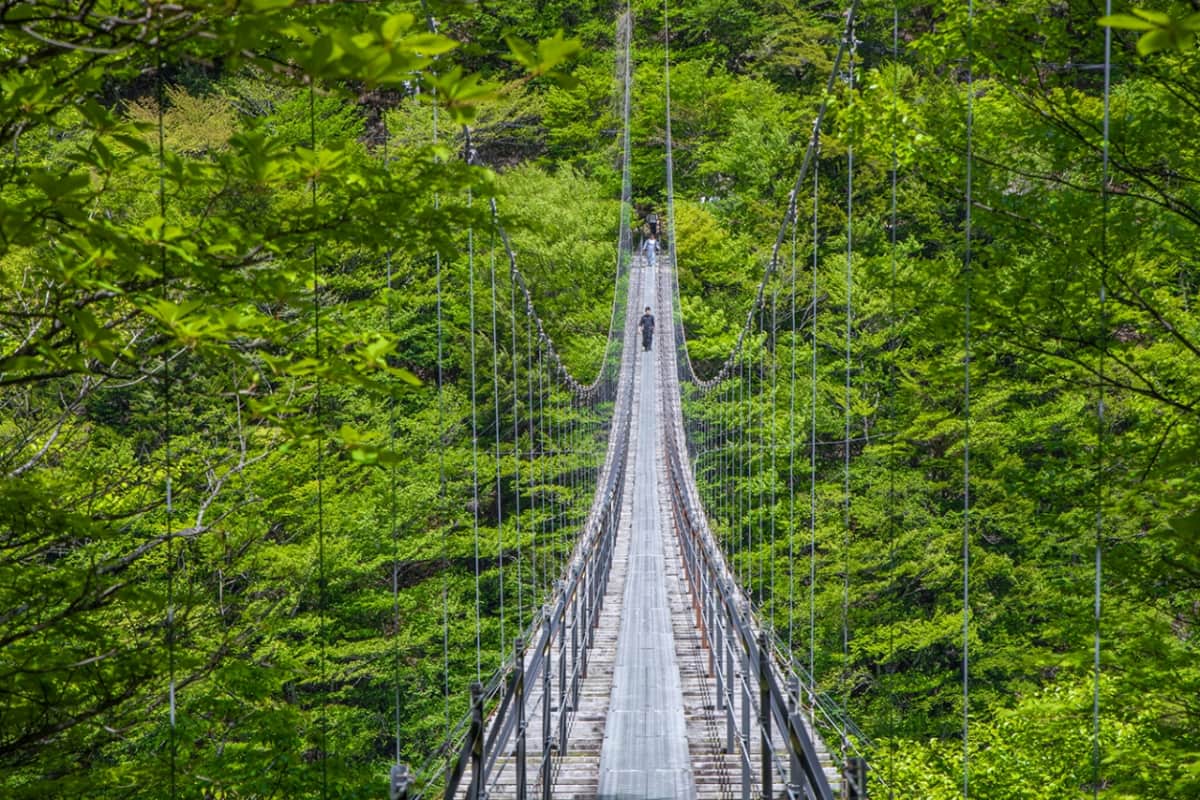
Suspended high above the emerald waters of Lake Hatanagi, this dramatic bridge is one of the most scenic footbridges in the Oku-Ōi region of Shizuoka. The Hatanagi Suspension Bridge stretches 181 meters across the lake at an elevation of 970 meters, connecting forest paths deep in the Southern Alps [南アルプス]. It’s not just the scale that makes it memorable; it’s the surreal sense of floating in the mountains, with panoramic views in every direction.


Originally constructed as part of the maintenance route for the Hatanagi No. 1 Dam, the bridge has since become a destination in its own right. It gently sways as you walk, offering a slightly nerve-wracking but entirely safe experience. Capacity is limited to 15 people at a time. Though engineered for utility, it has become a quiet local icon for those seeking raw natural beauty far from crowded tourist paths.
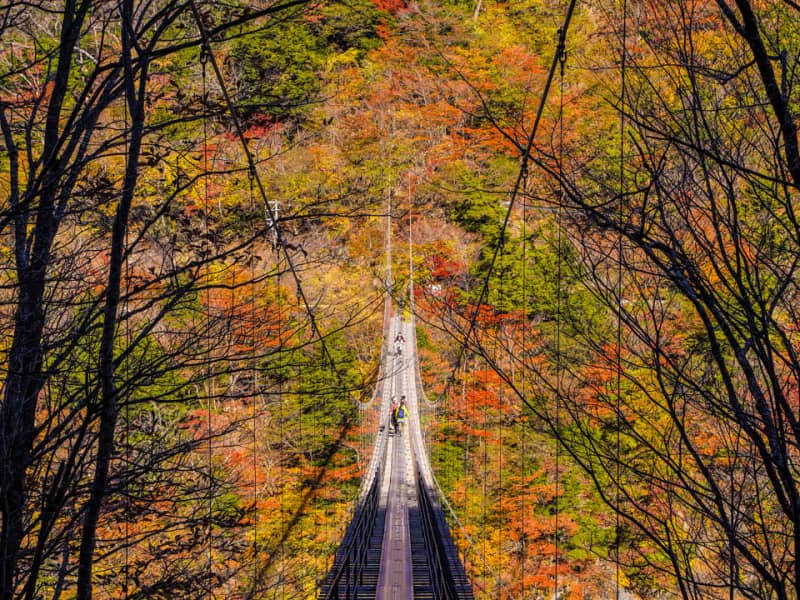
The approach to the bridge is part of the adventure. From Numadaira Gate [沼平ゲート], it’s about a 40-minute walk (roughly 2.5 km) along a well-maintained forest road. No cars are allowed past the gate, which helps preserve the tranquility of the area. The trail itself is serene, bordered by mossy rocks and tall cedar trees, and is especially beautiful in autumn, when the slopes surrounding the lake burst into rich hues of crimson and gold.
This spot also gained attention through the popular anime Yuru Camp△ (Laid-Back Camp), where it appears as part of Rin Shima’s solo camping journey through Oku-Shizuoka. Fans of the series will recognize the bridge and forest road, which were faithfully recreated in the show and have since become a quiet destination for anime pilgrims tracing Rin’s path through the mountains.


Photographers and hikers alike are drawn to the bridge for its striking composition. The curve of the bridge is framed against alpine peaks and jewel-toned water. Mid-morning to early afternoon offers the best lighting conditions, and the area is most vivid during early to mid-November, when the koyo [紅葉] season hits its peak. Drones are prohibited, and tripods are discouraged due to the narrowness of the bridge, but there are excellent vantage points along the forest road for shooting.
While peaceful on most weekdays, the bridge also serves as a useful crossing point for mountaineers heading toward Mount Chausu [茶臼岳] and other deeper routes into the Southern Alps. It’s one of those rare spots that feels both isolated and meaningful, a place where infrastructure quietly blends into nature.
Before you go
The bridge is only accessible on foot or by bicycle, with no motor vehicles allowed past the Numadaira Gate. Wear sturdy walking shoes, as the 2.5 km forest road to the bridge can be uneven in places. There are no toilets, vending machines, or cafés along the path, so bring water and snacks. The bridge sways and has narrow railings, so take care if you’re sensitive to heights. Max number of people that are allowed on the bridge at a time is 15 people.
The area is generally open year-round, but the Numadaira Gate access road is closed to the public during winter, typically from late November to late April, depending on snow and weather conditions. Check the Shizuoka City or Oku-Shizuoka tourism websites for seasonal access updates before planning a trip.
When to go
Early to mid-November offers spectacular autumn foliage views with vibrant red and orange hues painting the surrounding landscape. Spring brings mild temperatures and clear visibility, making it ideal for photography and experiencing the bridge's full majesty. Visit between 10 AM and 1 PM when sunlight illuminates the entire bridge and surrounding mountains, creating optimal conditions for photos. Weekday mornings tend to be less crowded, offering a more peaceful experience with fewer visitors on the bridge.
Average crowd levels throughout the day, based on historical data.
Public review summary
Visitors appreciate the bridges dramatic swaying in the wind and spectacular autumn foliage views, while noting the thrill factor can be intense for those afraid of heights. The 40-minute walk from Numadaira Gate is generally considered worthwhile for the scenery. Bear sightings and the lack of facilities like restrooms or vending machines are commonly mentioned concerns. The bridges remote location adds to its charm but requires advance planning.
What you'll find here
Location & access
- DirectionsAddress
Tashiro, Aoi Ward, Shizuoka, 428-0505, Japan
- How to get there
By Public Transport: From Shizuoka Station, take the JR Tokaido Main Line to Kanaya Station. Transfer to the Ōigawa Railway and ride to Senzu Station (about 90 minutes total). From Senzu, board the Shizuoka City-operated minibus to Numahira Trailhead [沼平登山口], which runs only from late April to early November and has limited service (1–2 buses daily). From Numahira Gate, it’s a 40-minute walk (2.5 km) along a forest road to the suspension bridge. Public transport schedules are sparse, so plan ahead and check the latest timetables. Some travelers stay overnight in Senzu to catch the morning bus.
By Car: From central Shizuoka, drive north via National Route 362, then take Prefectural Road 60 toward the Oku-Ōi and Hatanagi Dam area. Parking is available just before Numahira Gate, where private vehicles must stop. From the gate, walk 2.5 km (about 40 minutes) along the forest road to the bridge. Note that the access road may be closed during winter (late November to late April) due to snow or maintenance, so check conditions before visiting.
Common questions
How do I get to Hatanagi Suspension Bridge?
Access is via a 2.8km walk or bicycle ride from Numadaira Gate, which is closed to general vehicles. In summer, there are reserved buses from Shizuoka to Hatanagi Dam. The path is relatively flat but takes about 40 minutes each way on foot.
What safety precautions should I take when visiting?
Bear sightings are reported in the area, so bring bear bells and make noise while walking. During strong winds, the bridge can sway significantly. Be careful not to drop items like phones or cameras, and hold the handrails when crossing.
When is the best time to see autumn foliage at the bridge?
The autumn foliage peak typically occurs in early to mid-November, with the best viewing hours between 10 AM and 1 PM when sunlight illuminates both the bridge and surrounding mountains. The autumn colors create a stunning backdrop.
Is the suspension bridge difficult or scary to cross?
The 181-meter bridge can sway in the wind and accommodates up to 15 people at once. While some visitors find it thrilling, most report it's manageable unless you have a serious fear of heights. The bridge is about 30 meters high.
Are there any facilities near the suspension bridge?
There are no restrooms, vending machines, or facilities at the bridge itself. The nearest amenities are at Shirakabaso Onsen. There is a covered bench on the forest road side that can be used as a rest area or equipment check point.

Bring this spot to life with a local photographer
Book a vetted local photographer who knows the best light, angles, and timing for this location.