

At a glance
The Holy Resurrection Cathedral, commonly known as Nikolai-do, serves as the principal cathedral of the Japanese Orthodox Church in Tokyo's Chiyoda City. This Byzantine-style architectural masterpiece features a distinctive emerald-green dome rising 35 meters high, completed in 1891 and designated as a National Important Cultural Property in 1962. Visitors can explore the solemn interior with its beautiful stained glass and Orthodox icons for a 300 yen donation, though photography inside is prohibited.
Photographs
Holy Resurrection Cathedral
Set on the Surugadai hill above Ochanomizu, the Holy Resurrection Cathedral, better known as Nikolai-do, feels almost unreal the first time you see it. Office buildings and busy train lines surround it, then suddenly this green-domed Orthodox cathedral appears, carrying a very different visual language from the temples, shrines, and churches most visitors expect in Tokyo. It was first completed in 1891 through the work of Saint Nicholas of Japan, who built it as the center of the Japanese Orthodox Church after decades of missionary work in the country.


What makes the cathedral especially compelling is that it is not just “Russian” in appearance, but part of a longer story about how Orthodox Christianity took root in Japan during the Meiji period. Saint Nicholas learned Japanese deeply and worked within Japanese society rather than standing apart from it, which helps explain why Nikolai-do still feels less like a foreign relic and more like a lived religious space with its own place in Tokyo’s history. The original building was heavily damaged in the Great Kanto Earthquake of 1923, then rebuilt and reconsecrated in 1929. That layered history is part of why it was later designated an Important Cultural Property of Japan.
Architecturally, the cathedral stands out for its Byzantine Revival form, brick-and-stone construction, and the calm weight of its rounded dome, arched windows, and bell tower. The earlier design is associated with Mikhail Shchurupov, while Josiah Conder helped shape the realized building, giving it a rare place in the story of Meiji-era architecture as well as Christian history in Japan. Inside, the mood shifts immediately. Light falls softly across icons [聖像], candles, and the wide interior volume beneath the dome. The current interior is plainer than the pre-earthquake version, but that restraint gives it a quiet dignity that suits Orthodox worship well.
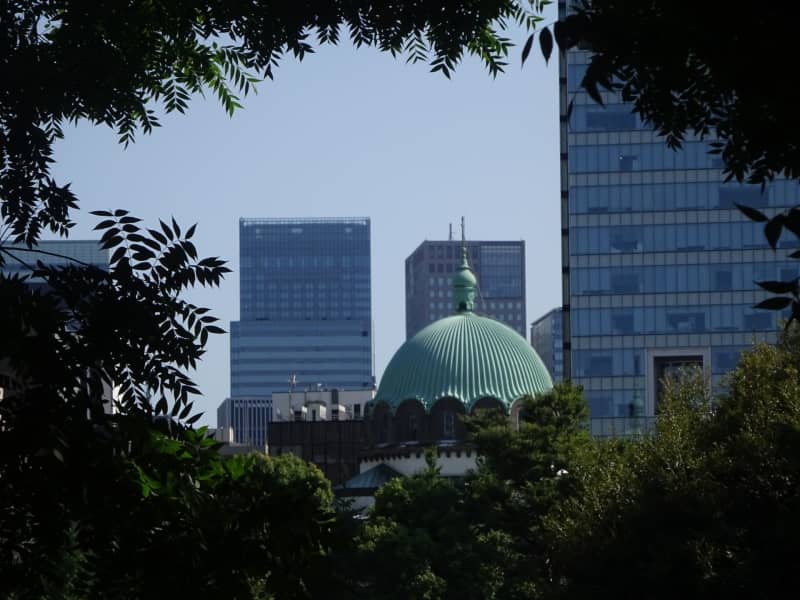

For visitors, Nikolai-do is best approached as a working cathedral, not just a sightseeing stop. You are usually only allowed into part of the interior, and photography inside is not permitted, which actually changes the experience in a good way. You slow down, notice the silence, and pay more attention to sound, light, and ritual detail. Even the bells matter here. They have been part of the cathedral’s identity since the beginning, and their presence still gives the area a slightly detached, contemplative feeling despite the city pressing in from every side. From a photography point of view, the exterior is strongest in softer daylight, especially when the green dome contrasts with a pale sky or the surrounding modern buildings. Wide angles work well from the lower approach, while tighter framing helps isolate the crosses, arches, and copper dome against the Tokyo skyline.
Before you go
Entry to the cathedral interior requires a small donation of around 300 yen, while the outer grounds are free to explore. Only part of the interior is accessible, as it remains an active place of worship. Photography is not allowed inside, but permitted outside. Expect a few steps and gentle slopes on the grounds. Modest behavior is expected, and voices should be kept low. Basic English signage is available, and there are usually staff or guides nearby to provide context.
The cathedral may have adjusted access during major Orthodox Christian holidays such as Easter and Christmas, when services take priority and visitor entry may be restricted. It’s best to visit outside service hours if you want to go inside.
When to go
Visit during spring or autumn when mild weather makes the walk from Ochanomizu Station pleasant and the cathedral's Byzantine architecture stands out beautifully against clear skies. Winter offers a special atmosphere when the distinctive green dome and brick exterior create striking contrasts with seasonal decorations. Plan your visit during weekday afternoons when the cathedral is less crowded and natural light illuminates the interior stained glass most effectively. Arrive shortly after the 1PM opening to enjoy a more peaceful experience before tour groups typically arrive mid-afternoon.
Public review summary
Visitors consistently praise the cathedrals magnificent Byzantine architecture and beautiful interior featuring stunning stained glass and icons. Many appreciate the peaceful, solemn atmosphere and helpful guides who provide detailed historical explanations. Some note the 300 yen admission fee and photography restrictions as minor drawbacks. A few express frustration with limited viewing areas and short visiting hours during weekdays.
What you'll find here
Location & access
- DirectionsAddress
4 Chome-1-3 Kanda Surugadai, Chiyoda City, Tokyo 101-0062, Japan
- How to get there
By Public Transportation:
The cathedral is about a 5-minute walk from JR Ochanomizu Station (Hijiribashi exit). It’s also easily reached from Shin-Ochanomizu Station on the Chiyoda Line, just a few minutes on foot. The walk uphill is short but noticeable.
By Car:
Driving is not recommended due to limited parking in the area. If you do come by car, use nearby paid parking facilities around Ochanomizu or Kanda, then walk up to the cathedral.
Common questions
What are the visiting hours for Holy Resurrection Cathedral?
The cathedral is open Tuesday through Saturday from 1:00 PM to 3:30 PM, and Sunday from 9:00 AM to 1:00 PM. It is closed on Mondays. Hours may vary seasonally, with extended hours until 4:00 PM during summer months (April-September). Visiting may be restricted during special ceremonies like weddings or funerals.
Is there an admission fee to enter the cathedral?
There is a 300 yen donation requested for entry to Holy Resurrection Cathedral. This contribution helps maintain this Important Cultural Property. Orthodox worshippers may enter without a donation. The fee includes access to view the Byzantine interior and its beautiful icons and stained glass.
How do I get to Holy Resurrection Cathedral from the nearest station?
The cathedral is a 2-3 minute walk from JR Ochanomizu Station's Hijiribashi Exit. Exit and turn right, continue straight past Shin-Ochanomizu Station entrance, and the cathedral appears on your right at the first corner. Alternatively, it's accessible from Tokyo Metro Shin-Ochanomizu Station (Chiyoda Line).
Can I take photographs inside the cathedral?
Photography is strictly prohibited inside Holy Resurrection Cathedral. Visitors are encouraged to quietly observe and keep the magnificent Byzantine interior in their hearts. You are welcome to photograph the exterior of the building and its distinctive green dome from the grounds or surrounding streets.
What should I know before visiting Holy Resurrection Cathedral?
Holy Resurrection Cathedral is an active Orthodox place of worship requiring respectful behavior. Services are held Saturday evenings and Sunday mornings. The interior features Byzantine architecture with icons and stained glass. Guided explanations are available. Facilities include restrooms and on-site parking for visitors.

Bring this spot to life with a local photographer
Book a vetted local photographer who knows the best light, angles, and timing for this location.