
At a glance
A historic Buddhist temple in Kyoto's Ohara district, featuring a famous "frame garden", 700-year-old Japanese white pine, and blood-stained ceiling from Fushimi Castle. Visitors can enjoy traditional matcha tea service while contemplating the meticulously maintained gardens and architecture.
Photographs
Hosen-in Temple
Step inside Hōsen-in, a small Tendai-sect retreat nestled in Ohara’s gentle hills, and your eyes are immediately drawn to a 700-year-old five-leaf pine tree, carefully pruned and supported to echo the iconic silhouette of Mt. Ōmi-Fuji. It stands as a quiet guardian, rooting you in a timeless beauty.


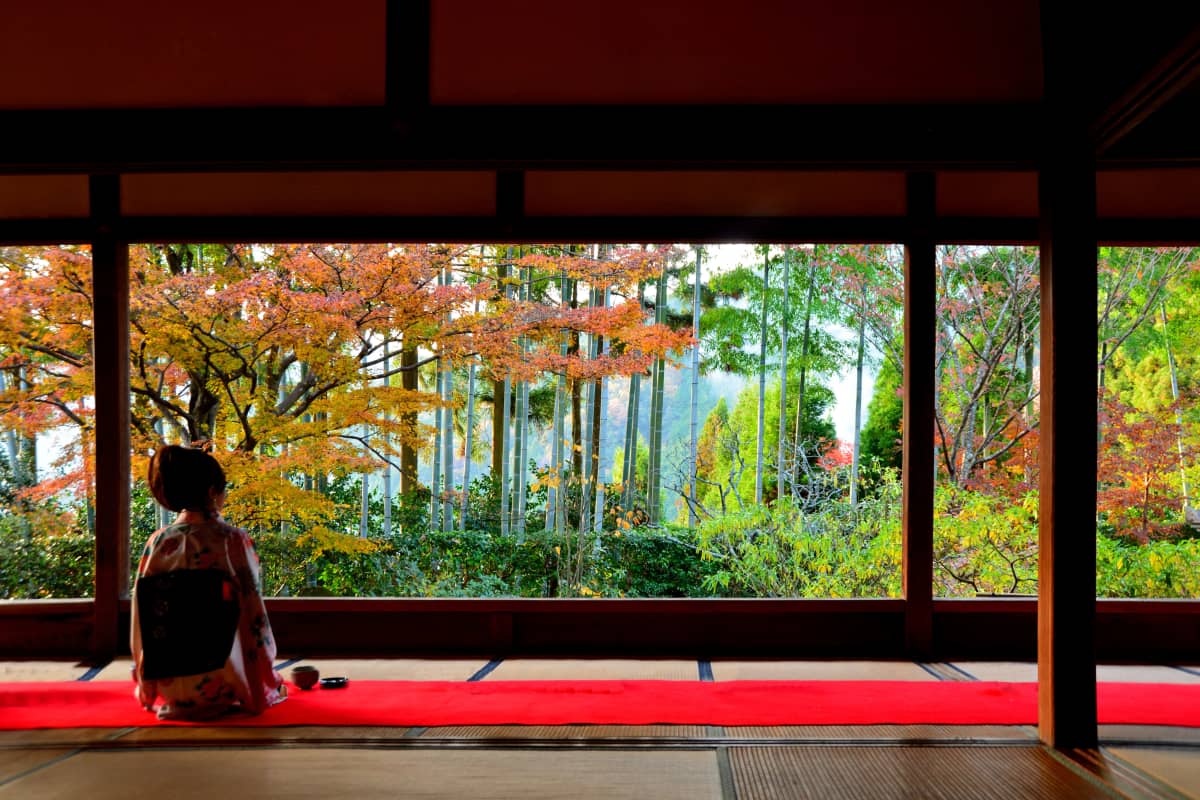
Through the wooden pillars and lintels of the tatami room, that garden becomes a living frame, a gakubuchi teien, where every view is composed like a painting. This is sometimes called Bankan-en, the garden you’ll find “hard to leave behind”. You’re invited to sit on the red felt cushions, sip matcha tea, and savor a wagashi sweet, all included in the simple but thoughtful admission.
Above you lies a different kind of artistry, one that holds a heavier kind of history. The ceiling is crafted from floorboards salvaged from Fushimi Castle, stained with the blood of samurai who chose ritual suicide rather than capture in a final act of loyalty. It’s a quiet, solemn memorial that lingers in your awareness even as you gaze at serene scenery.


Along the veranda you’ll notice two slender bamboo pipes rising from the floorboards, the clever, double-barreled suikinkutsu, or “water chime.” Press your ear against one of them and you’ll hear the delicate echo of water drops transforming the garden into a multisensory meditation.
Beyond the main building, the grounds include the peaceful Horakuen, a contemporary dry landscape garden inspired by Earth's primordial oceans, and a carefully designed Crane and Turtle Garden featuring ancient camellia trees. The temple's tranquil atmosphere is enhanced by its surrounding bamboo groves, offering visitors a peaceful retreat from the busier tourist sites of Kyoto.
Before you go
Wear footwear that’s easy to slip on, rooms are tatami and soft. The entry fee for adults is usually around ¥800, and that includes a thoughtful serving of matcha tea and a wagashi sweet, perfect for settling into the view. There’s a gentle downhill path to reach Hōsen-in, and stepping stones in the lower garden require mindful balance. Tripods are generally fine as long as you’re discreet and keep the calm intact.
Hōsen-in opens from 9:00 am to 5:00 pm, with last entry at 4:30 pm. It does not close for holidays, so you can visit even on national breaks. Still, holiday weekends—especially in autumn—can see much heavier crowds and longer bus rides.
When to go
Hosen-in Temple offers spectacular viewing throughout all four seasons, with autumn bringing vibrant maple foliage and winter offering serene snow-covered landscapes. Spring welcomes new greenery while summer showcases the lush gardens and ancient pine tree in full verdancy. Early morning visits, particularly between 9AM and 10AM, provide the most peaceful atmosphere for enjoying the temple's famous frame garden and tea service. Weekday mornings generally offer a more tranquil experience with fewer visitors compared to weekend afternoons.
Public review summary
Visitors consistently praise the serene atmosphere and intimate garden views. The matcha tea service included with admission receives high marks for enhancing the peaceful experience. Staff helpfulness and cultural explanations are frequently commended. The 700-year-old pine tree and frame garden format particularly impress guests. Some note concerns about growing tourist numbers affecting tranquility, and a few mention the support structure for the ancient tree being visually distracting. Early morning visits are widely recommended for the best experience.
What you'll find here
Location & access
- DirectionsAddress
187 Oharashorinincho, Sakyo Ward, Kyoto, 601-1241, Japan
- How to get there
By Public Transportation: From Kyoto Station, hop on Kyoto Bus No. 17 heading to Ohara—it takes just over an hour to get there. Once you arrive at the Ohara bus stop, follow the path toward Sanzen-in, then walk further uphill to reach Hōsen-in. Total walking time is around 10 minutes. Inside Kyoto, you can also use the subway line to Kokusaikaikan Station, and transfer to Bus No. 19, then walk to the temple.
By Car: There’s no official parking at the temple. If you’re driving, you’ll need to find nearby paid parking—Ohara is rural, so space is limited. From the parking area, walk following signs toward Sanzen-in and onward to Hōsen-in. The village roads are narrow, so drive slowly and respectfully.
Common questions
What is special about Hosen-in Temple's garden?
Hosen-in Temple features a unique 'Frame Garden' (Bankan-en) where the garden is viewed through the temple's pillars and lintels, creating a natural picture frame effect. The centerpiece is a majestic 700-year-old Japanese White Pine tree that represents Mount Fuji.
Is matcha tea service included with admission?
Yes, the 900 yen admission fee includes a serving of matcha green tea and traditional Japanese sweets. Visitors can enjoy these refreshments while seated in the temple hall overlooking the beautiful garden, creating a quintessential Japanese cultural experience.
What is the story behind the Blood Ceiling?
The temple's ceiling contains wooden panels from Fushimi Castle bearing bloodstains from samurai who committed ritual suicide during the Battle of Fushimi Castle in 1600. These panels were preserved as a memorial to the warriors and represent an important piece of Japanese history.
Is the temple wheelchair accessible?
The temple has many stairs and is generally difficult to access by wheelchair. This information comes directly from visitor feedback and staff responses, suggesting alternative arrangements should be made for visitors with mobility concerns.
What unique features should I look for at the temple?
Look for the suikinkutsu (water chime) which produces mysterious beautiful sounds, the Horakuen dry landscape garden created in 2005, and the frame garden viewing spots. The temple also features ancient camellia trees and a special crane and turtle garden design.

Bring this spot to life with a local photographer
Book a vetted local photographer who knows the best light, angles, and timing for this location.