

At a glance
Located in central Tokyo's Chiyoda City, the Imperial Palace serves as Japan's imperial residence, featuring traditional architecture and meticulously maintained gardens. Free guided tours offer glimpses of historic structures while scenic moats and stone walls showcase centuries of Japanese royal heritage.
Photographs
Imperial Palace
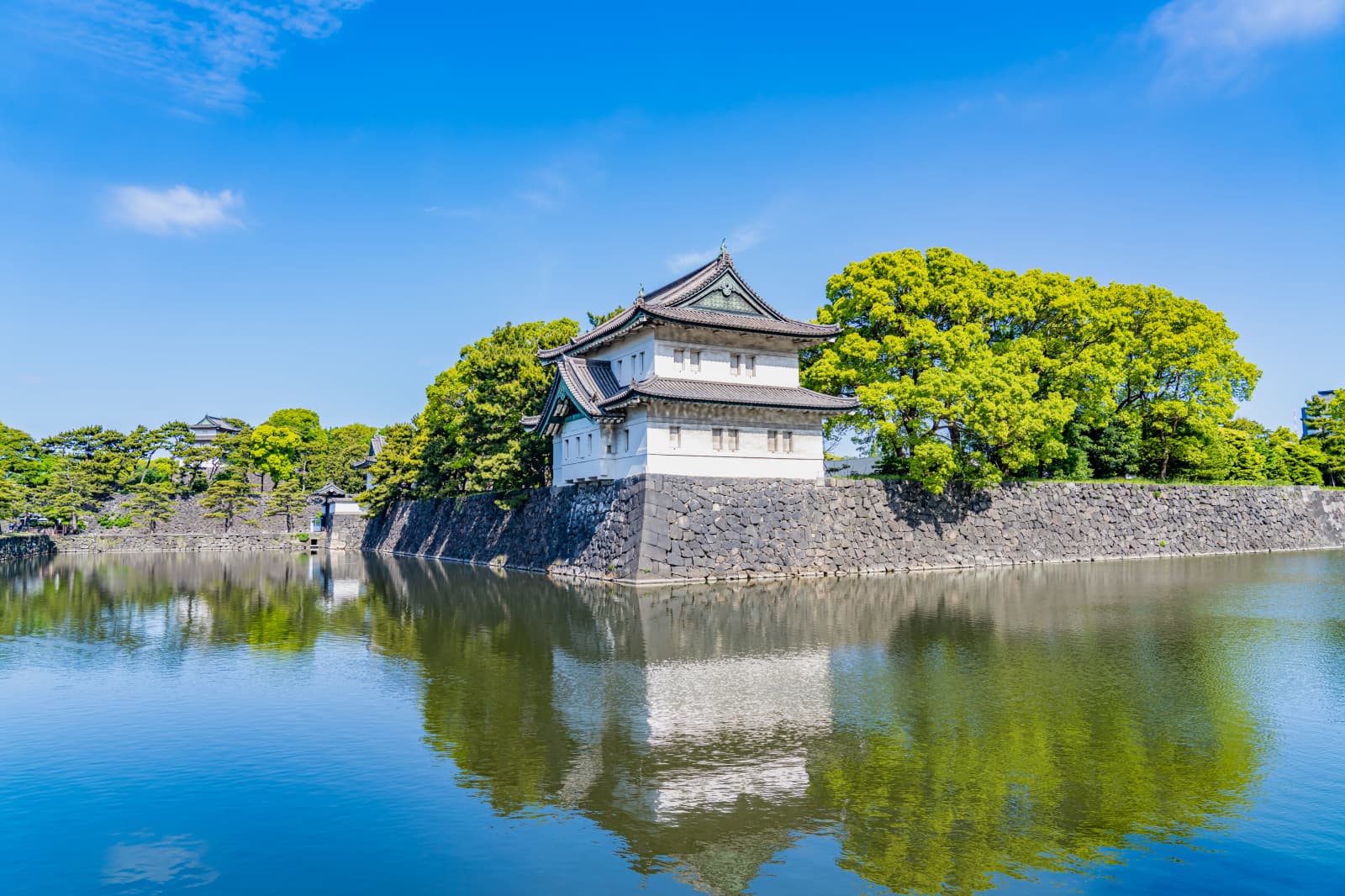
Tucked into the center of Tokyo, the Imperial Palace feels like a world apart. It’s the official home of Japan’s royal family, but it also stands as a quiet testament to the country’s deep history, refined culture, and timeless approach to garden design.Surrounded by a deep moat and massive stone walls, the palace grounds feel like a retreat from the surrounding city, even as skyscrapers peek over the treetops in the distance.


The public can’t enter the inner palace except during special occasions like New Year’s Greeting (January 2) and the Emperor’s Birthday, when visitors gather in the thousands to see the Imperial Family wave from a glass-covered balcony. But the East Gardens (Higashi Gyoen) are open throughout the year and offer a surprisingly peaceful stroll through what was once the heart of Edo Castle. Here, you’ll find remnants of the original castle foundations, traditional gates, a beautifully curated Japanese garden, and wide lawns that change dramatically with the seasons.
In spring, the gardens explode with sakura [桜], and in autumn, the koyo [紅葉] paints the landscape in fiery reds and golds. The garden’s Ninomaru Grove includes native species from every prefecture in Japan, a quiet nod to the country’s diversity. These seasonal changes, paired with historic architecture like the Otemon Gate and Fujimi-yagura watchtower, make it a favorite spot for photographers and nature lovers alike.

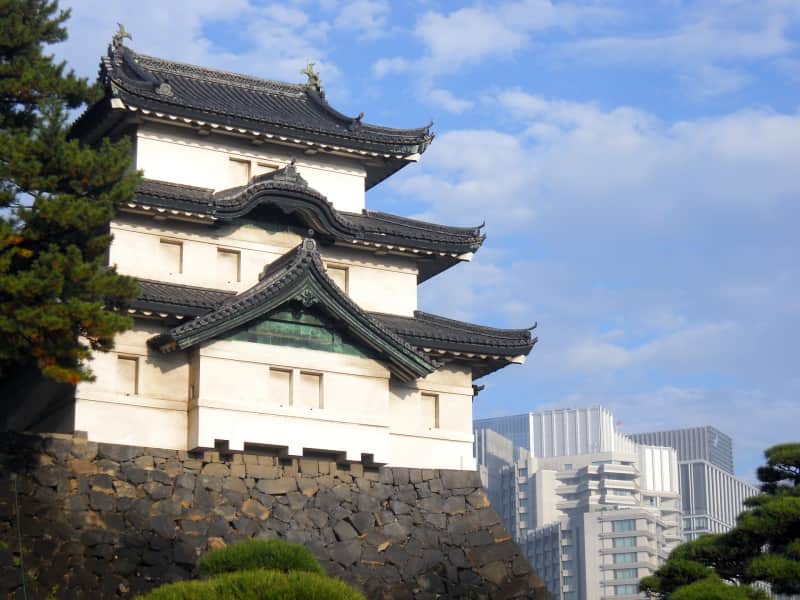

The outer grounds, particularly near Nijubashi Bridge, are among the most photographed spots in Tokyo. The double-arched stone and steel bridge reflects beautifully in the water, especially in the soft light of early morning or late afternoon. Free guided tours of the palace grounds (excluding the interior) are offered by the Imperial Household Agency, but you’ll need to book online in advance. They’re conducted in Japanese, though audio guides in English and other languages are available.
Whether you’re walking under blooming cherry trees or just soaking in the contrast between samurai-era architecture and the modern skyline, the Imperial Palace offers a quiet but powerful reminder of how tradition still shapes everyday life in Japan.
Before you go
The East Gardens are mostly level but feature paths and historic stone steps so wear comfortable shoes. Free English audio guides are available for the guided tours, while personal tripods are generally discouraged in crowded areas. Restrooms are located inside, near the Museum of Imperial Collections. Signage is mostly bilingual, though a few spots are Japanese-only. No bag checks unless attending a special event. Pets and bicycles are not permitted.
The East Gardens are closed every Monday and Friday, unless those days fall on a national holiday, in which case the garden opens and closes the following day instead. They are also closed from December 28 to January 3 for New Year maintenance. The inner grounds of the Imperial Palace are only open to the public on two special occasions: January 2 for the New Year’s Greeting and February 23 for the Emperor’s Birthday, when visitors can see members of the Imperial Family appear briefly. Additionally, a limited public walk-through along Inui Street is sometimes allowed in spring and autumn, typically for about a week during the cherry blossom and autumn foliage seasons.
When to go
Spring offers spectacular cherry blossom views around the Imperial Palace grounds, making it the most enchanting season to visit. Autumn brings vibrant foliage and comfortable temperatures, ideal for exploring the extensive gardens and moats. Early morning visits between 9:00-10:00 AM provide the best experience with fewer crowds and pleasant temperatures. Weekday afternoons tend to be less crowded than mornings, making them perfect for leisurely walks around the palace grounds.
Public review summary
Visitors consistently praise the palace gardens while noting limited interior access. The guided tours receive mixed feedback, with some finding them informative but others feeling underwhelmed by restricted viewing areas. Summer visitors often mention the lack of shade, while spring brings popular cherry blossoms. Many highlight the historical significance and peaceful atmosphere despite crowded tour groups and strict entry requirements.
What you'll find here
Location & access
- DirectionsAddress
1-1 Chiyoda, Chiyoda City, Tokyo 100-8111, Japan
- How to get there
By Public Transportation: The East Gardens lie just a 5‑minute walk from Otemachi and Takebashi subway stations. For the outer gardens and Nijubashi Bridge, exit at Tokyo Station (Marunouchi side) or Kokyo Gaien Mae Station on the Chiyoda line.
By Car: Public parking is unavailable inside the grounds. Nearby parking garages around Marunouchi or Otemachi are your best bet. Most drop‑off zones prohibit stopping, so plan to park and walk in.
Common questions
Do I need to make a reservation to visit the Imperial Palace?
While the East Gardens are freely accessible, guided tours of the Imperial Palace grounds require advance planning. Tours are offered twice daily at 10:00 AM and 1:30 PM Tuesday through Saturday. Tour tickets are distributed on a first-come basis starting at 9:00 AM and 12:30 PM respectively.
What's the best way to get into the Imperial Palace grounds?
Enter through Kikyomon Gate, which is the designated entrance for palace tours. You'll need your passport for identification. The East Gardens can be accessed separately without a tour, but to see the palace grounds, joining an official guided tour is the only option.
Can I have a picnic at the Imperial Palace?
No, picnics are not allowed within the Imperial Palace grounds or gardens. Security officers actively enforce this rule. Food and drinks are not permitted inside the premises, though there is a coffee shop located by the viewpoint up the hill.
Is the Imperial Palace wheelchair accessible?
Yes, the Imperial Palace offers wheelchair-accessible entrances and facilities. The grounds are designed to accommodate visitors with mobility needs, though some historical areas may have limited accessibility due to preservation requirements.
What can I actually see during a palace visit?
While you cannot enter the palace buildings themselves, visitors can view the impressive architecture from designated viewing areas, explore the scenic gardens, and see historic structures like gates and walls. The guided tour provides external views of key buildings and detailed historical commentary.
Bring this spot to life with a local photographer
Book a vetted local photographer who knows the best light, angles, and timing for this location.