

At a glance
A sacred beach in Izumo, Shimane Prefecture, where Japanese mythology meets natural beauty. Connected to Izumo Taisha Shrine through ancient rituals, this wide sandy shore features Bentenjima Island with its distinctive torii gate. Free parking and wheelchair accessibility available.
Photographs
Inasa Beach
Nestled about 1 km west of Izumo Taisha in Shimane, Inasa Beach is a sacred shoreline steeped in ancient myth. This is where the god Takemikazuchi-no‑Kami is said to have landed to negotiate the handing over of the land with Okuninushi-no‑Mikoto, a fabled chapter in the kuni‑yuzuri legend.
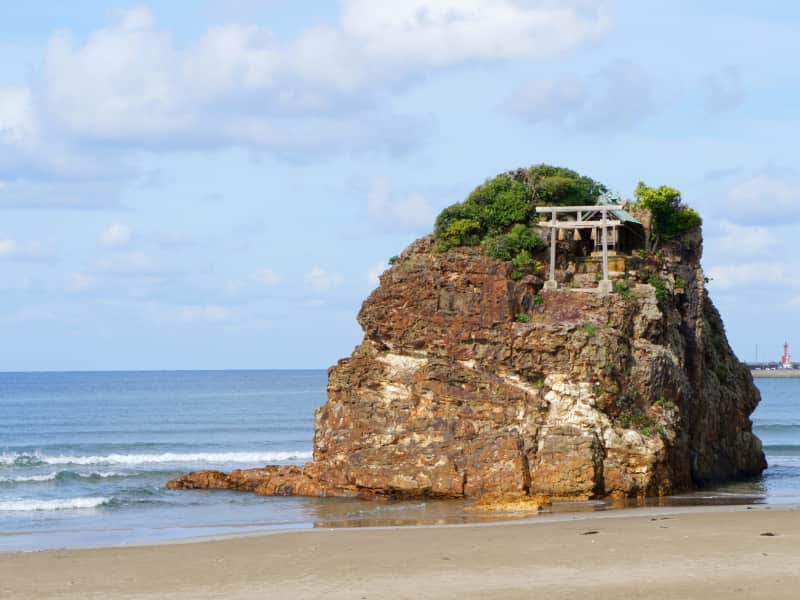


Rising from the sand just offshore is the rounded rock known as Bentenjima, crowned with a small shrine and a Shinto torii gate above. Initially called an island, it is now connected to the beach by sand, making it a must-see silhouette at sunrise and sunset. The torii gate marks the sacred presence of Toyotamahime‑no‑Mikoto, guardian of the sea.
Each year on the 10th day of the 10th lunar month, Inasa Beach becomes the gathering point for yaoyorozu no kami, the countless Shinto deities coming to Izumo Taisha. A solemn ritual at dusk ushers them ashore before they continue to the grand shrine. A cherished custom follows: visitors gather dry sand from Inasa Beach and later exchange it for sacred sand at Soga-no‑Yashiro within Izumo Taisha, believed to purify the land and bring blessings.


Today the beach is peaceful rather than recreational: swimming is no longer allowed since 2022. Instead, people come to walk the white sandy arc framed by pine trees, to reflect, and to witness the dramatic sunset behind Bentenjima. That silhouette with the torii gate makes for a poetic and photogenic scene.
Despite restricted swimming, the beach remains welcoming. There is free parking and a mostly paved path suitable for wheelchair users, allowing most visitors to feel the spiritual ambiance comfortably.
Before you go
Visiting is free and straightforward. There is a free parking lot and a mostly paved path from the lot to the shoreline, making access wheelchair-friendly. Swimming is no longer allowed, so the focus is on walking, reflection, and photography. Tripods are generally fine to use, but large setups might be discouraged if others are near the torii view. The sands are soft and warm in the sun, comfortable footwear is recommended.
Open 24/7, all year round — no holiday closures.
When to go
Spring and autumn offer the most pleasant temperatures for visiting Inasa Beach, with mild weather perfect for collecting sacred sand and beach walks. Summer brings vibrant sunsets and evening crowds gathering to watch the mystical Benten Island silhouetted against the sky. Early morning visits between 6 AM and 8 AM provide the most serene experience, with fewer visitors and optimal lighting for photography. Weekdays see significantly lower crowds than weekends, making them ideal for a peaceful visit and easier parking.
Average crowd levels throughout the day, based on historical data.
Public review summary
Visitors highlight the beachs spiritual atmosphere and scenic beauty, particularly praising the mysterious shrine on Benten Island and the calming waves. The clean, well-maintained facilities and free parking receive consistent positive mentions. Some note peak season parking challenges and occasional crowding issues. Recent reports mention construction scaffolding impacting views, while a few visitors express concern about increasing beach litter from tourism.
What you'll find here
Location & access
- DirectionsAddress
Taishacho Kizukikita, Izumo, Shimane 699-0702, Japan
- How to get there
By Public Transportation: From Izumo Taisha‑Mae Station (Ichibata Electric Railway), it’s a pleasant 12 to 15 minute walk west to the beach . You can also take the Hinomisaki Line bus from JR Izumo‑shi Station, alighting at the Inasa‑no‑Hama stop, then walk a short distance.
By Car: It’s only a 3‑minute drive from Izumo Taisha. Follow signs for “Inasa‑no‑Hama,” and you’ll arrive at a small lot with free parking and toilets.
Common questions
Is the sand at Inasa Beach really connected to Izumo Taisha Shrine?
Yes, there is a traditional practice of collecting sand from Inasa Beach and exchanging it at Izumo Taisha Shrine. Visitors can take sand from the beach to the shrine's Susanoo Shrine area, where they can exchange it for sacred sand to take home as a spiritual talisman.
Is there parking available at Inasa Beach?
Yes, there is a free, spacious parking lot with restroom facilities. The main parking area (Parking Lot No. 1) is well-maintained and easily accessible. There's also a shaded parking area located slightly north of the main lot.
Can I collect and take sand home from the beach?
While you can collect sand for the shrine exchange ritual, there are specific rules. The sand from the right side of Bentenjima is not to be taken, but sand from other areas can be collected for the exchange ritual at Izumo Taisha Shrine.
Is Inasa Beach wheelchair accessible?
Yes, the beach has wheelchair-accessible parking facilities. The parking lot area is well-maintained and designed to accommodate visitors with mobility needs.
What makes Inasa Beach historically significant?
Inasa Beach is renowned for its connection to Japanese mythology and serves as a sacred site. The beach features Benten Island with its distinctive shrine and torii gate, making it an important spiritual and historical landmark in Izumo's cultural landscape.

Bring this spot to life with a local photographer
Book a vetted local photographer who knows the best light, angles, and timing for this location.