

At a glance
Kenrokuen Garden in Kanazawa is a traditional Japanese strolling garden and one of Japan's Three Great Gardens, designated for its exceptional beauty across all seasons. Originally developed by the ruling Maeda clan over two centuries, the garden showcases classical landscape design featuring tranquil ponds, historic stone lanterns including the iconic Kotoji Lantern, meticulously shaped pine trees with distinctive yukitsuri snow supports in winter, and natural water features including Japan's oldest fountain operating on natural pressure.
Photographs
Kenrokuen Garden
Kenrokuen Garden stands as one of Japan’s three great gardens, a masterpiece of landscape design spanning over 11 hectares in the heart of Kanazawa. Originally developed over two centuries by the ruling Maeda clan, this traditional strolling garden exemplifies the six essential attributes of perfect garden design: spaciousness, seclusion, artificiality, antiquity, water features, and panoramic views. The name “Kenrokuen” literally means “Garden of Six Sublimities,” derived from classical Chinese garden theory.

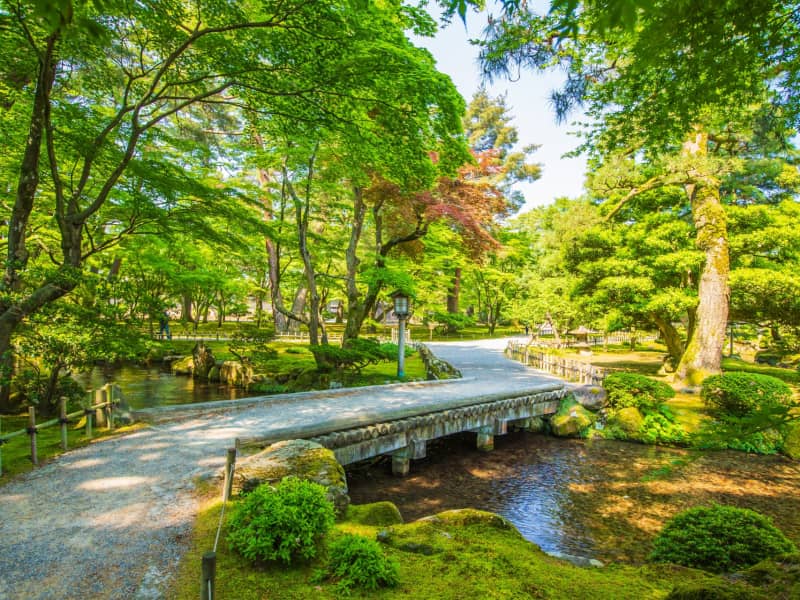

Visitors follow winding paths through meticulously maintained landscapes featuring the iconic Kotoji stone lantern standing at the edge of Kasumiga-ike Pond, the natural fountain powered entirely by water pressure, and the distinctive Neagari-no-Matsu pine with its exposed roots. The garden showcases seasonal beauty year-round, from cherry blossoms and fresh green maple leaves in spring to the dramatic yukitsuri rope supports protecting pine trees from winter snow. Each vista reveals careful composition where water, stone, and vegetation create harmonious scenes.


The grounds contain numerous historical features including teahouses where visitors can experience traditional matcha ceremonies, stone bridges crossing serene ponds, and strategically placed viewing platforms. The garden’s design allows multiple paths through different landscape styles, from open pond views to intimate moss-covered forest areas. Wheelchair-accessible entrances and paved paths make much of the garden navigable for all visitors, though some gravel sections and slopes exist throughout the expansive grounds.
Seasonal and Event Highlights
- Spring: Cherry blossoms and plum blossoms transform the garden, typically from late March to early April.
- Summer: Lush greenery, irises, and the garden’s ponds create a peaceful atmosphere with vibrant foliage.
- Autumn: Brilliant maple and ginkgo foliage make this one of Kanazawa’s premier autumn color destinations from mid-November.
- Winter: The famous yukitsuri rope supports and snow-covered landscapes create Kenrokuen’s most iconic seasonal scenery.
- Event: Seasonal evening illuminations are held on selected dates throughout the year, including during cherry blossom season, autumn foliage, and winter snow events.
Before you go
Admission is 320 yen for adults (18+), while visitors under 18 can enter free of charge. Comfortable walking shoes are recommended, as the garden covers over 11 hectares with some gravel paths and gentle slopes. Much of the garden is wheelchair accessible via designated entrances, with accessible toilets available. Teahouses, rest areas, souvenir shops, vending machines, and drinking fountains are located within or near the grounds. Tripods are generally permitted for personal photography but should not obstruct pathways or other visitors, especially during peak seasons and special illumination events.
Kenrokuen is open year-round. Opening hours are generally 7:00 AM to 6:00 PM from March 1 to October 15, and 8:00 AM to 5:00 PM from October 16 to the end of February. Extended evening hours are offered during selected seasonal illumination events.
When to go
Spring brings spectacular cherry blossoms in early April, while autumn transforms the garden with vibrant maple foliage from mid-November. Winter offers the iconic yukitsuri snow supports on pine trees from November through March, and summer provides lush greenery with special firefly viewing events during the rainy season. Arrive right at opening time around 7 AM for peaceful exploration with minimal crowds and excellent morning light for photography. Weekdays, particularly Tuesday through Thursday, offer significantly fewer visitors than weekends and allow for more intimate appreciation of the garden's six (scenic qualities). The garden reaches peak capacity on weekend afternoons, especially from noon to 2 PM when tour groups and day-trippers converge around signature features like the Kotoji Lantern and Kasumigaike Pond. Sunday afternoons consistently see the highest visitor numbers throughout the year. Early morning hours before 8 AM on any day of the week provide the most tranquil experience, with occupancy levels below 30 percent and opportunities to photograph iconic features without crowds obstructing views.
Average crowd levels throughout the day, based on historical data.
Public review summary
Visitors consistently praise the gardens meticulous maintenance and serene beauty across all seasons. Many recommend early morning visits to avoid crowds and enjoy peaceful strolls. The iconic Kotoji Lantern, Kasumigaike Pond, and unique pine trees draw particular admiration. Some note the extensive walking paths can be tiring and wish for more rest areas. The affordable admission and accessibility features earn positive feedback.
What you'll find here
Location & access
- DirectionsAddress
1 Kenrokumachi, Kanazawa, Ishikawa 920-0936, Japan
- How to get there
By Public Transportation:
From JR Kanazawa Station, take the Hokuriku Railroad or Hokutetsu bus bound for Kenrokuen or Kanazawa Castle. Get off at Kenrokuen-shita / Kanazawa Castle or Kenrokuen bus stop, then walk about 3 to 5 minutes to the garden entrance. The garden is also served by the Kanazawa Loop Bus, making it easy to combine with nearby attractions.
By Car:
Kenrokuen is about 15 to 20 minutes from the Kanazawa Higashi IC or Kanazawa Nishi IC on the Hokuriku Expressway. There is no parking inside the garden, but several paid public parking lots are available around Kenrokuen and Kanazawa Castle Park within a short walking distance.
Common questions
What makes Kenrokuen Garden one of Japan's perfect gardens?
Kenrokuen Garden is one of Japan's three most famous gardens, named for possessing six essential landscape elements: grandeur, tranquility, human ingenuity, antiquity, water features, and panoramic views. This combination of qualities, typically contradictory in garden design, makes it exceptionally rare and valuable.
Is Kenrokuen Garden free to enter?
Admission to Kenrokuen Garden is generally free during cherry blossom week in early April, during Obon festival (August 13-16), on Culture Day, and during the first three days of New Year. Visitors aged 65 and over receive free admission year-round with identification.
What is yukitsuri and when can I see it at Kenrokuen?
Yukitsuri refers to traditional rope structures placed on pine trees to protect branches from heavy snow. Installation typically begins in early November and continues for over a month. Visitors can watch craftsmen perform this traditional technique throughout the installation period.
What seasonal highlights should I know about?
Kenrokuen offers distinct beauty each season: cherry blossoms and plum blossoms in spring, fresh greenery in summer, autumn foliage in fall, and snow-covered landscapes with yukitsuri in winter. The garden hosts special night openings during cherry blossom season and a firefly festival during rainy season.
What accessibility features does Kenrokuen Garden provide?
Kenrokuen Garden features wheelchair accessible entrances and designated wheelchair accessible parking areas. The garden has paid parking lots and accepts multiple payment methods including credit cards, PayPay, au PAY, and Transit IC cards for visitor convenience.

Bring this spot to life with a local photographer
Book a vetted local photographer who knows the best light, angles, and timing for this location.