

At a glance
The Kitazawa Flotation Plant stands as a haunting industrial relic from the 1930s on Sado Island, where advanced technology once separated precious gold and silver from crushed ore. Today, ivy-covered concrete structures rise dramatically against the sky, creating an atmospheric scene often compared to ancient ruins. This free-to-access historical landmark features nighttime illuminations that transform the ruins into a fantastical spectacle, complemented by an onsite cafe and souvenir shop where visitors can touch a genuine gold bar.
Photographs
Kitazawa Flotation Plant
The Kitazawa Flotation Plant stands as a haunting testament to Sado Island's rich mining heritage, often compared to the fantastical ruins of Laputa from Studio Ghibli films. Completed in 1938, this massive industrial facility once processed ore from the nearby Sado Gold Mine, separating precious gold and silver from waste materials through advanced flotation technology. Today, the surviving concrete foundations, draped in cascading ivy and vegetation, create an atmospheric blend of industrial archaeology and natural reclamation that captivates photographers and history enthusiasts alike.


Visitors can explore the grounds freely, walking across the lawn area to view the towering ruins and the adjacent 50-meter thickener, both part of the nationally designated Sado Gold and Silver Mine historic site. During the annual illumination period, the site transforms dramatically after dark with colorful, changing LED lights and music, creating a magical atmosphere around the industrial ruins.

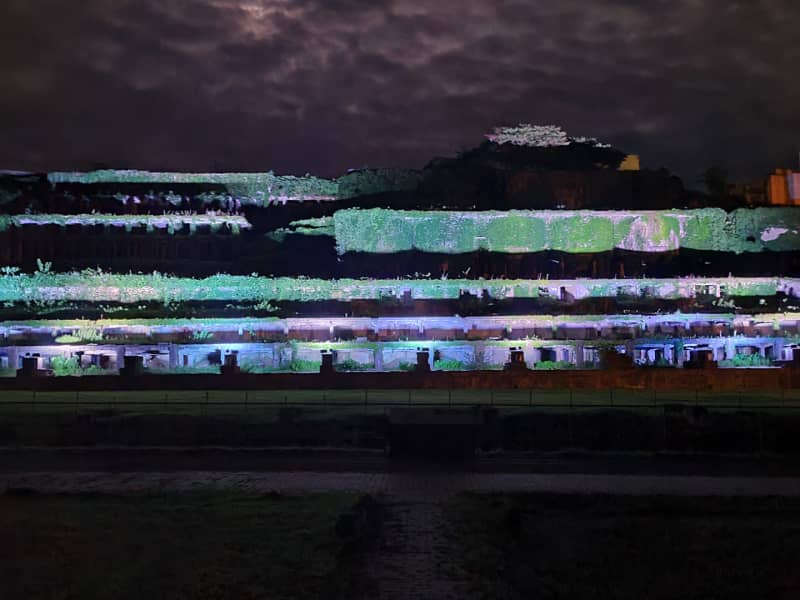
The location pairs perfectly with a visit to the Sado Gold Mine nearby, providing essential context about the facility's historical role in Japan's mining industry. Early morning visits offer peaceful exploration ideal for photography, while evening visits during the illumination period reveal an entirely different side of the ruins.
Seasonal and Event Highlights
- Spring: Fresh greenery begins covering the concrete ruins, creating a striking contrast between vegetation and industrial architecture.
- Summer: Dense green vegetation gives the ruins their most dramatic overgrown appearance, although daytime visits can be hot and humid.
- Autumn: Cooler weather makes daytime exploration more comfortable, while changing vegetation adds warmer tones around the ruins.
- Illumination: Seasonal evening illuminations typically run from spring through early winter, with colorful LED lighting and music continuing until around 10 PM.
Before you go
Entry to the Kitazawa Flotation Plant ruins and surrounding grounds is free. The site is primarily viewed from the maintained lawn and designated areas, as the historic structures themselves are not open for climbing or interior exploration. Wear comfortable shoes, especially after rain when the grounds may be damp. Toilets and limited visitor facilities are available nearby. Photography is one of the main reasons to visit, but avoid obstructing pathways with tripods, particularly during busy evening illuminations.
The outdoor ruins can generally be visited year-round and do not follow regular closing days. Seasonal illuminations operate separately, typically from spring through early winter in the evening, so dates and hours should be checked before visiting.
When to go
Visit during spring or autumn when comfortable temperatures make exploring the outdoor ruins pleasant, and ivy-covered concrete creates striking photo opportunities. Summer brings vibrant greenery that enhances the Laputa-like atmosphere, while evening illuminations transform the site into a magical landscape from 7PM onwards. Early morning visits before 9AM offer peaceful exploration with minimal crowds and excellent natural lighting for photography. Weekday mornings provide the most relaxed experience, though evening visits after 7PM reward visitors with spectacular illumination displays and cooler temperatures during summer months.
Average crowd levels throughout the day, based on historical data.
Public review summary
Visitors consistently praise the atmospheric ruins for their photogenic, Laputa-like quality and recommend experiencing both daytime greenery and nighttime illumination. Many appreciate the free admission, nearby souvenir shop with gold bar exhibit, and family-friendly lawn area. Some note limited shade during summer and mosquitoes near the river. Early morning visits offer peaceful exploration before crowds arrive.
What you'll find here
Location & access
- DirectionsAddress
Japan, 〒952-1539 Niigata, Sado, Aikawa Kitazawamachi, 3−2
- How to get there
By Public Transportation:
From Ryotsu Port, take a bus toward the Aikawa area. The journey generally takes around one hour, followed by a short walk from the nearest bus stop to the Kitazawa Flotation Plant. Bus services on Sado can be relatively infrequent, so checking the return schedule in advance is recommended.
By Car:
The site is roughly a 50 to 60-minute drive from Ryotsu Port. Driving is one of the easiest ways to combine Kitazawa with the nearby Sado Gold Mine and other historic mining sites around Aikawa. Parking is available near the site.
Common questions
What is the Kitazawa Flotation Plant and when was it built?
The Kitazawa Flotation Plant is a historical landmark and national historic site from the 1930s. It was used to separate silver and gold from waste ore extracted from the nearby Sado Gold Mine. The facility operated until 1989 and now stands as overgrown ruins with ivy-covered structures.
Is there an admission fee to visit the Kitazawa Flotation Plant ruins?
No, admission to the Kitazawa Flotation Plant ruins is completely free. The site is open 24 hours a day, seven days a week, making it accessible at any time for visitors to explore this industrial heritage site at their convenience.
Are the ruins lit up at night?
Yes, the Kitazawa Flotation Plant features nighttime illumination that creates a magical, fantastical atmosphere. The light-up begins at 7 PM with colorful lights that change throughout the evening, transforming the ruins into a scene reminiscent of Castle in the Sky.
Is Kitazawa Flotation Plant suitable for families with children?
Yes, the site is good for kids and families. There's a grassy lawn area where children can run around safely, and nearby facilities include a souvenir shop where visitors can touch a 300 million yen gold bar, which children find particularly exciting.
How long does it take to visit the Kitazawa Flotation Plant?
Most visitors spend approximately 1 hour exploring the Kitazawa Flotation Plant ruins. This allows enough time to view the structures, take photos, relax on the lawn, and visit the adjacent souvenir shop and cafe that offer displays related to the Sado Gold Mine.

Bring this spot to life with a local photographer
Book a vetted local photographer who knows the best light, angles, and timing for this location.