

At a glance
Kuhonbutsu Joshin-ji Temple is a historic Jodo sect Buddhist temple in Setagaya City's Okusawa neighborhood, established in 1678. The temple is renowned for its nine monumental Amida Buddha statues housed in three halls, representing the nine levels of rebirth in Pure Land Buddhism. Set within expansive wooded grounds featuring seasonal foliage, ancient ginkgo trees, and peaceful gardens, the temple offers a tranquil sanctuary despite its urban location near Kuhonbutsu Station.
Photographs
Kuhonbutsu Joshin-ji Temple
Kuhonbutsu Joshin-ji Temple, established in 1678 in Setagaya’s quiet Okusawa neighborhood, offers a remarkably tranquil escape within Tokyo’s urban landscape. This historic Jodo sect temple is renowned for its nine large Amida Buddha statues housed in three halls, representing the nine grades of rebirth in Pure Land Buddhism. The spacious grounds, spanning approximately 120,000 square meters, create an atmosphere that feels worlds away from the surrounding city despite being just minutes from Kuhonbutsu Station.


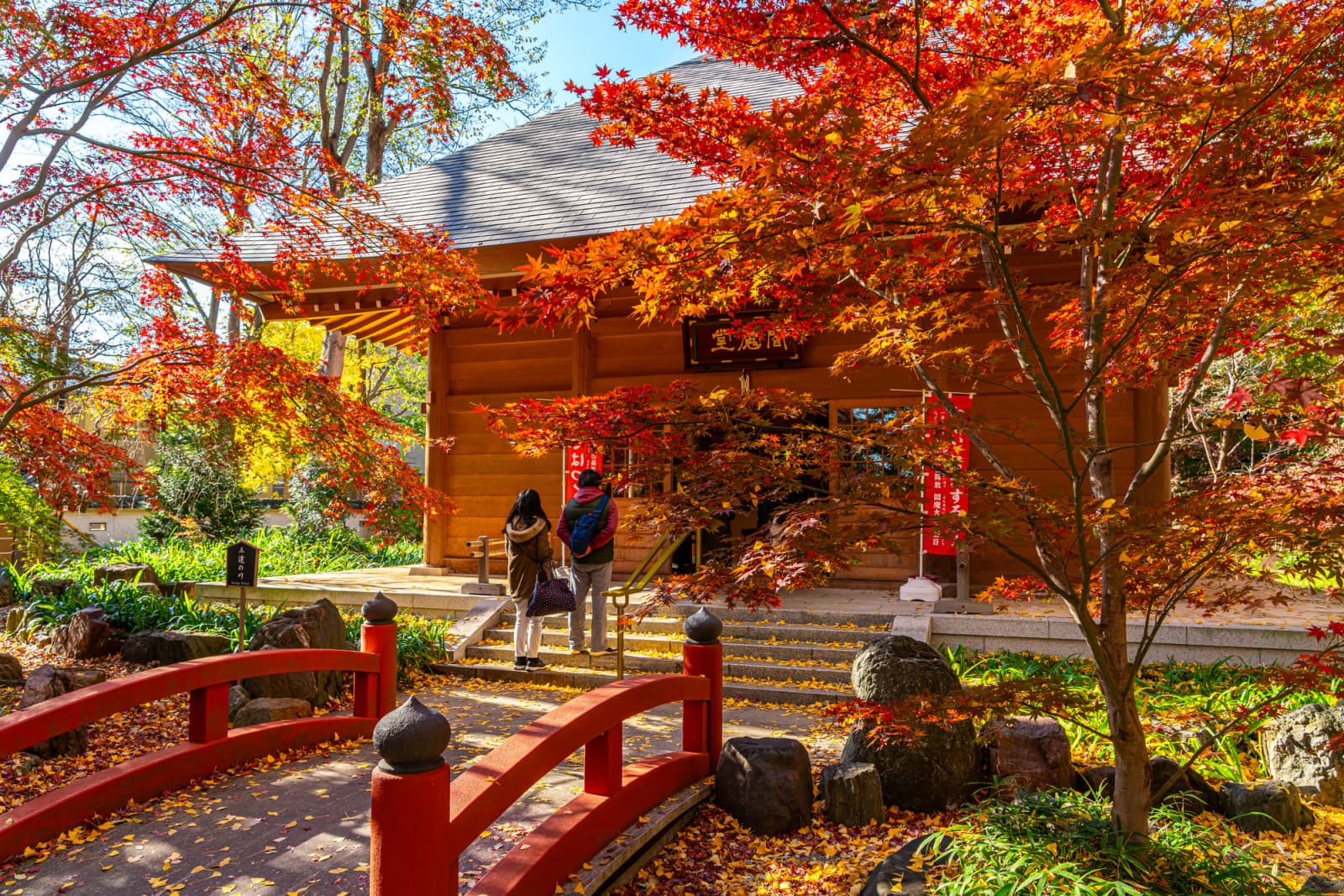
The temple’s wooded setting provides stunning seasonal beauty, particularly during autumn when vibrant red and gold foliage creates a spectacular backdrop to the traditional architecture. Visitors can explore the main hall with its Shakyamuni Buddha statue, stroll through the expansive grounds, and view the impressive ginkgo tree designated as a Tokyo Metropolitan Natural Monument. The temple offers goshuin temple stamps, including a special version on gold-colored paper for those contributing to the temple’s major Buddhist statue restoration project.


The peaceful atmosphere attracts those seeking spiritual reflection and natural beauty, with gravel pathways winding through lush greenery. The temple grounds feature seasonal flowers including cherry blossoms in spring and sagiso orchids in summer, while the main hall, known as Ryugoden, has two guardian dragons enshrined on its inner pillars.
Seasonal and Event Highlights
- Spring: Cherry blossoms add soft color to the wooded temple grounds, making this one of the more attractive seasons for a quiet visit.
- Summer: Sagiso, Setagaya’s symbolic white orchid, can be seen in the Sagiso Garden within the temple grounds, generally from late July into mid-August. Summer can otherwise be hot and humid.
- Autumn: One of the temple’s strongest seasons, with maples and the large historic ginkgo producing vivid red and yellow foliage around the traditional halls.
- Winter: Plum blossoms provide a quieter seasonal highlight later in winter, with fewer visitors and clearer views through the temple’s trees.
- Omen Kaburi: The important Twenty-Five Bodhisattvas Raigo Ceremony is now held once every four years on May 5. The next ceremony is scheduled for May 5, 2028.
Before you go
Admission to Kuhonbutsu Joshin-ji Temple is free, although donations are welcome and goshuin stamps or other temple items have separate fees. The grounds are spacious and generally easy to explore, but gravel paths and some steps around temple buildings may make certain areas less convenient for wheelchairs or strollers. Public toilets are available. As an active Buddhist temple, visitors should keep noise low and avoid interfering with worship or ceremonies. Photography around the grounds is generally suitable, but be respectful around worshippers and follow any posted restrictions inside buildings. For serious photography, avoid blocking paths with tripods, particularly during busy autumn foliage periods or ceremonies.
The temple grounds are generally open daily, including weekends and public holidays. Access to individual halls, temple offices, goshuin services, and special areas may follow separate hours or change during ceremonies and temple events, so visitors coming for a specific purpose should check the temple’s latest official notices.
When to go
Autumn is the most spectacular season to visit Kuhonbutsu Joshin-ji Temple, when vibrant red maple leaves and golden ginkgo trees transform the wooded grounds into a breathtaking display, typically peaking from late November through early December. Spring brings beautiful cherry blossoms along the pathways, while summer showcases lush greenery and seasonal flowers throughout the spacious temple grounds. Early morning visits between 6AM and 8AM offer the most peaceful experience with minimal crowds and soft natural lighting filtering through the trees. Weekday afternoons provide a quieter atmosphere compared to weekends, though the temple maintains a generally tranquil environment throughout the week. The temple experiences its highest visitor numbers on weekend afternoons, particularly during autumn foliage season when photography enthusiasts and families gather to enjoy the scenic grounds. Sunday afternoons from 12PM to 2PM typically see peak attendance. For the most serene experience with virtually no crowds, visit on weekday mornings when the temple opens at 6AM, especially Monday through Thursday between 6AM and 9AM when you can explore the sacred halls and gardens in peaceful solitude.
Average crowd levels throughout the day, based on historical data.
Public review summary
Visitors consistently praise the temples remarkably peaceful atmosphere despite its central Tokyo location, with many noting the spacious grounds feel like stepping into Kyoto. The autumn foliage draws particular acclaim, though some mention seasonal timing can be tricky. Most appreciate the free admission and well-maintained Buddha statues, while a few found ongoing restoration work limiting. The early morning quiet is frequently recommended.
What you'll find here
Location & access
- DirectionsAddress
7 Chome-41-3 Okusawa, Setagaya City, Tokyo 158-0083, Japan
- How to get there
By Public Transportation:
Take the Tokyu Oimachi Line to Kuhonbutsu Station. Joshin-ji is approximately a 3 to 5-minute walk from the station, making it one of the more accessible historic temple grounds in Setagaya.
By Car:
The temple is in a quiet residential part of Setagaya where surrounding roads can be narrow. Driving is possible, but public transportation is generally more convenient, particularly during autumn foliage periods and temple events.
Common questions
What is Kuhonbutsu Joshin-ji Temple known for?
Kuhonbutsu Joshin-ji Temple is renowned for its nine Amida Buddha statues housed in three halls, representing the nine stages of rebirth in Pure Land Buddhism. Established in 1678, the temple is especially famous for its spectacular autumn foliage, with vibrant red maples and golden ginkgo trees set within wooded grounds that create a peaceful escape from Tokyo's urban atmosphere.
How do I get to Kuhonbutsu Joshin-ji Temple?
Kuhonbutsu Joshin-ji Temple is conveniently located just a few minutes' walk from Kuhonbutsu Station on the Tokyu Oimachi Line in Setagaya City. The temple is also within walking distance from Jiyugaoka Station. The approach to the temple begins right after exiting the station, making it easily accessible for visitors.
Can I receive a goshuin stamp at Kuhonbutsu Joshin-ji Temple?
Yes, you can receive goshuin temple stamps at Kuhonbutsu Joshin-ji Temple at the main hall. The temple offers several types of goshuin, including regular stamps and special editions. During restoration periods for the Buddha statues, special gold leaf goshuin are available through donations. Stamps are available until 4:30 PM daily.
Is there an admission fee for Kuhonbutsu Joshin-ji Temple?
Admission to Kuhonbutsu Joshin-ji Temple is completely free. Visitors can explore the spacious temple grounds, view the nine Amida Buddha statues, and enjoy the seasonal foliage without any entrance charge. The temple is open daily from 6 AM to 4:30 PM, making it an accessible destination for budget-conscious travelers.
What should I wear when visiting Kuhonbutsu Joshin-ji Temple?
Comfortable walking shoes are highly recommended when visiting Kuhonbutsu Joshin-ji Temple, as the grounds feature many gravel paths and unpaved areas. The temple grounds are spacious, encouraging leisurely exploration. During warmer months, insect repellent is advisable due to mosquitoes in the wooded areas. Dress modestly and respectfully as it is an active Buddhist temple.
Bring this spot to life with a local photographer
Book a vetted local photographer who knows the best light, angles, and timing for this location.