

At a glance
Kyorinbo Temple is a centuries-old Buddhist temple in Omihachiman featuring moss-covered rock gardens and stunning autumn foliage displays. The temple grounds showcase approximately 200 maple trees alongside traditional Edo-period thatched buildings. During fall, nighttime illuminations highlight the contrast between vibrant red leaves and surrounding bamboo groves, creating a serene atmosphere for visitors seeking a peaceful retreat.
Photographs
Kyorinbo Temple
Kyorinbo Temple stands as a centuries-old Buddhist sanctuary nestled in the mountains of Omihachiman, renowned for its spectacular autumn foliage displays and meticulously maintained rock gardens. Founded in 605 AD by Prince Shotoku, the temple features approximately 200 ancient maple trees that create a vibrant canopy of red and yellow leaves each fall, complemented by moss-covered gardens that glow emerald against the seasonal colors. The temple grounds include an Edo-period thatched cottage and a Momoyama-era rock garden designed by Kobori Enshu, offering visitors a serene journey through Japanese garden aesthetics and Buddhist heritage.
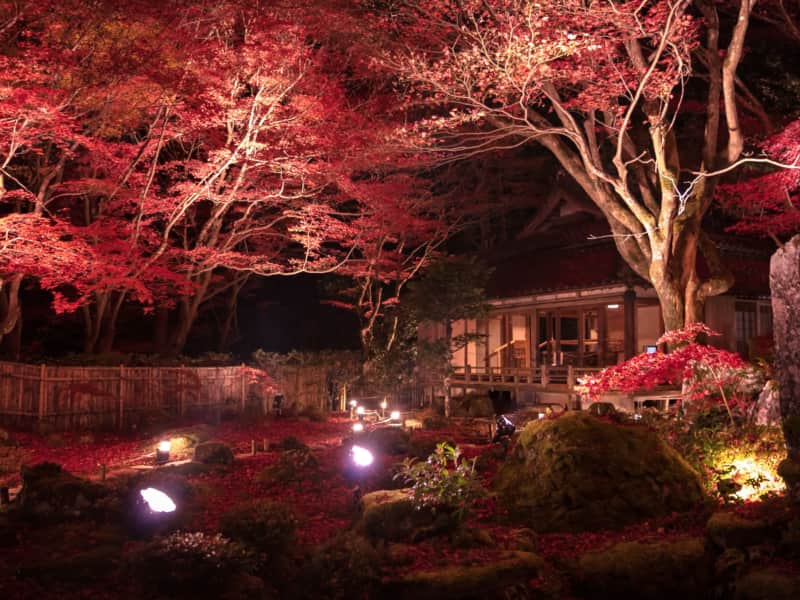


The temple operates on a limited seasonal schedule, typically opening to the public during spring and autumn, with its most popular period centered around late November when the maple foliage peaks. During this time, special evening illuminations are sometimes held, casting soft light over the moss gardens and maple trees, creating a quiet, almost otherworldly atmosphere. Access requires traveling through narrow residential roads, though staff provide traffic guidance during peak periods, and free parking accommodates approximately 40-50 vehicles near the entrance.


The viewing path winds gently upward through the temple grounds, making it accessible for visitors of various mobility levels with minimal steep steps. The combination of fallen maple leaves carpeting the moss garden creates a layered visual effect that photographers particularly appreciate, though tripods and monopods are prohibited to maintain visitor flow. Restroom facilities are available only in the parking area, so visitors should plan accordingly before entering the temple grounds for their approximately one-hour exploration of this tranquil mountain retreat.
Before you go
Entry fee is typically around ¥700-¥1,000 during special openings (varies by season and illumination events). During the main autumn foliage season, typically from early November to mid-December, the temple opens daily to visitors. Outside of this peak period, access is usually limited to weekends and public holidays, with weekday visits generally not available unless arranged in advance for larger groups. Tripods, monopods, and drones are not allowed, and lingering too long for photography is discouraged during busy periods. Restrooms are located near the parking area rather than inside the temple grounds. There are no major shops or cafés on-site, so bring water if needed.
Kyorinbo does not follow regular daily opening hours year-round. It opens seasonally during spring and autumn, with specific dates announced each year. During peak autumn foliage, it may open daily and include limited-time evening illumination hours, typically until early evening.
When to go
Late autumn offers the most spectacular views at Kyorinbo Temple, particularly from late November through early December when approximately 200 ancient maple trees create a vibrant red canopy. The temple opens special viewing periods during autumn foliage season, including enchanting nighttime illuminations from mid-November to early December that showcase the contrast between fiery maple leaves and verdant bamboo groves. During the main autumn foliage season the temple opens daily to visitors. Outside of this peak period, access is usually limited to weekends and public holidays.
Public review summary
Visitors consistently praise the temples stunning autumn foliage, particularly the vibrant red maple leaves contrasting beautifully with verdant moss-covered gardens and illuminated bamboo forests. Many appreciate the peaceful atmosphere and well-maintained grounds, though some note the narrow access roads and crowded conditions during peak season. The admission fee draws mixed reactions, with most finding it worthwhile for the spectacular scenery despite being higher than typical area temples.
What you'll find here
Location & access
- DirectionsAddress
1145 Azuchicho Ishidera, Omihachiman, Shiga 521-1331, Japan
- How to get there
By Public Transportation:
From Kyoto, take the JR Biwako Line to Omi-Hachiman Station. From there, take a local bus toward the Ishidera area, followed by a short walk. Bus services are limited, especially outside peak seasons, so timing needs to be planned carefully.
By Car:
Driving is the most convenient option. From central Kyoto or Shiga areas, it takes around 40–60 minutes. The final approach involves narrow residential and mountain roads, so drive carefully. A small free parking lot is available near the temple, but it fills quickly during peak autumn season.
Common questions
What is the best time to see autumn leaves at Kyorinbo Temple?
The best time to see autumn leaves at Kyorinbo Temple is typically late November to early December. According to visitor experiences, around November 23rd to December 1st offers peak viewing conditions. The temple offers special nighttime illuminations during this period from mid-November to early December.
Is there parking available at Kyorinbo Temple?
Yes, Kyorinbo Temple offers free parking during the autumn viewing season. The parking lot accommodates approximately 40-50 vehicles. During peak times, temporary parking areas are also available nearby. Staff members help direct traffic on the narrow access roads leading to the temple.
Are tripods allowed for photography at Kyorinbo Temple?
No, tripods and monopods are strictly prohibited at Kyorinbo Temple. All photography must be handheld. This policy helps maintain visitor flow and allows everyone to enjoy the gardens comfortably, especially during crowded autumn foliage season when many visitors come to photograph the scenic landscapes.
How much time should I plan for visiting Kyorinbo Temple?
Most visitors spend approximately 1 hour exploring Kyorinbo Temple. The temple grounds are relatively compact with gentle slopes, making it accessible for elderly visitors and families. The main attractions include the rock garden, thatched buildings, bamboo forest, and approximately 200 maple trees throughout the grounds.
What is the entrance fee for Kyorinbo Temple?
During the autumn viewing season, the entrance fee to Kyorinbo Temple is typically 1000 yen for adults and 200 yen for elementary and middle school students. An additional fee of approximately 300 yen grants access to the annex building. Note that fees may vary outside the special viewing periods.

Bring this spot to life with a local photographer
Book a vetted local photographer who knows the best light, angles, and timing for this location.