
At a glance
A harmonious blend of East and West, Kyu-Furukawa Gardens features a striking English manor house overlooking manicured rose gardens and a traditional Japanese stroll garden. This nationally designated scenic spot in Tokyo's Kita City showcases seasonal blooms and authentic architectural heritage.
Photographs
Kyu-Furukawa Gardens
Tucked into the quiet residential area of Kita ward, Kyu-Furukawa Gardens is one of Tokyo’s rare places where you can walk seamlessly between Western and Japanese worlds. Perched on a gentle hill, the striking Western-style mansion, designed by British architect Josiah Conder in the early Taisho era, anchors the top of the grounds. With its dark stone walls and angular silhouette, the manor feels more European than Japanese, a nod to the period’s fascination with Western culture.


In front of the mansion lies a beautifully manicured rose garden in the formal European style, complete with symmetrical pathways and terraces. The garden boasts around 200 rose bushes in spring and autumn, offering bursts of color and scent that contrast with the quiet elegance of the house behind them. The roses typically peak in May and again in October, drawing visitors from all over the city.
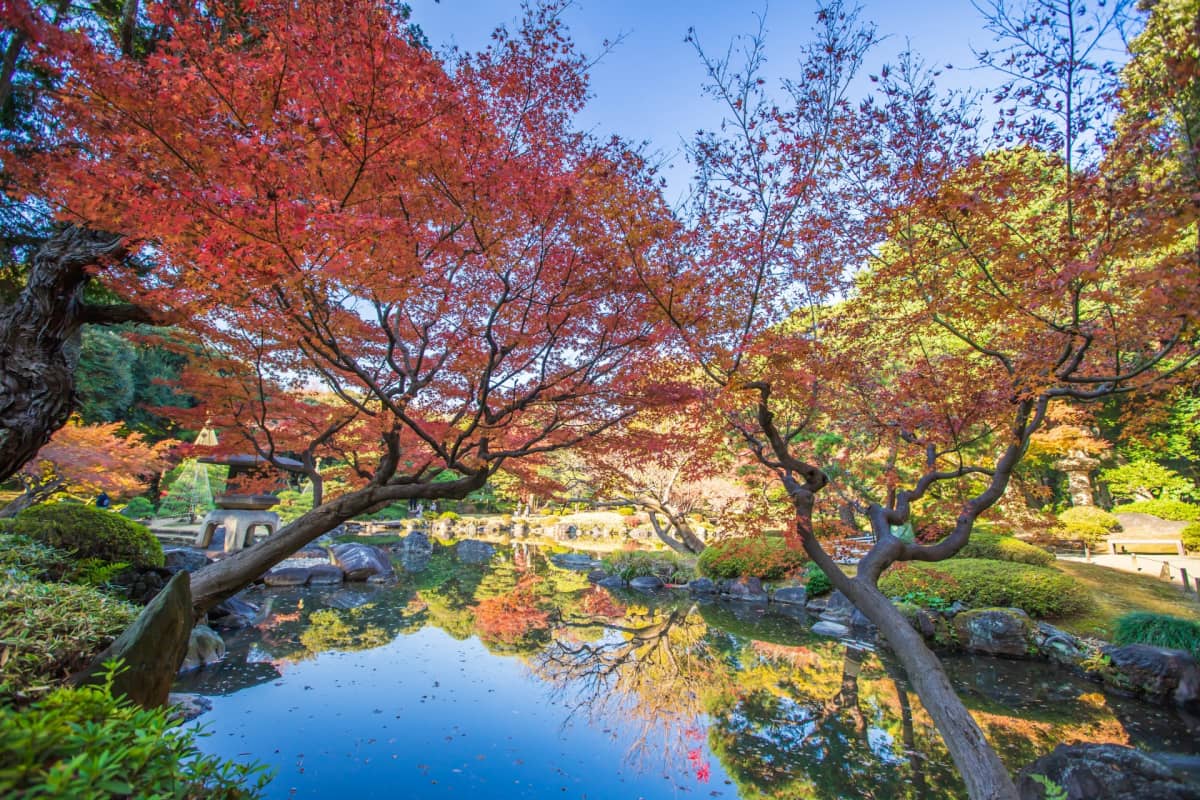
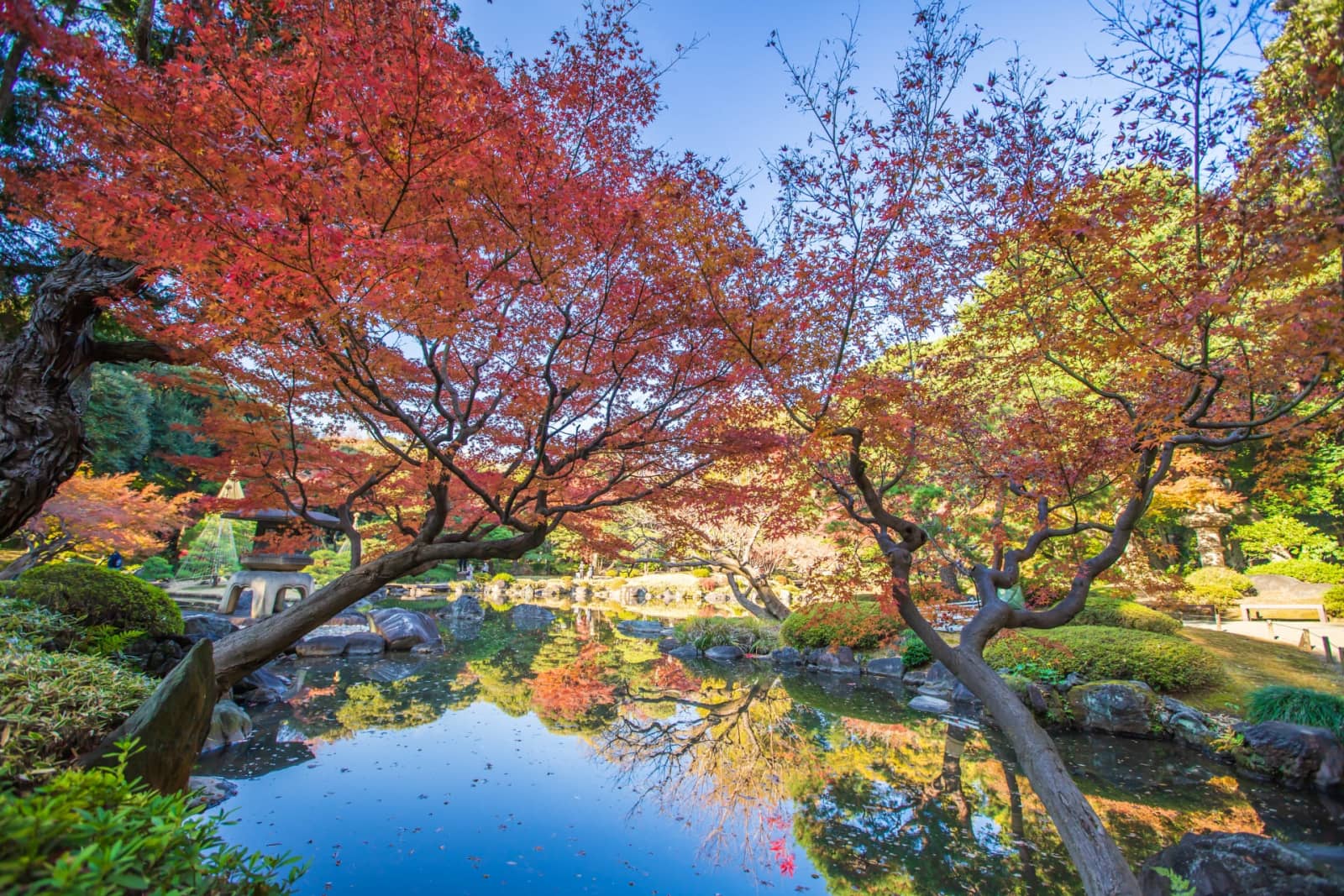
Descending from the Western grounds, the scene shifts entirely. A winding path leads to a lush Japanese garden, designed by master gardener Ogawa Jihei VII (Ueji). His layout uses the landscape’s natural slope to create a layered stroll garden centered on a shinji-ike (heart-shaped pond), a small 10-meter waterfall, and a collection of stone lanterns, bridges, and a chashitsu (tea house). In autumn, the area comes alive with koyo [紅葉], as maples and other deciduous trees reflect fiery reds and golds across the pond surface. It’s a quiet, photogenic moment that contrasts beautifully with the spring and summer greenery.

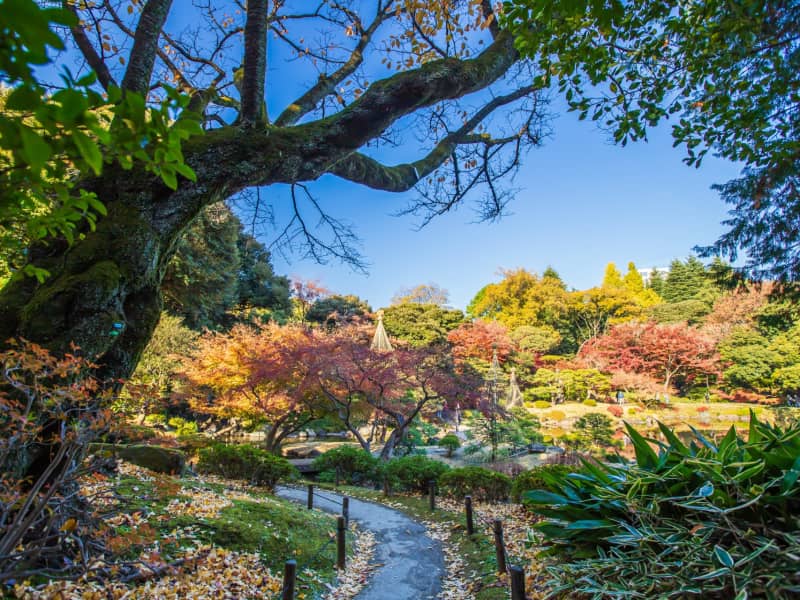

While the Western mansion isn’t generally open for casual walkthroughs, a refined tea salon in the building lets guests enjoy Japanese sweets and tea with a view of the roses. Photography isn’t allowed inside, preserving the ambiance. Outside, both casual strollers and photographers will find plenty to appreciate, from dramatic stone textures to soft reflections on water.
For those looking to photograph the site, early morning or late afternoon offers softer lighting, especially in the Japanese garden. The rose terraces are best shot slightly elevated to capture their symmetry, while the pond below reflects color and sky beautifully in calm weather. Tripods aren’t allowed, so hand-held shooting or phone cameras are best.
Before you go
Tripods and selfie sticks are not allowed in the premises. The gardens are stroller and wheelchair accessible on most routes; accessible maps are available at the gate. Toilets and a seasonal tea salon are located near the Western-style mansion. Entry is ¥150 for adults, ¥70 for seniors (65+), and free for children up to junior high school age. English signage is available throughout the grounds, and photo zones are clearly marked, though the mansion interior is off-limits unless you’ve reserved a tour in advance. Entry to the Western-style mansion interior (not the tea salon) requires advance reservation and a separate fee.
Kyu-Furukawa Gardens is open daily from 9:00 AM to 5:00 PM, with last entry at 4:30 PM. It is closed from December 29 to January 1 for the New Year holidays. Admission is free only on May 4 (Greenery Day) and October 1 (Tokyo Citizens’ Day), which are especially popular with locals and photographers.
When to go
Spring and autumn are the prime seasons to visit Kyu-Furukawa Gardens, when its famous rose garden bursts into full bloom. May and late October offer the most spectacular displays, with over 65 varieties of roses complementing the striking Western-style manor house. Early morning visits between 9:00-10:30 AM provide the best photography opportunities and peaceful garden exploration. Weekday mornings are notably quieter, offering a more serene experience for enjoying both the rose garden and traditional Japanese landscape.
Average crowd levels throughout the day, based on historical data.
Public review summary
Visitors praise the unique blend of Western and Japanese garden elements, with the rose garden and historic Western-style mansion being particular highlights. The tranquil Japanese garden section offers a peaceful escape, though some note the rose garden is smaller than expected. The teahouse receives mixed reviews, with praise for its elegant atmosphere but concerns about pricing and crowding during peak seasons. Garden maintenance and staff helpfulness are consistently commended.
What you'll find here
Location & access
- DirectionsAddress
1 Chome-27-39 Nishigahara, Kita City, Tokyo 114-0024, Japan
- How to get there
Public Transportation:
• 7 min walk from JR Keihin‑Tōhoku Line Kami‑Nakazato Station
• 7 min from Metro Namboku Line Nishigahara Station
• 12 min from JR Komagome Station
Community buses stop nearby, and regular buses run from Komagome and Ōji Stations .
By Car: No on‑site parking. Street parking in the residential area is limited—public transit is strongly recommended.
Common questions
When is the best time to see roses in bloom at Kyu-Furukawa Gardens?
The roses bloom twice annually, with peak viewing periods in late May for spring roses and late October for autumn roses. The Western-style garden features over 65 varieties, and during these seasons special Rose Festivals are held with garden concerts.
Is there a cafe or restaurant on site?
Yes, there is a cafe in the Western-style building serving cakes, coffee, and tea in an elegant setting. Additionally, there is a Japanese tea room in the garden where visitors can enjoy matcha and traditional sweets, plus a cafe called 'cocofulu' serving sandwiches.
What is the admission fee for the gardens?
The garden entrance fee is 150 yen for adults, with discounted rates of 70 yen for seniors over 65. An additional fee of 400 yen is required to tour the Western-style building interior.
Can I take photos inside the Western-style building?
Photography is not permitted inside the Western-style building, including in the cafe areas. However, you are welcome to take photos throughout the gardens and of the building's exterior.
Is the garden accessible for wheelchairs?
Yes, the garden features wheelchair accessible entrances and parking facilities. However, due to the garden's design with slopes and different levels, some areas may have limited accessibility.
Bring this spot to life with a local photographer
Book a vetted local photographer who knows the best light, angles, and timing for this location.