

At a glance
A majestic avenue in Tokyo's Minato City, lined with towering ginkgo trees that create a stunning natural tunnel. This iconic pathway transforms seasonally, offering vibrant green canopies in summer and a spectacular golden corridor during autumn, complemented by sports facilities and historic architecture along its route.
Photographs
Meiji Jingu Gaien Gingko Avenue
Meiji Jingu Gaien’s ginkgo-lined avenue is one of Tokyo’s most iconic seasonal sights, forming a majestic golden tunnel that stretches approximately 300 meters from Aoyama-dori to the Seitoku Memorial Picture Gallery. With 146 meticulously planted ginkgo trees on both sides, their symmetrical form creates a naturally arched canopy that peaks in color from late November to early December. The contrast of the vivid yellow leaves against the crisp blue sky and historic stone façade of the gallery makes it a favorite subject for both amateur and professional photographers.
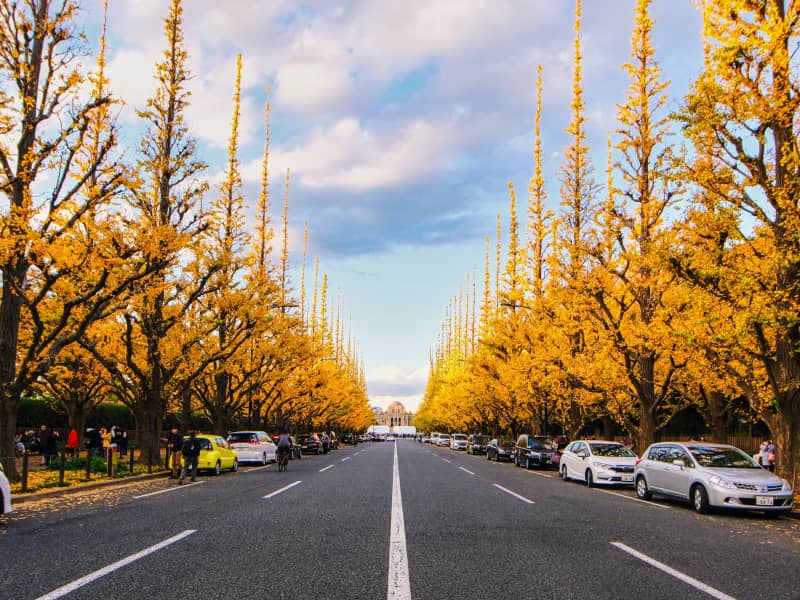
While it is best known for its spectacular autumn foliage, the avenue is also a year-round urban oasis. The surrounding area of Meiji Jingu Gaien features sports facilities like batting centers, tennis courts, and even a skating rink, reflecting the area's origins as a public recreation zone. The avenue also draws a wide range of visitors—from casual strollers to car enthusiasts who gather on weekends, giving the area a lively yet laid-back charm.
Each autumn, the Jingu Gaien Ginkgo Festival (いちょう祭り) attracts thousands of visitors with food stalls, seasonal produce, and cultural exhibitions. Adding to the seasonal atmosphere, nighttime illuminations during the peak foliage period bathe the ginkgo trees in soft, golden light, offering a dreamlike atmosphere and extending viewing hours into the evening.


For photographers, the avenue offers a rare combination of symmetry, seasonal color, and architectural backdrop that is hard to match in Tokyo. The gentle curve of the path, coupled with the uniform tree spacing, creates perfect leading lines that draw the eye toward the Seitoku Memorial Picture Gallery, an ideal focal point for wide-angle compositions. During peak foliage, the golden leaves glow especially well during the early morning hours, when soft light filters through the canopy. On overcast days, the scene takes on a more muted, painterly tone, ideal for a moodier aesthetic. A 50–85mm lens works well for isolating textures and details, while a wider lens captures the full tunnel effect. While tripods are generally tolerated outside of busy hours, handheld shooting is more practical during festival periods due to crowds. For a unique frame, try photographing from a low angle to emphasize the "ginkgo carpet" against the towering yellow arch above.
A particularly cherished feature is the “ginkgo carpet” (いちょうの絨毯)—a thick layer of golden leaves that blankets the pathway in late fall. Locals often return each year just to witness this fleeting sight. For those interested in quiet photography or slow walks, early weekday mornings are ideal. Tripod use is not prohibited, though due to heavy foot traffic during the festival season, compact or handheld setups are encouraged.

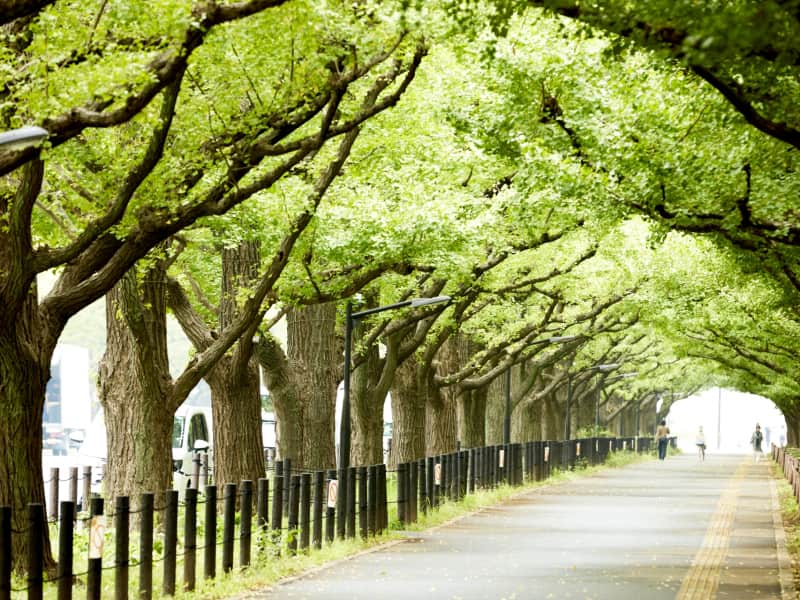
Whether visiting for the fall spectacle or simply to enjoy the area's peaceful energy, Meiji Jingu Gaien’s ginkgo avenue continues to be a beloved place that beautifully balances natural elegance and urban vitality.
Before you go
The ginkgo avenue is flat and fully paved, making it accessible for all visitors, including those using wheelchairs or strollers. Comfortable walking shoes are recommended, especially in autumn when the fallen leaves can be slippery. Tripods are allowed but best used in the early morning or late evening when the crowd is minimal. Benches line the path for resting, and nearby cafés and convenience stores are available around Aoyama-dori. Toilets can be found at Meiji Jingu Gaien sports facilities nearby. During the Jingu Gaien Ginkgo Festival, the area becomes busy, so plan accordingly for a more relaxed experience.
Open 24/7, all year round — no holiday closures. Temporary traffic control or stall setup may affect movement during the festival period.
When to go
Late November to early December transforms this avenue into a spectacular golden corridor as the ginkgo trees reach peak autumn colors. During this season, the fallen leaves create a mesmerizing yellow carpet effect, enhanced by special evening illuminations. Visit during early morning hours before 9 AM to avoid crowds and capture the best photos with optimal lighting. Weekdays offer a more peaceful experience compared to weekends, when the avenue becomes extremely crowded with photographers and visitors. For photography enthusiasts and those seeking tranquility, weekday mornings provide the perfect balance of natural light and minimal crowds. The avenue takes on a different character throughout the day, with early morning sunlight creating particularly stunning effects through the leaves.
Average crowd levels throughout the day, based on historical data.
Public review summary
Visitors praise the avenues stunning autumn foliage when ginkgo trees create a golden canopy, while also appreciating its year-round appeal as a peaceful urban escape. The well-maintained path and benches receive consistent positive feedback. Some note weekend overcrowding during peak foliage season and recommend early morning visits. Car enthusiasts regularly gather on weekends, adding a unique cultural element that most find entertaining though it can occasionally impact the tranquil atmosphere.
What you'll find here
Location & access
- DirectionsAddress
2 Chome-付近 Kita-Aoyama, Minato City, Tokyo 107-0061, Japan
- How to get there
By Public Transport: Meiji Jingu Gaien’s ginkgo avenue is easily accessible from multiple stations. It’s just a 3-minute walk from Exit 4a of Gaiemmae Station (Tokyo Metro Ginza Line), a 6-minute walk from Exit 1 of Aoyama-itchome Station (Tokyo Metro Ginza & Hanzomon Lines, Toei Oedo Line), a 9-minute walk from Shinanomachi Station (JR Chuo–Sobu Line), and a 10-minute walk from Exit A1 of Kokuritsu-Kyogijo Station (Toei Oedo Line).
By Car: The nearest expressway exit is Gaien Exit (外苑出口) on the Shuto Expressway Route 4 – Shinjuku Line (首都高速4号新宿線), which offers convenient access directly to the area.
Common questions
When is the best time to see the ginkgo trees at their peak autumn colors?
The ginkgo trees typically reach their peak autumn colors from late November to early December. For the best viewing experience, plan your visit in early morning to avoid crowds and catch the golden leaves in optimal sunlight.
Are there facilities like benches or restrooms along the avenue?
Yes, benches are placed at regular intervals under the trees, providing convenient rest spots in the shade. However, be aware that restrooms are located some distance away from the main avenue, though the overall area is well-maintained and clean.
Can I take photos or do special photoshoots here?
Photography is welcome and the avenue is a popular spot for both casual and professional photos. The iconic view with the Seitoku Memorial Picture Gallery in the background is particularly photogenic, especially during autumn when yellow leaves create a natural carpet.
Is the avenue accessible for people with mobility issues?
The avenue features a wide, flat pathway that is generally accessible. The paved surface and lack of significant elevation changes make it suitable for wheelchairs and those with limited mobility, though crowds during peak seasons may present challenges.
Do cars have access to the ginkgo avenue?
While the avenue is normally open to vehicles, there are frequent traffic restrictions, especially during autumn weekends and peak viewing periods. Vehicle access is completely restricted during special events and peak foliage times for pedestrian safety.

Bring this spot to life with a local photographer
Book a vetted local photographer who knows the best light, angles, and timing for this location.