

At a glance
Standing majestic in Miharu, Fukushima Prefecture, the Miharu Takizakura is a millennium-old weeping cherry tree that transforms into a cascading waterfall of pale pink blossoms each spring. This national natural monument, reaching 13.5 meters high, offers an awe-inspiring display of Japan's cherished hanami tradition.
Photographs
Miharu Takizakura
The Miharu Takizakura stands in Miharu, Fukushima, as one of Japan’s most beloved and symbolic cherry trees. Estimated at over 1,000 years old, this weeping higan cherry has been cherished as a national natural monument since 1922 and features among Japan’s three giant sakura trees.
Rising to around 12 to 13.5 meters, with a trunk girth of approximately 9.5 to 11.3 meters, the tree’s branches spread out dramatically, up to 22 meters east-west and nearly 20 meters north-south, creating the mesmerizing, waterfall-like drape of blossoms that earn it the name “Takizakura” (“waterfall cherry tree”).


When late April arrives, thousands of pale pink florets cascade from its sweeping branches, blanketing the slope like liquid silk. The effect is heightened by the vivid carpet of yellow nanohana (rapeseed) at the base, creating a harmony of seasonal colors rarely seen in other hanami settings.
Preservation here is more than a formality. The tree is nested in a gentle hillside, offering ideal drainage, and its heavy limbs are supported by wooden props crafted by caring locals. Despite heavy snow damage in the early 2000s and the region’s challenges from the 2011 earthquake and nuclear accident, the tree has remained resilient, its survival often seen as a symbol of community strength and hope.

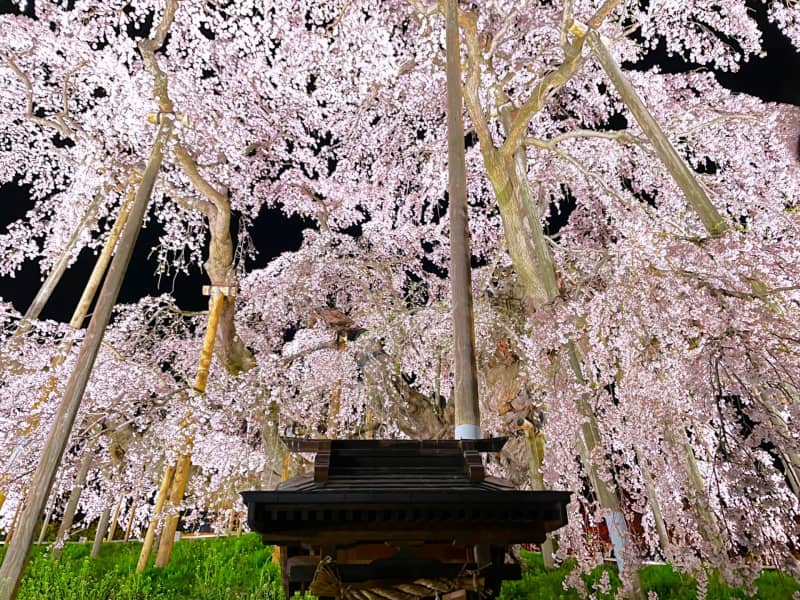

Visitors explore the site via a stepped pathway that encircles the entire tree, allowing views from multiple angles, each revealing subtle differences in the blossom cascade. Local volunteers sometimes touch a small offertory box at the tree’s base, honoring the animistic belief that the tree itself houses a spirit, or kami.
At night, the Takizakura takes on an almost otherworldly presence. Temporary illumination during peak bloom stages bathes the tree in soft light, giving it a ghostly beauty that contrasts starkly with daytime vibrancy. It’s this dual character, gentle day to haunting evening, that many say is the full experience of Takizakura.
Before you go
Expect 300 yen adult admission (free for children up to junior high school). The fee supports continued preservation. Wheelchair access is available along the main paved pathway. There are toilets and a cafe nearby, but once blossoms fall the site can be quite muddy—wear shoes you don’t mind getting a little dirty. Tripods are allowed but be courteous during busy hours. English signage is limited; volunteer staff are friendly and helpful when asked.
The cherry blossom viewing season typically begins shortly after the flowers start blooming, usually in mid to late April, and continues until the petals fall. Evening illumination is available only during this period, generally from around 6 PM to 9 PM, depending on bloom conditions. The exact opening and closing dates vary each year based on weather and blossom timing. Outside of this short seasonal window, the site is closed to the public, no entry, parking, or facilities are available, and the tree cannot be viewed up close.
When to go
Mid to late April offers the perfect window to witness the Miharu Takizakura in full bloom, with its cascading pink blossoms creating a breathtaking waterfall effect. The surrounding rape blossoms provide a stunning yellow contrast during this peak flowering period. Early morning visits between 6-8 AM provide the most serene viewing experience with optimal natural lighting for photography. Weekday mornings tend to be significantly less crowded than weekends, offering more peaceful appreciation of this thousand-year-old cherry tree.
Average crowd levels throughout the day, based on historical data.
Public review summary
Visitors consistently praise the awe-inspiring presence of this ancient cherry tree, highlighting its magnificent spring blooms and impressive trunk size. The contrast with surrounding rape blossoms draws particular appreciation. While most find the viewing experience deeply moving, some note crowding during peak bloom season and suggest arriving early. The well-maintained grounds and easy accessibility receive positive mentions, though occasional visitors recommend clearer directional signage.
What you'll find here
Location & access
- DirectionsAddress
Sakurakubo-296 Taki, Miharu, Tamura District, Fukushima 963-7714, Japan
- How to get there
By Public Transportation: From Miharu Station (JR Ban’etsu East Line), take the temporary “Takizakura-go” bus during cherry season (15-20 minutes). A free shuttle operates from Miharu Town Sports Park to the tree, especially on weekends and during evening lighting hours. Buses run in loops and final return may be earlier than tree closing time.
By Car: From the Ban-etsu Expressway, drive ~7 km from Funehiki‑Miharu IC or ~12.6 km from Koriyama-Higashi IC. Parking lot fits approx 850 cars plus spaces for buses. During peak bloom weekends road congestion is heavy, prefer parking at Miharu Sports Park and ride free shuttle to the site.
Common questions
When is the best time to see Miharu Takizakura in bloom?
The iconic cherry tree typically flowers from mid to late April, with peak bloom occurring around mid-April. The exact timing can vary slightly each year based on weather conditions, but visitors should plan their trip within this window for the best viewing experience.
Is there parking available at Miharu Takizakura?
Yes, there is a large, free parking lot with 850 spaces available for visitors. The parking area is wheelchair accessible and connects to the viewing area. During peak bloom season, the lot can fill up quickly, especially during midday hours.
What facilities are available at the site?
The site features wheelchair-accessible restrooms and has wheelchair-accessible paths to view the cherry tree. There are some vendor stalls during peak season near the parking area. The site is family-friendly and suitable for visitors of all ages.
Can I visit Miharu Takizakura outside of cherry blossom season?
You cannot officially visit Miharu Takizakura outside of cherry blossom season, as the site is only open to the public during the short bloom period in mid to late April. Outside that time, all facilities are closed and access to the tree is restricted but you can see the tree from the road.
What makes Miharu Takizakura special?
Miharu Takizakura is a remarkable weeping cherry tree that's over 1,000 years old and has been designated as a national natural monument. Its cascading branches create a waterfall-like effect when in bloom, making it one of Japan's most iconic cherry trees.

Bring this spot to life with a local photographer
Book a vetted local photographer who knows the best light, angles, and timing for this location.