

At a glance
Miho no Matsubara is a 7-kilometer scenic coastline in Shizuoka featuring ancient pine forests and spectacular Mount Fuji views. This World Heritage site combines pristine beaches, over 30,000 pine trees, and cultural significance as the setting of the famous Hagoromo legend.
Photographs
Miho no Matsubara
Miho no Matsubara unfolds along a 7-kilometer stretch of coastline on the Miho Peninsula in Shizuoka City, where over 30,000 black pine trees form a sweeping, evergreen canopy beside the deep-blue waters of Suruga Bay. The forest’s quiet beauty is more than just visual. It holds centuries of myth, memory, and reverence. Officially designated one of Japan’s earliest Places of Scenic Beauty and now part of a UNESCO World Heritage site linked to Mt. Fuji, the landscape continues to inspire both travelers and artists alike.


At the spiritual heart of Miho no Matsubara stands the Hagoromo no Matsu, a pine tree rooted in legend. According to a famous Noh tale, a celestial maiden descended to bathe in the sea and hung her feathered robe on a pine branch. When a fisherman found and refused to return it, she danced a hauntingly beautiful celestial dance to reclaim it and ascend once more. Though the current pine is a third-generation successor, the story still lingers in the sea breeze, retold each October during the Hagoromo Matsuri, where torch-lit Noh performances bring the ancient fable to life under the trees.
The approach to the coast begins with the Kami no Michi, or “Path of the Gods.” It’s a gentle, straight walkway lined with towering pines that rustle softly overhead. This path leads to Miho Shrine, a quiet Shinto sanctuary dedicated to maritime deities, blending naturally into the forest around it. Visitors often describe this walk as meditative, with the scent of pine needles, the crunch of gravel, and glimpses of sky between branches creating a kind of quiet spell. It’s not just a walk to the sea. It feels like a passage between worlds, from sacred to scenic.
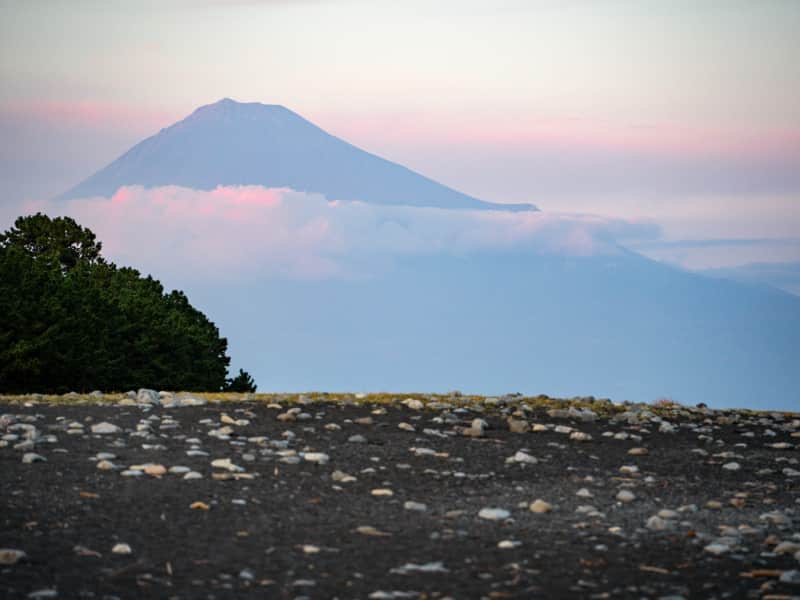
At the shoreline, black volcanic sand contrasts sharply with the emerald pine grove and, on clear days, the majestic form of Mount Fuji rising across the bay. This view is one of Japan’s “New Three Views” and has been immortalized in countless works of art, especially in Edo-period ukiyo-e prints by Hiroshige and Hokusai. It’s a landscape that feels both vast and intimate, shaped by natural forces but steeped in human imagination.


A short walk inland brings you to Miho Shirube, a cultural and visitor center that deepens the experience with interactive exhibits on local folklore, ecology, and World Heritage conservation. It’s a thoughtful space that helps visitors connect the beauty of the pines with the efforts to protect them: past, present, and future.
For the best photos at Miho no Matsubara, arrive early to catch the soft morning light that highlights the contrast between the black sand, green pines, and Mount Fuji. Use a zoom lens to capture the full landscape, and try framing your shots with pine branches or shoreline patterns for depth. The Path of the Gods offers great leading lines, while sunset silhouettes and long exposures during festivals can add drama.
Before you go
Miho Shirube, the nearby visitor center, offers coin lockers, clean restrooms, a small café, and even beach-friendly wheelchair rentals. Some parts of the forest trail and beach may have uneven or sandy surfaces, so sturdy walking shoes are recommended. Bicycles are allowed on designated paths, and rental options are available nearby. Bring sun protection and water during summer months, and visit on weekday mornings for a quieter experience. Check Mt.Fuji visibility here.
Miho no Matsubara is open year-round, with no gate or entrance hours since it’s a natural outdoor site. However, the Miho Shirube visitor center operates daily from 9:00 AM to 4:30 PM and is closed during the New Year holidays, typically from December 29 to January 3. Public transportation services like the direct bus to “Sekai Isan Miho no Matsubara” run only on weekends and public holidays, while the water bus may be suspended during bad weather or follow a reduced schedule on certain holidays.
When to go
Winter offers the clearest views of Mount Fuji when the air is crisp and visibility peaks. Spring and autumn provide comfortable temperatures for exploring the pine forests, while summer brings vibrant beach activities despite hazier mountain views. Early morning visits between 6AM and 8AM offer the best photography conditions and fewer crowds. Weekday mornings generally provide a more peaceful experience for enjoying the pine-lined paths and sacred sites.
Average crowd levels throughout the day, based on historical data.
Public review summary
Visitors consistently praise the stunning views of Mount Fuji on clear days, particularly in winter when visibility is best. The pine forest setting and beach access receive high marks for their natural beauty and peaceful atmosphere. Many note the free parking and well-maintained paths as positives. However, weather-dependent visibility of Mount Fuji leads to mixed experiences, with some expressing disappointment on cloudy days. The historical connection to ukiyo-e art adds cultural appreciation for many.
What you'll find here
Location & access
- DirectionsAddress
1338-45 Miho, Shimizu Ward, Shizuoka, 424-0901, Japan
- How to get there
By Public Transportation: From JR Shizuoka Station, take a train to JR Shimizu Station (about 13 minutes). From there, board a bus bound for Miho and get off at “Miho Matsubara Iriguchi” (about 25 minutes). It’s roughly a 15-minute walk from the bus stop to the pine grove. On weekends and holidays, a special bus stops at “Sekai Isan Miho no Matsubara,” which shortens the walk to about 5 minutes.
Alternatively, you can take a water bus from “Ejiri” near JR Shimizu Station’s east exit (at Kashi no Ichi fish market) to “Miho.” From the dock, it’s about a 35-minute walk. If you disembark at “S-Pulse Training Ground Entrance / Water Bus Stop,” there’s a connecting bus that takes around 5 minutes to reach “Miho Matsubara Iriguchi,” followed by a 15-minute walk. Please note that water bus and shuttle operations may vary depending on the day or weather conditions.
By Car: From the Shimizu Interchange, it’s about a 25-minute drive. From the Shizuoka Interchange, expect about 35 minutes. Parking is available near the site with space for approximately 173 vehicles.
Common questions
Can you see Mount Fuji from Miho no Matsubara all year round?
Mount Fuji visibility varies greatly with weather conditions. Winter offers the clearest views when the air is crisp, while summer months often have hazier conditions that can obscure the mountain. For the best chance of seeing Mount Fuji, visit on clear winter mornings.
Is there a parking fee at Miho no Matsubara?
Parking is completely free at the main Hagoromo Park Parking Lot, which can accommodate 173 vehicles. During peak periods, additional temporary parking lots are opened to handle overflow. The parking area is well-maintained with pine trees scattered throughout.
What is the legend of the Hagoromo Pine Tree?
According to local legend, a celestial maiden descended to earth and hung her feathered robe (hagoromo) on a pine tree while bathing. A fisherman found it, leading to a famous story. Today's Hagoromo Pine is the third generation of this legendary tree, marked by a small shrine and stone monument.
What facilities are available for wheelchair users?
Miho no Matsubara features wheelchair-accessible entrances and dedicated wheelchair parking spaces. The site offers onsite services to accommodate visitors with mobility needs, though some paths through the pine forest may have varying levels of accessibility.
What's the best way to get to Miho no Matsubara by public transport?
From JR Shimizu Station, take the Shizutetsu Justline bus bound for Miho from bus stop #3. On weekdays, alight at 'Miho no Matsubara Iriguchi' and walk 13 minutes. On weekends and holidays, there's a direct bus that stops 5 minutes from the site.

Bring this spot to life with a local photographer
Book a vetted local photographer who knows the best light, angles, and timing for this location.