

At a glance
Mukojima-Hyakkaen Gardens is a compact 19th-century Japanese garden in Sumida City featuring seasonal flowering plants throughout the year. The garden offers views of Tokyo Skytree and contains approximately 29 haiku stone monuments scattered among winding paths. Originally established during the Edo period by Sahara Mario in collaboration with literati and artists, the garden preserves traditional downtown Tokyo charm while showcasing native and cultivated plant varieties across approximately 10,000 square meters.
Photographs
Mukojima-Hyakkaen Gardens
Mukojima-Hyakkaen Gardens showcases the refined aesthetics of Edo-period garden design within an intimate 8,700 square meter garden in Sumida City. Established in the early 19th century by merchant Sahara Kikuu in collaboration with literati and artists, the garden earned its name “Hyakkaen” (Garden of a Hundred Flowers), which is said to refer either to plum blossoms leading the hundred flowers or to flowers blooming throughout the four seasons. The grounds feature 29 haiku monuments and stone pillars, creating a harmonious blend of botanical beauty and literary heritage that reflects the cultural sophistication of old Tokyo.


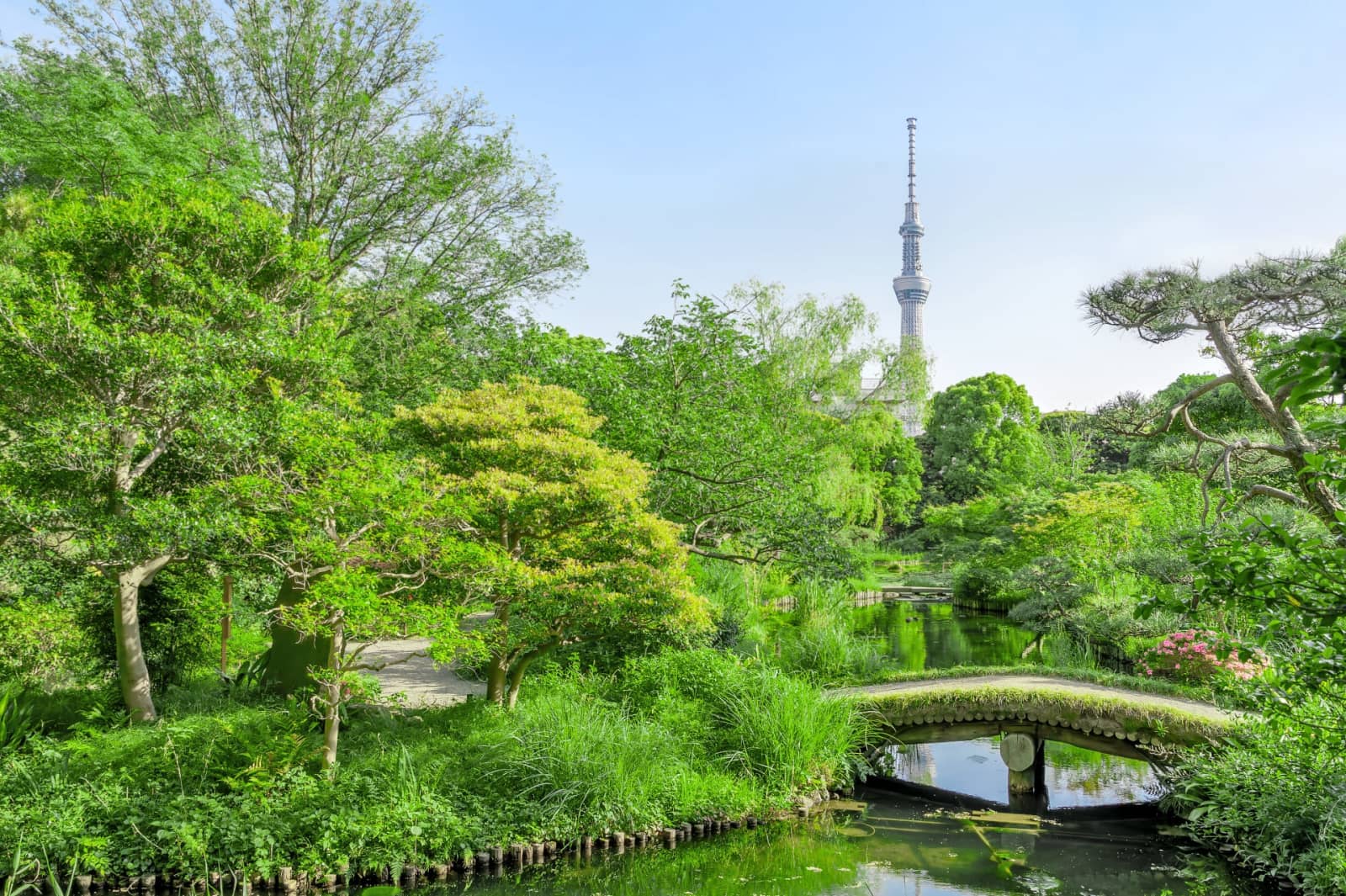
The garden’s signature attraction is the hagi (bush clover) tunnel, which transforms into a cascading canopy of delicate blooms during the annual Hagi Festival around September and early autumn. Early spring brings spectacular displays of plum blossoms throughout February and March, while warmer months bring hydrangeas, bellflowers, and other seasonal flowers, with Japanese wisteria typically peaking around early May. The traditional moon-viewing parties in early autumn continue an Edo-period custom, offering evening visits beneath the autumn sky. Strategic viewpoints throughout the garden frame Tokyo Skytree against seasonal foliage, creating unique photo opportunities that connect historical and modern Tokyo.


The compact layout includes winding paths through seasonal plantings, a tranquil pond inhabited by wildlife, and rest areas where visitors can pause and enjoy the garden. The garden’s accessible routes and manageable size make it ideal for leisurely exploration, typically requiring about one hour to fully appreciate the seasonal displays and cultural monuments that define this preserved slice of Edo elegance.
Seasonal and Event Highlights
- Winter: Plum blossoms are the major late-winter attraction, with more than 20 varieties flowering around February and early March; the annual Plum Festival celebrates the garden’s origins as a famous plum garden.
- Spring: Cherry blossoms, wildflowers and other traditional plants appear across the garden, followed by the wisteria around late April to early May.
- Summer: Hydrangeas, Japanese irises, bellflowers and climbing plants provide seasonal interest, but Tokyo’s heat and humidity can make midday visits uncomfortable. The garden itself issues heatstroke precautions during midsummer.
- Early Autumn: The 30-meter Hagi Tunnel becomes the garden’s signature sight as bush clover flowers, accompanied by the traditional Hagi Festival.
- Moon Viewing Festival: This traditional Edo-period event is held around the lunar moon-viewing period, with extended evening opening and lantern-lit garden scenery; dates vary each year.
- Late Autumn: Susuki pampas grass, autumn wildflowers, chrysanthemums and other traditional plants give the garden a quieter seasonal character rather than the large-scale maple foliage displays found at some other Tokyo gardens.
Before you go
Admission is ¥150 for adults and ¥70 for visitors aged 65 and over; children of elementary school age and younger, as well as junior high school students living or studying in Tokyo, enter free. Admission is also free for everyone on May 4 and October 1. The garden is compact and generally easy to explore, although some routes may be less accessible than the designated barrier-free paths. Pets are not permitted, including those carried in cages, except assistance dogs. Summer visitors should bring water and sun protection, particularly during Tokyo’s hot and humid July and August weather.
The garden is normally open throughout the year, including Mondays, but closes for the New Year holiday from December 29 through January 3. From January 1 to 3, a limited section leading to the Fukurokuju Hall opens from 9:00 AM to 5:00 PM for the Sumida River Seven Lucky Gods pilgrimage, with no admission fee for this section. Special events may occasionally extend normal opening hours.
When to go
Spring stands out as the premier season when plum blossoms transform the garden from February through March, while autumn brings the celebrated Hagi Festival from mid-September to early October, featuring the iconic bush clover tunnel. The garden offers year-round botanical interest with seasonal highlights including Japanese wisteria, hydrangeas, bellflowers, and Chinese silver grass, though winter months see fewer blooms and some maintenance work throughout the grounds. Weekday mornings between 9 AM and 11 AM provide the most peaceful experience before crowds arrive, particularly on Thursdays when visitor numbers remain lowest. Weekend afternoons from 12 PM to 2 PM see peak attendance, especially during special seasonal festivals when the garden's compact size makes crowding more noticeable.
Average crowd levels throughout the day, based on historical data.
Public review summary
Visitors consistently praise the tranquil atmosphere and seasonal variety of flowers, particularly plum blossoms in February and bush clover in September. Many appreciate the affordable entrance fee and charming traditional garden setting with Tokyo Skytree views. Some note the garden feels underwhelming during off-season months with limited blooms, and occasional maintenance issues are mentioned. The intimate size receives mixed feedback.
What you'll find here
Location & access
- DirectionsAddress
3 Chome-18-3 Higashimukojima, Sumida City, Tokyo 131-0032, Japan
- How to get there
By Public Transportation:
From Higashi-mukojima Station on the Tobu Skytree Line, the garden is about an 8-minute walk. From Keisei-Hikifune Station on the Keisei Oshiage Line, allow around 13 minutes on foot. Alternatively, take Toei Bus Route Sato 22 and get off at Hyakkaen-mae, around a 2 to 3-minute walk from the entrance.
By Car:
Mukojima-Hyakkaen does not have a dedicated parking lot, so visitors arriving by car will need to use nearby public or commercial parking. Public transportation is generally the more convenient option.
Common questions
What flowers can I see at Mukojima-Hyakkaen Gardens?
Mukojima-Hyakkaen Gardens showcases diverse flowering plants throughout the year. Notable highlights include plum blossoms in late winter, Japanese wisteria in spring, hydrangeas and bellflowers in summer, and bush clover (hagi) during the autumn Hagi Festival from mid-September to early October. The garden also features seasonal displays of chrysanthemums, irises, and camellias depending on the time of year.
Is Mukojima-Hyakkaen Gardens wheelchair accessible?
Yes, Mukojima-Hyakkaen Gardens has a wheelchair accessible entrance. While there are some steps within the garden, alternative flat routes are available to navigate around these areas. The bridges over the pond are equipped with handrails for added safety and support.
How much does it cost to enter the gardens?
General admission to Mukojima-Hyakkaen Gardens is 150 yen. Visitors aged 65 and over receive a discounted rate of 70 yen. The garden accepts modern payment methods including PayPay and Rakuten Pay in addition to traditional payment options.
Can I see Tokyo Skytree from Mukojima-Hyakkaen Gardens?
Yes, Tokyo Skytree is visible from various points within Mukojima-Hyakkaen Gardens, creating a unique contrast between traditional Edo-period garden aesthetics and modern Tokyo architecture. Several benches throughout the garden offer particularly good views of the tower, making it a popular photo opportunity for visitors.
Are there guided tours available at the gardens?
Mukojima-Hyakkaen Gardens offers volunteer-led garden guides every Saturday and Sunday at 11:00 AM and 2:00 PM. Additionally, expert-led wildflower watching tours are conducted on the second Saturday of each month at 11:40 AM and 2:40 PM. Reception staff can also answer basic questions about the garden's plants and history.
Bring this spot to life with a local photographer
Book a vetted local photographer who knows the best light, angles, and timing for this location.