

At a glance
NageireDou is a cliffside Buddhist temple in Misasa, Tottori Prefecture, requiring a challenging one-hour hike aided by chains and tree roots. This National Treasure temple clings dramatically to a sheer rock face, offering unique spiritual and adventurous experiences for prepared visitors.
Photographs
NageireDou
Clinging high to the cliffs of Mount Mitoku in central Tottori, Nageiredo aka Mitokusan Sanbutsuji Temple is one of Japan’s most breathtaking and dangerous temples. Known as “Japan’s most dangerous shrine”, this small wooden hall is built directly into the face of a sheer rock wall and requires visitors to scale sections using metal chains bolted into the cliff. Built over 1,300 years ago by ascetic mountain monks, its construction method remains a mystery, and it has been designated a National Treasure for its daring architecture and cultural importance.
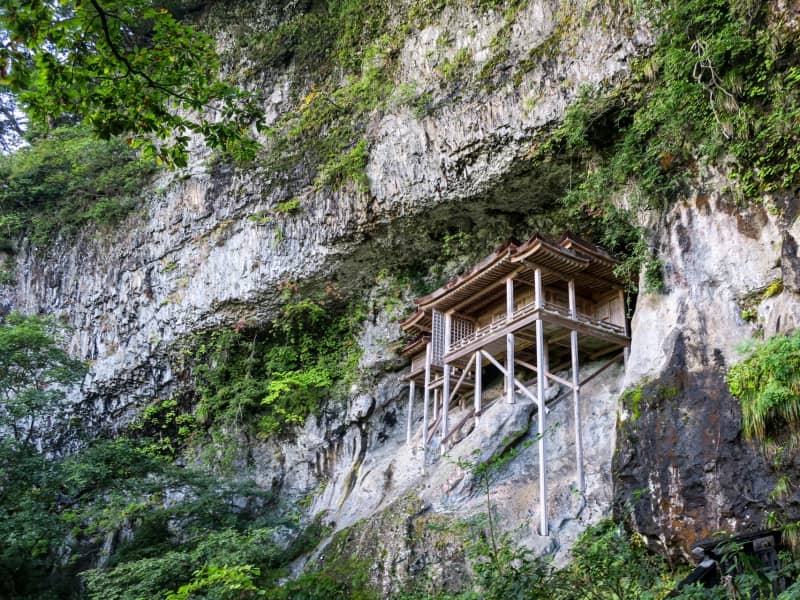
Climbing to Nageiredo is both a spiritual and physical challenge, deeply rooted in shugendō, the mountain-based ascetic faith that blends Buddhism, Shinto, and nature worship. The trail begins at Sanbutsu-ji and weaves through forest, exposed ridges, and rugged terrain. Climbers face obstacles like Kazura-zaka, where they must scramble up tangled tree roots, and Kusari-zaka, where the only way forward is to haul yourself up by grabbing thick, cold metal chains set into the rock.
Because of the risk involved and its history of accidents, Nageiredo is often called Japan’s most dangerous National Treasure. Safety is taken seriously. Solo hiking is not allowed, visitors must climb in pairs or groups. At the trailhead, staff inspect your shoes to ensure they have enough grip for the rocky route. If your footwear is inadequate, you may be required to wear traditional straw sandals (waraji), which surprisingly handle the terrain well. Work gloves or climbing gloves are also recommended, especially on the sections with chains and jagged surfaces.


The round-trip hike generally takes 1.5 to 2 hours, depending on fitness and how often you stop. Along the way, you’ll pass several historic sub-temples like Monjudo and Jizodo, which sit dramatically on narrow ledges overlooking the valley. These rest points offer both spiritual reflection and incredible views of the surrounding Chūgoku Mountains. The final destination is a viewing platform just below Nageiredo itself. Visitors are not permitted to enter the hall in order to preserve its fragile structure, but the visual impact from below is unforgettable.


Visitor Rules & Climbing Guidelines for Nageiredo
・Climbing is only allowed in groups of 2 or more. Solo entry is strictly prohibited.
・Reception hours: 8:00–15:00 (temple grounds open until 17:00).
・Entry fees: Main Sanbutsu-ji Hall: 400 yen (adults), 200 yen (children). Climb to Nageiredo: 800 yen (adults), 400 yen (children).
・Age restrictions: Climbing is permitted for older elementary school students and up. Younger children and preschoolers are not allowed due to safety concerns.
・Footwear requirements: Only non-slip hiking shoes, sneakers, or straw sandals (waraji) are allowed. No shoes with metal spikes or cleats. No walking sticks (to protect trail condition).
・Trail access is closed during bad weather, including rain, snow, or icy conditions. Check the official website before your visit.
・Entry procedure: Register at the climbing office located behind the main hall of Sanbutsu-ji before starting the trail.
Before you go
Wear sturdy hiking shoes with good grip, footwear is inspected before climbing. The trail is not a casual walk. It involves rugged mountain paths, chain-assisted climbs, and exposed ridgelines. It’s short in distance but physically and mentally demanding. Gloves are strongly recommended for chain sections. Solo hikers are not allowed; you must climb in groups of two or more. Tripods are discouraged due to narrow paths. There are toilets at the temple base, but none on the trail. Basic English signage is available, though limited. Expect to get muddy or dusty, and pack light. Check official website as climbing may not be allowed on days with bad weather.
Sanbutsu-ji Temple is generally open daily, but Nageiredo trail access is closed during rain, snow, or winter months (typically late November to mid-March) for safety. Climbing hours are usually 8AM to 3PM, with last entry around 2:30PM. Always check the official website or call ahead for weather-based closures.
When to go
Spring and fall offer the most pleasant hiking conditions with comfortable temperatures and clear visibility. During late spring, the surrounding mountain landscape bursts with vibrant greenery, while autumn brings spectacular foliage colors that frame the temple dramatically. Early morning visits between 8AM and 10AM provide the best experience, as the mountain path is less crowded and lighting conditions are optimal for photography. Avoid rainy days and the day after rainfall, as the hiking trail becomes particularly treacherous when wet and is closed for climbing.
Public review summary
Visitors consistently praise the unique spiritual experience while noting the physically demanding nature of the climb. The challenging trail, aided by chains and tree roots, requires proper footwear and preparation, with many highlighting this as both thrilling and daunting. Safety measures and equipment checks are strict but appreciated. The temples spectacular location and architectural marvel leave most in awe, though some mention concerns about difficult access and occasional crowding during peak times.
What you'll find here
Location & access
- DirectionsAddress
1010 Mitoku, Misasa, Tōhaku District, Tottori 682-0132, Japan
- How to get there
By Public Transport: From JR Kurayoshi Station, take a local Hinomaru bus bound for Mitokusan (三徳山). The ride takes about 40 minutes, and you should get off at Mitokusan Iriguchi (三徳山入口). From the bus stop, it’s a 5-minute walk to Sanbutsu-ji Temple, where the mountain trail to Nageiredo begins.
By Car: It takes about 50 minutes from either Innosho IC on the Chugoku Expressway via Route 179, or from Yubara IC on the Yonago Expressway via Routes 313, 482, and 179. Free parking is available near the temple entrance.
Common questions
What equipment do I need to visit NageireDou?
Proper hiking boots with good grip are mandatory and will be checked at reception. Work gloves with anti-slip properties are essential. You'll need to wear appropriate mountain climbing attire. If your shoes aren't suitable, you may need to purchase and wear traditional straw sandals (waraji).
Can I visit NageireDou alone?
No, solo visits are strictly prohibited for safety reasons. You must visit with at least one other person or join another group at the temple. This rule is strictly enforced due to the dangerous nature of the climb and the temple's location on steep cliffs.
How difficult is the climb to NageireDou?
The climb involves steep terrain, chains for climbing rock faces, and tree root steps. While not requiring professional climbing skills, it demands good physical fitness. The round trip typically takes 2 hours, with multiple challenging sections including cliff edges and slippery surfaces.
Is there a fee to visit NageireDou?
Yes, there is a climbing fee of 1,200 yen. Additional costs may be incurred if you need to purchase straw sandals due to unsuitable footwear. The entrance fee helps maintain the safety of this national treasure and its challenging mountain path.
What can I see along the path to NageireDou?
The path features several notable structures including Monju-do Hall with views of Mt. Daisen, Jizo-do, and a bell tower where visitors can ring the bell. The final view of NageireDou itself, built into a cliff face, is considered the highlight of the journey.

Bring this spot to life with a local photographer
Book a vetted local photographer who knows the best light, angles, and timing for this location.