

At a glance
Naritasan Shinshoji Temple is a historic 10th-century Buddhist complex featuring a magnificent three-story pagoda, traditional architecture, and sacred grounds. Located in Narita City, this temple offers free guided walking tours, wheelchair accessibility, and daily goma fire rituals, making it an essential cultural landmark.
Photographs
Naritasan Shinsho-ji
Naritasan Shinsho‑ji Temple is a historic Buddhist site with over 1,000 years of history, known for its deep spiritual ties and powerful fire rituals. Founded in 940, the temple was built to honor a fierce guardian deity whose image, according to legend, refused to leave the area after a conflict. Today, it’s one of the most important centers of Shingon Buddhism in eastern Japan. The grounds are home to several beautifully preserved buildings from the Edo period, including a striking three-story pagoda, imposing gates, and ceremonial halls. Many of these have been officially designated as cultural treasures, offering a rare glimpse into the religious architecture of the past.


As you pass through the main gate, the atmosphere immediately shifts. Towering lanterns and detailed woodwork frame the entrance, leading to an open plaza where the Daihondō, or Great Main Hall, dominates the view. Nearby, the vividly painted three‑storied pagoda offers an up‑close look at Edo‑period craftsmanship. Further in, the aged but stately Shaka‑dō and Komyō‑dō halls evoke centuries of Buddhist practice and devotion.
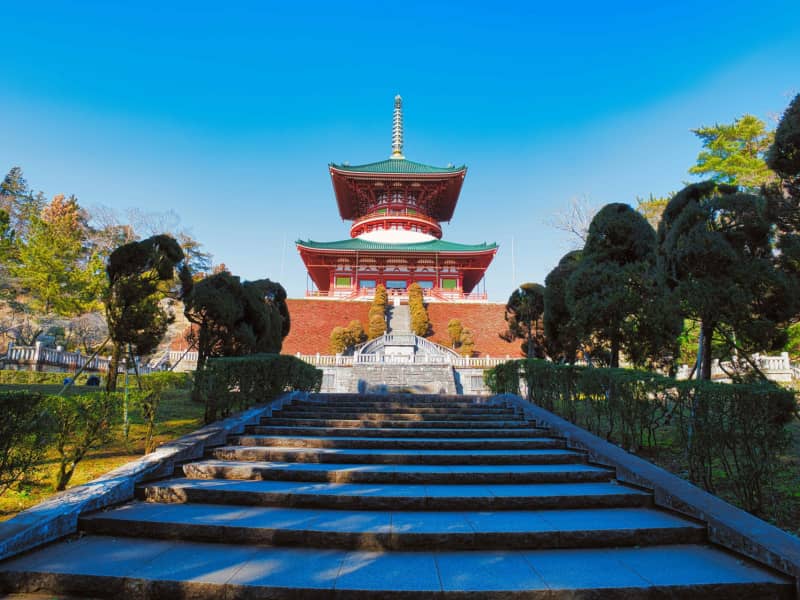
Climbing the slope behind the main complex brings you to the Great Peace Pagoda (Daitō), a more recent structure that offers a quiet spiritual refuge. Inside, the atmosphere is more intimate. A golden Fudō‑Myō‑ō figure sits behind the altar, glowing in the shadows left by the smoke of the daily goma fire rituals. From the surrounding terrace, visitors can take in sweeping views across Narita, even glimpsing distant planes rising from the airport on clear days.


Just beyond the main halls, Naritasan Park opens up like a hidden world. Originally landscaped in the early 20th century, the park covers more than 16 hectares of wooded paths, ponds, and stone bridges. In spring, cherry blossoms bloom beside the water. In autumn, koyo [紅葉] transforms the landscape into a palette of reds and golds. Literary carvings and historical markers dot the paths, adding cultural depth at every turn.
Tucked beside the park’s largest pond is the Naritasan Museum of Calligraphy, which houses a vast and evolving collection of works from the Nara period to contemporary masters. The museum blends tradition with modern design, offering calm and space for reflection through its soaring atrium and changing exhibits. The centerpiece is a massive 13‑meter rubbings panel suspended above the entrance, its brushstrokes bold and timeless.
Throughout the year, Shinsho‑ji remains a living temple. Visitors can witness or join in daily rituals, seasonal festivals, and even New Year’s prayers that draw millions annually. With its deep spiritual roots, artistic legacy, and lush surroundings, the temple offers far more than a historical visit. It’s a place where everyday life, memory, and sacred tradition quietly coexist.
Before you go
Entry is free for both the temple grounds and buildings. Toilets, rest areas, and small cafés are available on site. English signage is moderate, but free volunteer guides are usually available from 10 AM to 3 PM with prior request.
The temple is open year-round with no regular holidays. Temple buildings are generally open from 8:00 AM to 4:00 PM. The grounds remain accessible outside those hours for walking and viewing. Major holidays and festivals draw large crowds, especially during New Year’s (January 1-3), Setsubun (early February), Gion (July 7-8), and Obon (August 13-15). Expect congestion during these times and check the official temple website for exact event schedules and any seasonal changes.
When to go
Spring and autumn offer the most pleasant temperatures for exploring Naritasan Shinshoji Temple's extensive grounds and gardens. Cherry blossoms in early April and vibrant fall foliage in November make these seasons particularly photogenic and culturally significant. Early morning visits between 8:00 AM and 9:30 AM provide the most serene atmosphere for spiritual reflection and photography. Weekday mornings see significantly fewer visitors than weekends, making them ideal for a peaceful temple experience.
Average crowd levels throughout the day, based on historical data.
Public review summary
Visitors consistently praise the temples serene atmosphere and impressive architecture, particularly highlighting the magnificent main hall and three-story pagoda. The goma fire rituals receive enthusiastic feedback for their spiritual authenticity. While the temple grounds are well-maintained and wheelchair accessible, some note that parking can be challenging. The traditional shopping street along the approach draws mixed reviews, with praise for eel restaurants but comments about reduced vibrancy compared to past years.
What you'll find here
Location & access
- DirectionsAddress
1 Narita, Chiba 286-0023, Japan
- How to get there
By Public Transportation:
・From Keisei Ueno Station, take the Skyliner to Keisei Narita Airport Station (about 45 minutes), then transfer to a local train for Keisei Narita Station (around 10 minutes).
・From Tokyo Station, take the Rapid Airport Narita via the Yokosuka–Sōbu Line directly to JR Narita Station (about 70 minutes).
・Alternatively, from Ueno Station, take the Jōban Line via Abiko Station to Narita (approximately 80 minutes).
During New Year’s, trains run through the night and extra services are added for hatsumōde (first shrine visit of the year). Check JR East’s website for the latest schedules.
By Car:
From Tokyo, take the Higashi-Kantō Expressway and exit at either Tomisato IC or Narita IC for easy access to the temple. Highway buses between Tokyo and Narita Airport take about 80 minutes, with multiple services running daily.
Common questions
Is Naritasan Shinshoji Temple wheelchair accessible?
Yes, the temple is fully wheelchair accessible with dedicated entrances, parking spaces, and restroom facilities. The complex includes elevators and accessible pathways to ensure comfortable navigation for visitors with mobility needs.
How far is the temple from Narita Station?
The temple is approximately a 13-minute walk from both JR Narita Station and Keisei Narita Station. The route follows a traditional temple approach road lined with shops and restaurants, making it an enjoyable walking experience.
What are the temple's opening hours?
Naritasan Shinshoji Temple is open daily from 8:00 AM to 4:00 PM throughout the year. The temple maintains consistent hours regardless of seasons or holidays to accommodate visitors.
Are guided tours available at the temple?
Yes, free guided walking tours are available at Naritasan Shinshoji Temple. Foreign visitors can receive English-language guides who typically provide comprehensive one-hour tours of the temple grounds.
Is there parking at Naritasan Shinshoji?
Yes, paid parking is available at the temple complex. While specific spaces are limited, there are several parking areas nearby. The temple offers designated wheelchair-accessible parking spots closest to the entrance.

Bring this spot to life with a local photographer
Book a vetted local photographer who knows the best light, angles, and timing for this location.