

At a glance
Otaguro Park is a traditional Japanese strolling garden located in Suginami City, featuring century-old ginkgo tree-lined pathways, a tranquil pond with Nishikigoi koi, and a preserved Western-style memorial hall honoring music critic Motoo Otaguro. The free public garden showcases meticulously maintained landscapes including bamboo groves, manicured lawns, and cypress plantings arranged around a central pond fed by gentle streams, creating a serene escape within Tokyo's residential neighborhoods.
Photographs
Otaguro Park
Otaguro Park is a serene Japanese strolling garden nestled in Suginami City’s quiet residential area, developed on the former estate of pioneering music critic Motoo Otaguro. The park welcomes visitors through a magnificent entrance lined with towering cypress and century-old ginkgo trees, creating an immediate sense of tranquility. Beyond the impressive gate lies a meticulously maintained landscape featuring traditional Japanese garden elements including a central pond inhabited by magnificent Nishikigoi, wandering streams, bamboo groves, and seasonal plantings.


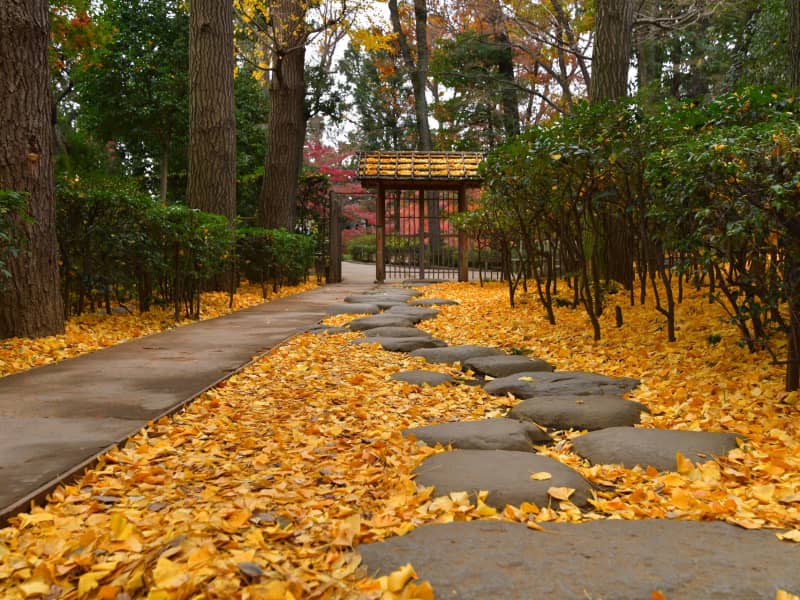
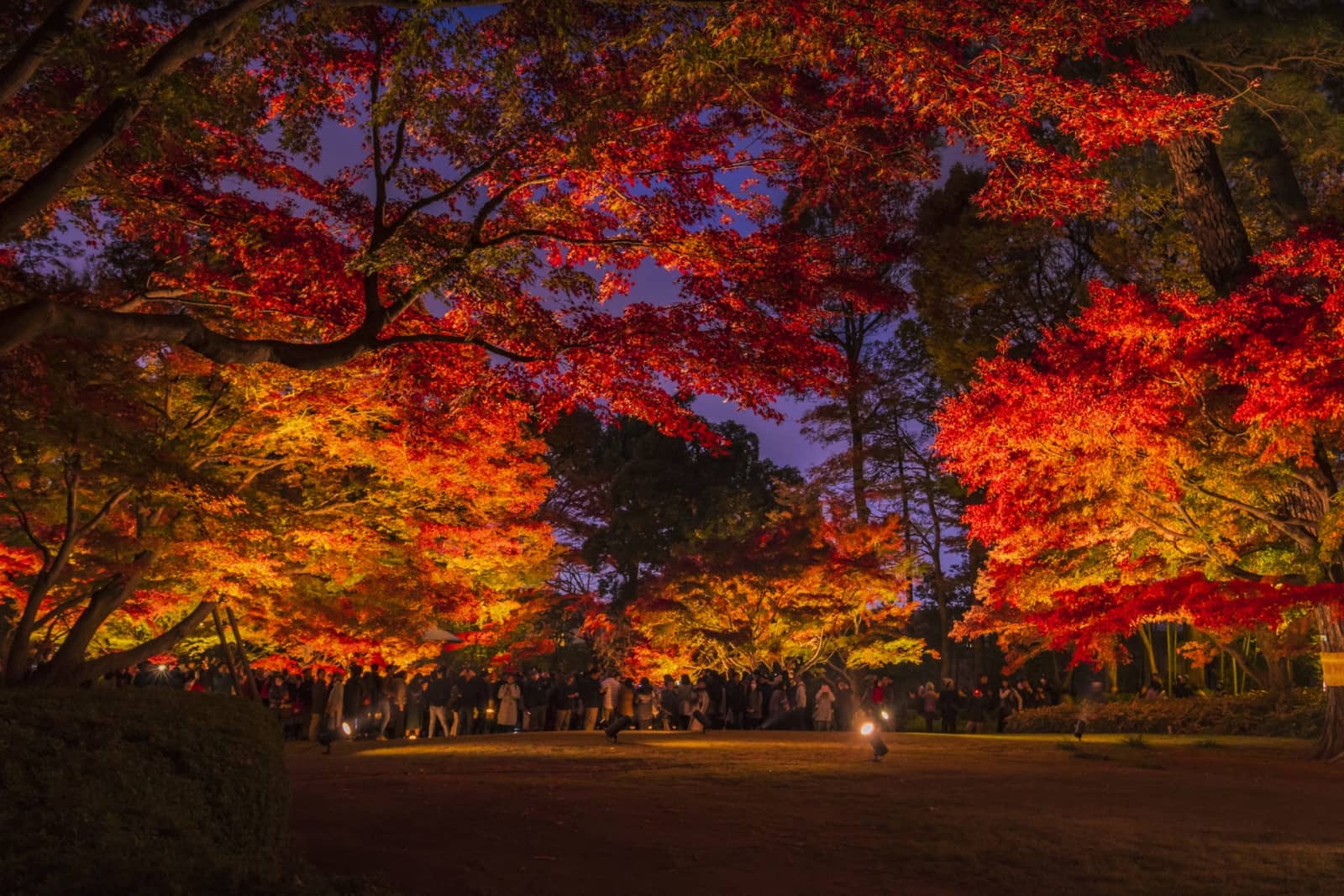
The garden’s western-style memorial hall houses Otaguro’s former studio, where visitors can view a restored 100-year-old Steinway grand piano and learn about his contributions to introducing Western classical music to Japan. Well-maintained pathways wind through diverse plantings of red pines, black pines, maple trees, and expansive lawns, with each turn revealing carefully composed views that showcase traditional Japanese garden design principles. The park is particularly renowned for its spectacular autumn foliage illuminations held annually from late November through early December, when the vibrant Iroha maple leaves are dramatically lit against the night sky and reflected in the pond’s still waters.


Despite its compact size, the garden offers numerous benches and rest areas throughout, making it ideal for contemplative strolls or peaceful relaxation. Clean public restrooms and a management office with helpful staff enhance visitor comfort, while limited koi food is available for purchase at 100 yen for those wishing to interact with the colorful carp. The garden’s free admission and proximity to Ogikubo Station make it an accessible urban retreat perfect for combining with nearby Kadokawa Garden and Ogikubo Family Residence (Ogikubo/Ogigaiso Park).
Seasonal and event highlights
- Spring: Fresh greenery and a peaceful atmosphere make it an excellent time for quiet walks, though it is not a major cherry blossom destination.
- Autumn: Peak maple foliage transforms the garden into one of Suginami’s best autumn viewing spots, typically from late November to early December.
- Event: Autumn Foliage Illumination (late November to early December) lights up the maple trees and their reflections across the pond, creating the park’s signature annual event.
Before you go
Admission is free throughout the year. The park features paved walking paths, benches, public restrooms, and a small management office. Most paths are relatively accessible, although some garden sections include gentle slopes and stepping stones. English information is limited, so a translation app may be helpful. Tripods are generally discouraged, especially during the popular autumn illumination event and when they may obstruct pathways. Comfortable walking shoes are recommended, and visitors should avoid feeding the koi except with officially sold fish food when available.
Open daily from 9:00 AM to 5:00 PM (last admission 4:30 PM). The park is typically closed during the New Year holidays (December 29 to January 3). During the annual autumn illumination event, special evening opening hours apply.
When to go
Autumn is the most spectacular season to visit Otaguro Park, particularly late November to early December when the Japanese maple leaves turn brilliant red and ginkgo trees glow golden yellow, with special evening illuminations enhancing the display. Spring offers charm with sakura blossoms and plum flowers, while summer provides cool respite under dense tree canopy, and winter reveals the garden's elegant structure with bare branches reflected in the pond. Weekday mornings from 9 AM to 11 AM offer the most peaceful experience for contemplative garden viewing, especially Tuesdays and Thursdays when visitor numbers remain modest. Saturday afternoons between 1 PM and 3 PM see the heaviest crowds, particularly during autumn foliage season when long queues may form at the entrance.
Average crowd levels throughout the day, based on historical data.
Public review summary
Visitors consistently praise the parks tranquil atmosphere and immaculate maintenance, especially during autumn when illuminated foliage attracts crowds. The free admission, clean facilities, and majestic ginkgo-lined entrance receive frequent commendation. Many appreciate the well-maintained pond with Nishikigoi carp and seasonal feeding opportunities. Some note limited food options and early closing times as drawbacks.
What you'll find here
Location & access
- DirectionsAddress
3 Chome-33-12 Ogikubo, Suginami City, Tokyo 167-0051, Japan
- How to get there
By Public Transportation: From JR Chuo Line or Tokyo Metro Marunouchi Line Ogikubo Station, use the south exit and walk about 10 minutes through the residential neighborhood to reach Otaguro Park. The park is also within walking distance of Kadokawa Garden and Ogikubo Family Residence, making it easy to combine several attractions in one visit.
By Car: Otaguro Park does not have dedicated visitor parking. Paid coin parking is available around Ogikubo Station and nearby residential streets, but spaces can be limited during weekends and the autumn illumination period. Public transportation is generally the most convenient option.
Common questions
Is Otaguro Park free to enter?
Yes, Otaguro Park offers free admission to all visitors. The park, developed by Suginami Ward on the former residence of music critic Motoo Otaguro, provides complimentary access to its beautiful Japanese garden, traditional teahouse, memorial hall, and grounds. Clean public restrooms are also available at no charge.
How do I get to Otaguro Park from Ogikubo Station?
Otaguro Park is located approximately 10 minutes on foot from JR Ogikubo Station. Exit from the south side of the station and walk through the residential area. The park is situated in a quiet neighborhood, and you'll be greeted by an impressive row of ginkgo trees at the entrance gate.
What are the main attractions at Otaguro Park?
The park features a strolling Japanese garden with a pond containing magnificent Nishikigoi koi carp from Niigata, a bamboo grove, expansive lawns, and century-old ginkgo trees. Visitors can also tour the Western-style memorial building housing a restored 100-year-old Steinway piano. Autumn foliage illuminations are particularly spectacular.
Can I feed the koi fish at Otaguro Park?
Yes, koi food is available for purchase at the management building for 100 yen on a first-come, first-served basis while supplies last. The park is home to several large Nishikigoi donated from Ojiya, Niigata Prefecture, which swim in the pond throughout the Japanese garden.
Is Otaguro Park suitable for young children?
Yes, Otaguro Park is good for kids and offers a peaceful environment for families. However, it's more suited for leisurely strolls and nature appreciation rather than active play. The park has clean restrooms and benches for resting. Note that eating is not permitted within the grounds, and the park is closed on Wednesdays.
Bring this spot to life with a local photographer
Book a vetted local photographer who knows the best light, angles, and timing for this location.