

At a glance
Rengein Tanjoji Temple in Tamana, Kumamoto is a Shingon Ritsu Buddhist temple complex featuring extensive grounds with a five-story pagoda, one of the world's largest temple bells known as the Flying Dragon Bell, and a monumental Buddha statue. The temple serves as a place of worship and spiritual training, offering zazen meditation sessions on the fourth floor of the pagoda by advance reservation. Visitors can explore scenic walking paths through landscapes adorned with seasonal flowers, stone lanterns, lotus ponds, and dedicated observation points with views across the Ariake Sea.
Photographs
Rengein Tanjoji Temple
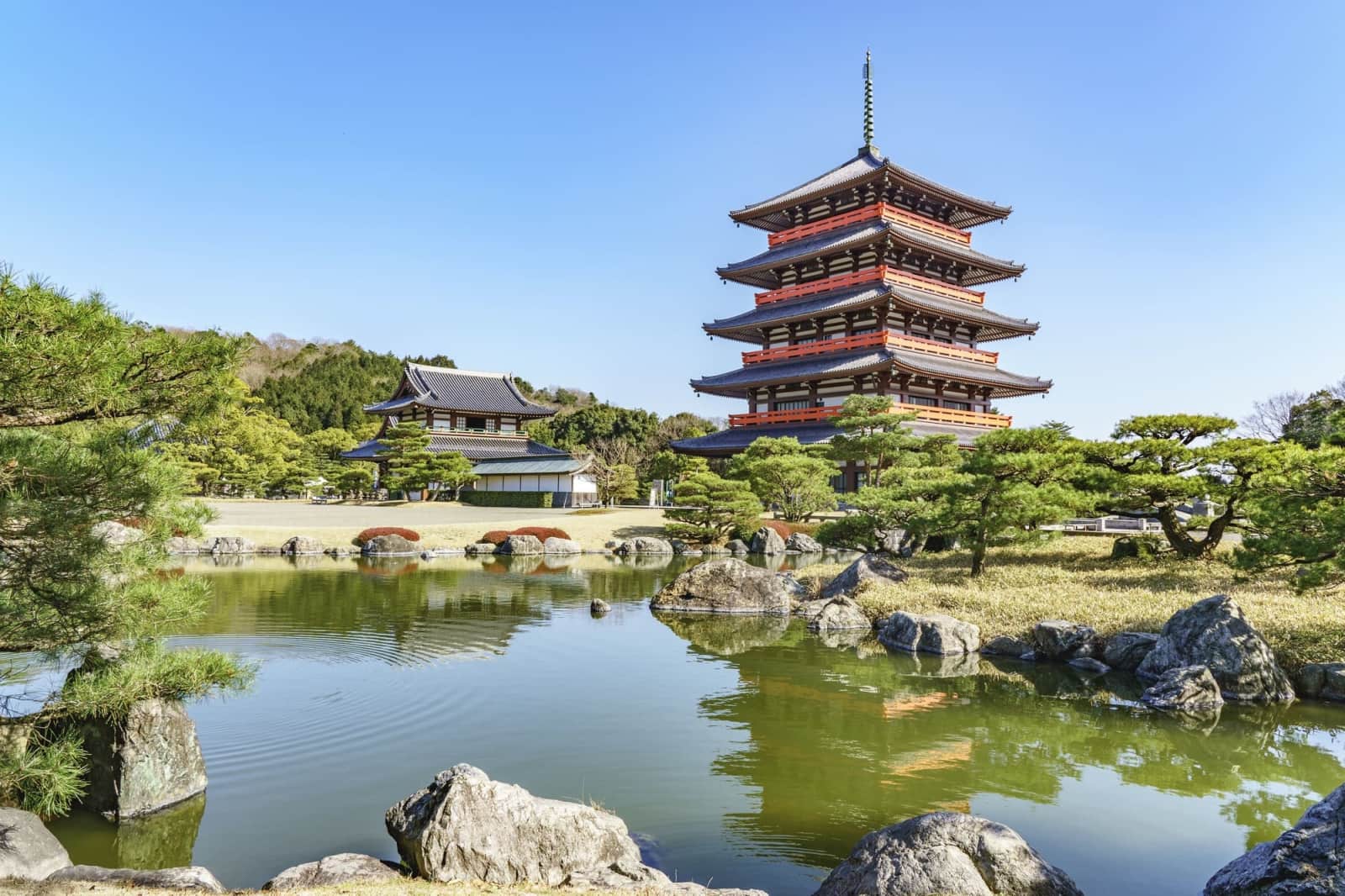
Rengein Tanjoji Temple stands as a significant Shingon Ritsu sect temple in Tamana, Kumamoto Prefecture, renowned for its expansive grounds nestled at the foot of Mount Shōdai. The temple complex features an impressive five-story pagoda reaching approximately 50 meters in height, one of Japan's largest and most architecturally significant structures of its kind. Visitors enter through a distinctive circular gate before encountering the massive Hiryu no Kane bell tower, housing one of the world's largest temple bells at 4.55 meters tall and weighing 37.5 tons.


The first thing that stays with most visitors is the scale. The grounds are wide and slightly mountainous, with stone steps, temple halls, forested paths, ponds, and views opening up as you climb. The famous Hiryu no Kane [飛龍の鐘] is especially striking: a massive temple bell measuring 4.55 meters high, 2.88 meters across, and weighing 37.5 tons. Visitors can usually join the bell prayer held around 11:50 AM, which gives the place a deep, physical sense of ritual.
The temple grounds sprawl across mountainous terrain, connected by numerous staircases and sloped pathways that wind through carefully maintained gardens and natural forest. Notable features include the Dainichido Hall housing the enshrined Kōen Daibosatsu, dedication grounds with thousands of stone lanterns lining the approach, decorative koi ponds, and an observation deck offering panoramic views of Tamana City, the Ariake Sea, and distant Mount Aso on clear days. The fourth floor of the five-story pagoda serves as an Ajikan zazen meditation hall, available by advance reservation.


The atmosphere is calm but not empty, especially when the bell rings and its sound rolls through the valley. Spring brings soft color from plum blossoms and rhododendrons, while clear days reward the climb with views over Tamana, the Ariake Sea, and the surrounding mountains. For photography, the best approach is to arrive in the morning, when the light is gentle on the pagoda, ponds, and stone lanterns, then save the higher viewpoints for wide landscape shots.
Before you go
Admission to the temple grounds is generally free, though some experiences such as meditation sessions, sutra copying, or special prayer activities may require a fee or advance reservation. The grounds are large with many stairs, sloped paths, and uneven stone walkways, so comfortable footwear is strongly recommended. Toilets, parking areas, vending machines, rest spaces, and souvenir shops are available around the complex. Some signage includes English, though most information is in Japanese. Tripods may be acceptable in open outdoor areas if they do not obstruct worshippers, but they are discouraged inside halls during ceremonies. Visitors should dress respectfully and remain quiet near prayer spaces and bell rituals.
The temple is generally open year-round, including weekends and national holidays. Hours may vary slightly during special ceremonies, New Year visits, or large memorial events. Major Buddhist observances and seasonal prayer gatherings can attract larger crowds, especially around New Year and spring festival periods.
When to go
Spring brings magnificent rhododendron blooms and cherry blossoms to Rengein Tanjoji Temple, creating a spectacular floral display across the vast temple grounds. Autumn foliage season transforms the mountain temple into a kaleidoscope of colors, while plum blossoms herald early spring with their delicate beauty. Weekday mornings from opening at 9 AM until 11 AM offer the most peaceful experience, with minimal crowds allowing for quiet contemplation and photography. Visiting at 11:50 AM provides the unique opportunity to witness the daily Flying Dragon Bell prayer ceremony, a deeply moving spiritual experience.
Average crowd levels throughout the day, based on historical data.
Public review summary
Visitors consistently praise the temples impressive scale and well-maintained grounds, highlighting the massive five-story pagoda, giant temple bell, and sprawling landscape. Many appreciate the peaceful atmosphere and spiritual experiences like bell-ringing ceremonies at 11:50 AM. The modest 200 yen entrance fee is considered excellent value. Some note the numerous stairs and slopes throughout, which can be challenging but rewarding. A few mention wishing for clearer signage to specific attractions.
What you'll find here
Location & access
- DirectionsAddress
1512-77 Tsuiji, Tamana, Kumamoto 865-0065, Japan
- How to get there
By Public Transportation:
From JR Tamana Station, take a local bus or taxi toward Rengein Tanjoji Okunoin. The ride usually takes around 15 to 20 minutes depending on traffic. Limited bus schedules make taxis the easier option for many visitors, especially on weekdays.
By Car:
The temple is accessible by car from central Kumamoto and the Kyushu Expressway. From Kumamoto City, the drive takes roughly 1 hour. Free parking is available on-site, including larger parking areas near the main entrance.
Common questions
What is the entrance fee for Rengein Tanjoji Temple?
The entrance fee for Rengein Tanjoji Temple is 200 yen for adults and 150 yen for children. There is an additional fee of 300 yen if you wish to climb to the second floor and above of the five-story pagoda. Free parking is available on site with plenty of spaces for visitors.
Can I participate in zazen meditation at the temple?
Yes, zazen meditation is available at Rengein Tanjoji Temple. The fourth floor of the five-story pagoda serves as the Ajikan Zazen Dojo. Advance reservations are required, and zazen practice sessions last approximately one hour. Contact the temple beforehand to arrange your participation.
What can I see at Rengein Tanjoji Temple?
The temple features an impressive five-story pagoda, one of the world's largest temple bells called the Flying Dragon Bell, a large Buddha statue, observation deck, lotus pond, and extensive gardens. You can also visit the main hall, participate in the plate-throwing ritual for warding off evil, and enjoy seasonal flowers throughout the grounds.
Is Rengein Tanjoji Temple wheelchair accessible?
The temple grounds have some wheelchair accessibility, though there are many stairs and slopes throughout the site. The accessible restroom is located outside near the restaurant area. Visitors with mobility challenges should be aware that accessing all areas may be difficult due to the terrain and numerous staircases.
What time does the bell ringing ceremony occur?
The Flying Dragon Bell prayer ceremony takes place daily at 11:50 AM. Visitors may have the opportunity to participate in ringing this massive bell, which measures 4.55 meters in height and weighs 37.5 tons. This is a deeply moving sacred moment that many visitors come specifically to experience.
Bring this spot to life with a local photographer
Book a vetted local photographer who knows the best light, angles, and timing for this location.