
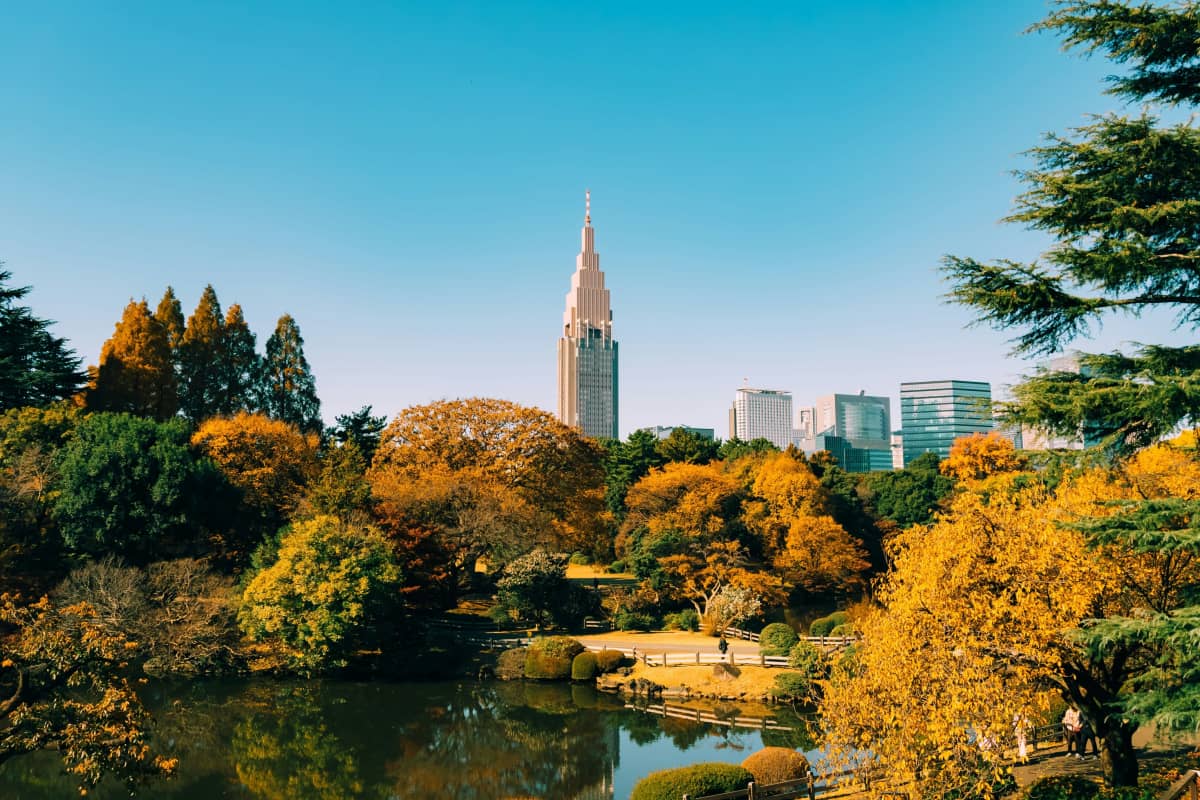
At a glance
Shinjuku Gyoen National Garden is a 144-acre urban park in Tokyo combining Japanese, French, and English landscape garden styles. This former imperial estate features traditional pond gardens, expansive lawns, formal flower beds, and a greenhouse with tropical plants. The garden serves as a peaceful retreat in central Shinjuku, maintaining a calm atmosphere year-round with its no-alcohol policy and controlled entry system.
Photographs
Shinjuku Gyoen National Garden
Shinjuku Gyoen National Garden spans 144 acres (58.3 hectares) in central Tokyo, combining three distinct landscaping styles: traditional Japanese gardens with carefully maintained ponds and bridges, formal French gardens featuring symmetrical rose beds, and expansive English landscape gardens with wide lawns. The park includes a greenhouse showcasing tropical and subtropical plants, making it accessible year-round regardless of weather conditions.


Originally a residence for Tokugawa-era retainers, the grounds transformed into an agricultural research institute during the Meiji period before becoming an imperial garden and eventually opening as a national garden. This historical evolution shaped the diverse botanical collections and garden designs visible throughout the property. The alcohol-free policy maintains a calm, family-friendly atmosphere distinct from typical hanami spots.


Multiple entrance gates provide access from Shinjuku Gate, Sendagaya Gate, and Okido Gate, with Sendagaya Gate offering the most direct path to the lakeside Starbucks location. The garden’s size naturally disperses visitors across Japanese teahouses, rose gardens, and scenic walking paths. Vending machines, rest areas with benches, and visitor facilities appear regularly throughout the grounds, while the on-site greenhouse offers respite during inclement weather. Wheelchair accessibility extends to entrances, restrooms, and seating areas.
Seasonal and Event Highlights
- Spring: One of Tokyo’s premier cherry blossom destinations, featuring around 900 cherry trees of approximately 70 varieties blooming from late February through April.
- Summer: Lush greenery, blooming hydrangeas, and tropical displays inside the greenhouse provide a refreshing urban escape.
- Autumn: Vibrant maple and ginkgo foliage typically peaks from late November to early December.
- Winter: Camellias, plum blossoms, and quieter garden landscapes create a peaceful atmosphere.
- Event: During peak cherry blossom season, special reservation systems and extended opening periods may be implemented to manage crowds.
Before you go
Admission is ¥500 for adults, ¥250 for seniors (65+) and students, while junior high school students and younger enter free. The garden is largely wheelchair accessible, with accessible restrooms and paved pathways throughout many areas. Comfortable walking shoes are recommended, as exploring the entire 58.3-hectare grounds involves considerable walking. Multiple rest areas, vending machines, toilets, a gift shop, cafés including the popular Starbucks near Sendagaya Gate, and English signage are available. Tripods for casual photography are generally permitted but may be restricted during crowded periods such as cherry blossom season. Alcohol consumption, sports activities, and cycling are prohibited inside the garden to preserve its peaceful atmosphere.
Shinjuku Gyoen is typically closed on Mondays (or the following weekday if Monday is a public holiday) and from December 29 to January 3. Special opening periods are often implemented during cherry blossom season and the Chrysanthemum Exhibition. Opening hours vary seasonally, generally operating from 9:00 AM until between 4:30 PM and 7:00 PM depending on the time of year.
When to go
Spring is the most celebrated season at Shinjuku Gyoen, when cherry blossoms transform the garden into a spectacular hanami destination, followed by beautiful double cherry blossoms (yaezakura) and azaleas. Autumn offers equally stunning displays with vibrant foliage from plane trees and bald cypress, peaking in late November, while the greenhouse provides year-round tropical plant exhibits and seasonal orchid displays. Early morning visits at 9 AM opening provide the most peaceful experience with easier access to popular spots like the lakeside Starbucks, especially on weekdays when crowds are significantly lighter. The garden closes promptly at its posted hours, so arrive at least two hours before closing to fully explore the expansive 144-acre grounds.
Average crowd levels throughout the day, based on historical data.
Public review summary
Visitors consistently praise the gardens peaceful atmosphere and diverse landscapes, noting it serves as a genuine escape from urban intensity. The combination of Japanese, English, and French garden styles receives particular appreciation. Many highlight the well-maintained grounds, seasonal blooms including cherry blossoms and roses, and convenient amenities like the lakeside Starbucks. Some mention crowds during peak seasons and higher food prices, though most agree the entry fee offers excellent value for the expansive, carefully preserved space.
What you'll find here
Location & access
- DirectionsAddress
11 Naitomachi, Shinjuku City, Tokyo 160-0014, Japan
- How to get there
By Public Transportation:
Shinjuku Gyoen National Garden can be accessed through three entrances. Shinjuku Gate is approximately a 10-minute walk from JR Shinjuku Station’s New South Exit. Shinjuku-gyoemmae Station (Tokyo Metro Marunouchi Line) is about a 5-minute walk from both Shinjuku Gate and Okido Gate, while JR Sendagaya Station provides the closest access to Sendagaya Gate.
By Car:
Paid parking is available at the garden, although spaces are limited and can fill quickly during cherry blossom and autumn foliage seasons. Public transportation is generally the more convenient option due to central Tokyo traffic and parking restrictions.
Common questions
What are the opening hours of Shinjuku Gyoen National Garden?
Shinjuku Gyoen National Garden is open Tuesday through Sunday from 9 AM to 7 PM. The garden is closed every Monday. Please note that entry may be restricted during peak cherry blossom season, and it's recommended to check ahead during special events or holidays to confirm operating hours.
Is Shinjuku Gyoen National Garden wheelchair accessible?
Yes, Shinjuku Gyoen National Garden offers comprehensive wheelchair accessibility throughout the grounds. The facility features wheelchair accessible entrances, parking lots, restrooms, and seating areas. The wide pathways and well-maintained grounds make it comfortable for visitors with mobility needs to explore the garden.
What payment methods are accepted at Shinjuku Gyoen?
Shinjuku Gyoen National Garden accepts multiple payment methods for your convenience. You can pay using credit cards, debit cards, PayPal, Rakuten Pay, and Transit IC cards. This variety of payment options makes it easy for both domestic and international visitors to access the garden without needing cash.
How long does it take to visit Shinjuku Gyoen National Garden?
Most visitors spend approximately 1 hour exploring Shinjuku Gyoen National Garden, though the expansive 144-acre grounds offer enough to see for those wanting to stay longer. The garden features diverse areas including Japanese, French, and English landscape gardens, along with a greenhouse, so you can adjust your visit based on your interests.
What garden styles can I see at Shinjuku Gyoen National Garden?
Shinjuku Gyoen National Garden showcases three distinct landscape styles in one location. You can explore a traditional Japanese garden with ponds and bridges, a formal French garden with symmetrical flower beds, and an English landscape garden with open lawns. The garden also includes a greenhouse with tropical and subtropical plants.

Bring this spot to life with a local photographer
Book a vetted local photographer who knows the best light, angles, and timing for this location.