
At a glance
Shiofune Kannon Temple in Tokyo's Ome City features a magnificent Buddhist temple complex surrounded by vibrant azalea gardens, highlighted by a towering peace Kannon statue. This historic site offers serene mountain views and seasonal flower displays, combining spiritual significance with natural beauty.
Photographs
Shiofune Kannon Temple
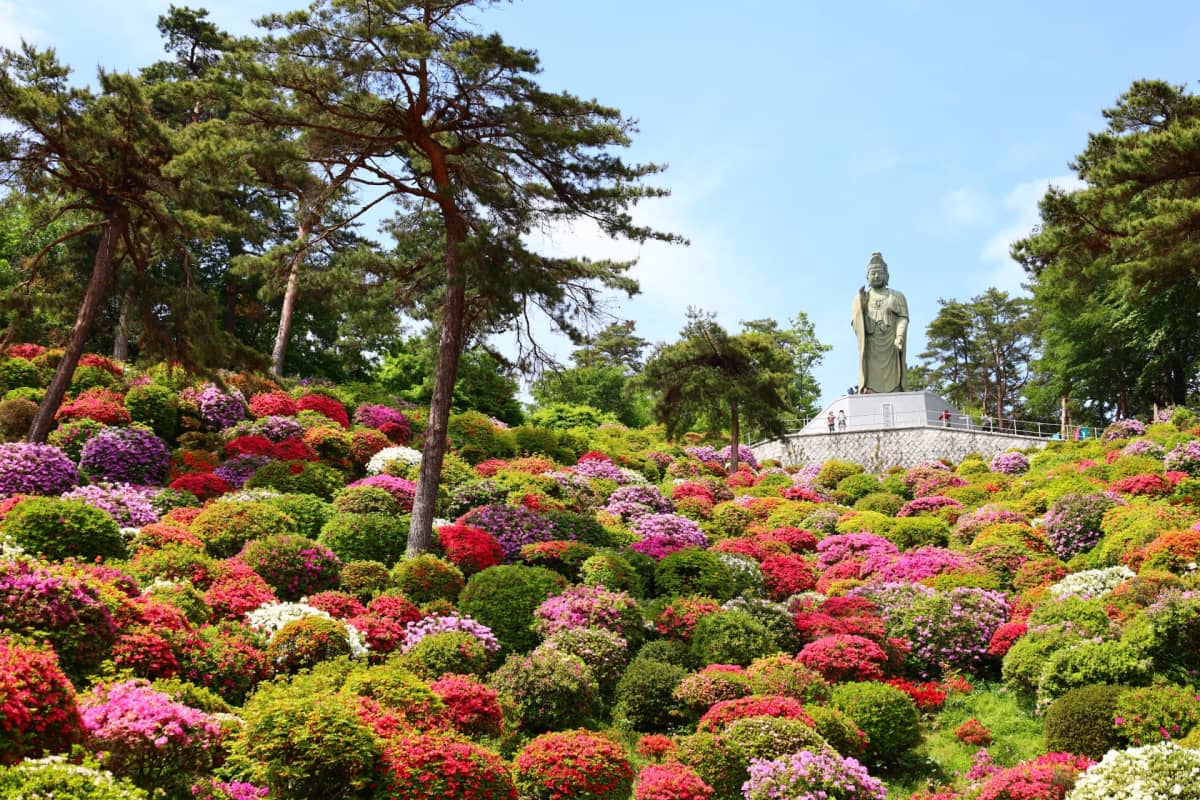
Shiofune Kannon Temple’s hillside garden blooms into a floral spectacle each spring, hosting nearly 20,000 azalea (tsutsuji) bushes across more than 20 varieties. The garden is carefully shaped into a broad, bowl-like hollow, with neatly trimmed spherical shrubs cascading down the slope. The planted shrubs form a horseshoe or basin around the main temple buildings, creating a breathtaking sea of pink, white, red, and purple that seems to spill toward the central courtyard.


From early April, the garden begins to stir with color as the early-blooming Mitsuba tsutsuji (three-leaf azaleas) emerge. By mid to late April, the bulk of the display arrives with the Kurume and Kirishima varieties, which make up the largest share of plantings. This is when the garden reaches its peak. From late April into early May, late-blooming Ryukyu azaleas take the stage, extending the viewing period to nearly a full month of blooming beauty.
At the top of the garden stands the striking Shiofune Heiwa (Peace) Kannon statue. From its base, you get sweeping views over the azalea valley, into the wider Tama plain, and on clear days even glimpses of Mount Fuji haunting the horizon. The positioning of the statue and garden echoes the temple founder’s original vision: he saw the natural depression as a symbolic “salt boat” carrying compassion into the world.

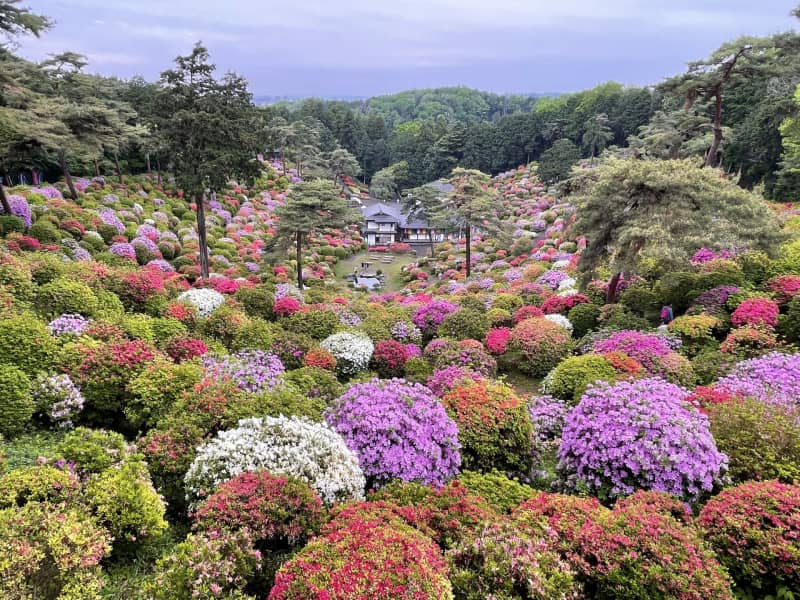

Surrounding the garden are several traditional thatched-roof buildings, including the thatched Kannon-dō which houses the ancient Senju Kannon (Thousand-Armed Kannon) statue said to date back to the Taika era in the 7th century. This carving is still preserved and occasionally displayed during major festivals along with the 28 attendants of Kannon, wood figures from the Kamakura period.
As you wander the grounds, you’ll encounter a peace bell, incense hall, and a modest restaurant and souvenir shop that serve soba and local produce, perfect for a post-bloom snack while gazing up at the colorful hillside. If you visit around May 3, you may witness or take part in the dramatic fire-walking ceremony (hiwatari), an ancient ritual believed to purify and bring blessings.
Before you go
During non-festival times, admission is free; during the Azalea Festival (mid-April through early May), the entrance fee is about ¥300 for adults, ¥100 for children, and group discounts apply for parties of 20 or more. Parking is typically around ¥700 during the festival; otherwise parking may be free or minimal. Facilities include toilets, a small restaurant serving soba, a souvenir shop, and accessible paths around much of the site, although steeper trails may be less accessible.
The temple grounds are open every day year‑round (no closing days), from 8 a.m. to 5 p.m. During the festival(mid‑April to early May), the fire‑walking event (hiwatari) is held annually on May 3, and the Senju Kannon and 28 attendant statues are displayed from May 1 to May 3.
When to go
Spring brings spectacular azalea blooms to Shiofune Kannon Temple, with peak flowering typically occurring in mid April to early May. The temple grounds transform into a vibrant tapestry of pink and purple hues, while autumn offers peaceful moments among the changing foliage. Early morning visits, between 8:00 AM and 10:00 AM, provide the best experience with fewer crowds and optimal lighting for photography. Weekday mornings are particularly peaceful, offering a more contemplative atmosphere for exploring the temple grounds and gardens.
Average crowd levels throughout the day, based on historical data.
Public review summary
Visitors consistently praise the temples serene atmosphere and well-maintained grounds, particularly highlighting the spectacular azalea displays during spring bloom season. The peaceful environment and panoramic views from the Kannon statue receive frequent mentions. Some note timing visits can be tricky, as flower peak periods vary yearly, and weekends during bloom season can get crowded. Parking availability during festivals is occasionally cited as challenging.
What you'll find here
Location & access
- DirectionsAddress
194 Shiobune, Ome, Tokyo 198-0011, Japan
- How to get there
By Public Transportation: Take the JR Ōme Line to Kabe Station. From there, ride a Nishi Tokyo Bus or Toei Bus and get off at Shiofune Kannon Iriguchi. It’s about a 10-minute walk from the bus stop. Alternatively, you can walk from Kabe Station in about 40 minutes.
By Car: From the Ken-Ō Expressway, take the Ome Interchange and drive about 4 km (10 minutes). From the Iruma Interchange, it’s about 13 km. Parking is available on site (fees apply during festival season).
Common questions
When is the best time to see the azaleas at Shiofune Kannon Temple?
The azaleas typically reach full bloom in mid to late April to early May, with peak viewing around Golden Week. Blooming times can vary each year, and the temple plants different varieties to extend the viewing season. For the best experience, visit in the morning before crowds arrive.
Is there parking available at the temple?
Yes, the temple has several on-site parking lots accessible for visitors, with wheelchair-accessible spaces available. During azalea season, parking becomes paid and costs around 700 yen. The lots can fill up quickly during peak bloom times, especially on weekends.
Can I see Mount Fuji from the temple grounds?
Yes, on clear days Mount Fuji is visible from the temple grounds, particularly from the viewing area near the large Kannon statue. The best visibility tends to be during morning hours when the air is clearest.
What makes Shiofune Kannon Temple historically significant?
The temple dates back to the Taika Reform period, with its name 'Shiofune' (salt ship) derived from the mortar-shaped topography that monk Gyoki likened to a ship. The temple grounds feature traditional thatched-roof buildings from the main gate to the main hall.
Are there amenities available for visitors?
The temple offers basic amenities including clean, wheelchair-accessible restrooms and a small shop area where you can purchase souvenirs and traditional snacks. The grounds are generally wheelchair accessible, though some areas have slopes.

Bring this spot to life with a local photographer
Book a vetted local photographer who knows the best light, angles, and timing for this location.