

At a glance
The National Art Center in Minato City serves as Japan's largest exhibition venue dedicated to rotating contemporary and traditional art displays. This modern facility features distinctive wave-like glass architecture designed by Kisho Kurokawa and operates without a permanent collection, instead hosting multiple concurrent exhibitions across its spacious galleries. Notable amenities include wheelchair accessibility throughout, family-friendly facilities with nursing rooms and changing tables, plus dining options ranging from casual cafes to French fine dining, making it suitable for extended cultural exploration.
Photographs
The National Art Center
The National Art Center, Tokyo (国立新美術館) is less a “museum you finish” and more a huge, flexible exhibition venue in the middle of Roppongi’s art triangle. It opened in 2007 and famously has no permanent collection, so what you see depends entirely on the season, the week, even the day. That’s part of the charm: you can drop in for a major ticketed show, or just wander the public spaces and smaller displays for free.
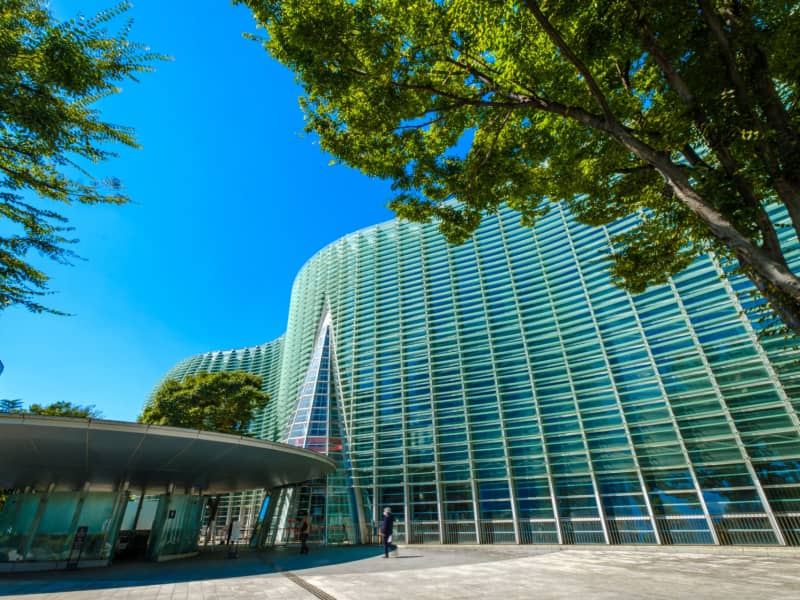


Architecturally, it’s one of Tokyo’s most photogenic interiors. Kisho Kurokawa designed the building around a wavelike glass curtain wall, and inside you get a soaring atrium with dramatic inverted cone structures that feel almost sci-fi in a calm, elegant way. The center has 14,000 square meters of exhibition space across multiple galleries, so even on busy days it rarely feels cramped once you’re past the entrance.
Exhibitions run in parallel, often spanning everything from large-scale international shows to Japanese art association exhibitions, so it’s worth checking what’s on before you go. Between galleries, the building is set up for lingering: an art library, a museum shop, and several solid food options, including Salon de Thé ROND in the cone space and BRASSERIE PAUL BOCUSE Le Musée upstairs if you want a longer sit-down break.
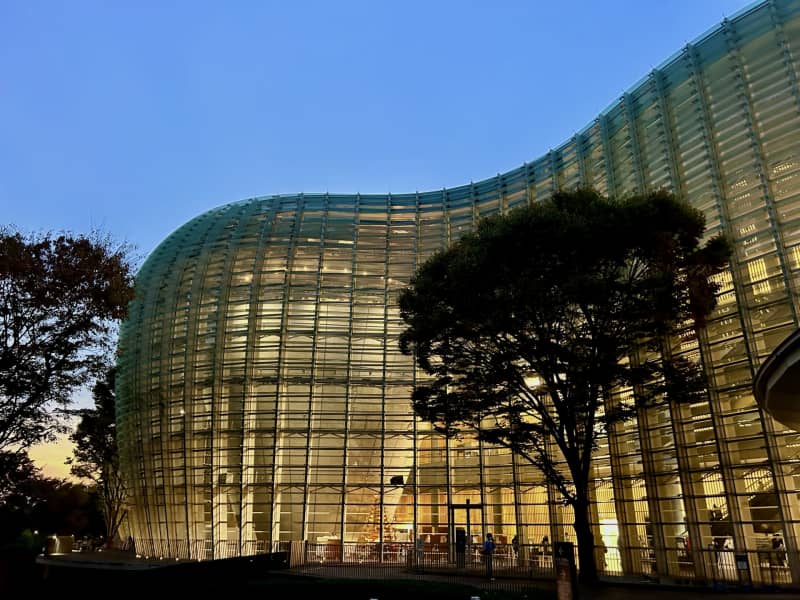


Logistically, it’s one of the easiest big museums in Tokyo to visit. You get direct access from Nogizaka Station (Exit 6), and the facilities are thoughtfully designed for strollers and wheelchairs, with elevators and barrier-free routes clearly supported. For photos, the best moments are usually when daylight is soft: morning or late afternoon turns the glass and concrete into gentle gradients, and the curves of the facade and atrium reward wide-angle shots and clean, centered compositions.
Before you go
General admission to the building and some exhibitions is free, but special exhibitions require a paid ticket, typically around ¥1,500-¥2,000 depending on the show. The museum is fully accessible, with elevators, ramps, nursing rooms, and lockers available. Large bags should be stored before entering galleries. Photography rules depend on the exhibition, but the atrium and public areas are usually allowed.
The museum is generally closed on Tuesdays, except during special exhibition periods. It also closes during the New Year holidays. Opening hours may extend into the evening on Fridays, so it’s worth checking the exhibition schedule in advance.
When to go
The National Art Center remains an excellent year-round destination, with its indoor galleries providing climate-controlled comfort regardless of Tokyo's seasonal weather. Spring and autumn offer particularly pleasant experiences when natural light through the dramatic curved glass facade creates stunning interior atmospheres, while seasonal exhibitions often align with major Japanese art events during these periods. Weekday mornings between 10 AM and 11 AM provide the most peaceful viewing experience, allowing visitors to appreciate both the architecture and exhibitions without significant crowds. Weekend visits, particularly Saturday afternoons, attract substantially more visitors and require advance ticket purchases for popular exhibitions to avoid disappointment.
Average crowd levels throughout the day, based on historical data.
Public review summary
Visitors praise the stunning modern architecture designed by Kisho Kurokawa, noting the building itself feels like art with its elegant curves and natural light. Many appreciate the free entry to common areas and diverse rotating exhibitions. The cafes and restaurants receive mixed feedback due to wait times and ordinary menus. Families value the accessibility features and child-friendly amenities, while art enthusiasts enjoy the spacious exhibition halls and professional presentation standards.
What you'll find here
Location & access
- DirectionsAddress
7 Chome-22-2 Roppongi, Minato City, Tokyo 106-8558, Japan
- How to get there
By Public Transportation:
The museum is directly connected to Nogizaka Station (Tokyo Metro Chiyoda Line), Exit 6, which leads straight into the building underground. It is also within walking distance from Roppongi Station on the Hibiya and Oedo Lines.
By Car:
Paid parking is available on-site in limited numbers. Spaces can fill quickly during popular exhibitions, so public transport is strongly recommended.
Common questions
Is The National Art Center free to enter?
Entry to The National Art Center building itself is free. You can access the lobby, cafes, restaurants, and museum shop without a ticket. However, special exhibitions require separate admission tickets, which vary by exhibition. The building features multiple exhibition spaces hosting different shows simultaneously.
How do I get to The National Art Center from Tokyo Station?
Take the Tokyo Metro Marunouchi Line from Tokyo Station to Kokkai-gijidomae Station, then transfer to the Chiyoda Line and get off at Nogizaka Station. The museum is directly connected to Nogizaka Station via Exit 6, making it easily accessible without going outside. The journey takes approximately 20 minutes.
Are there dining options at The National Art Center?
The National Art Center has multiple dining options across several floors. There's a cafeteria on the basement floor, cafes on the first and second floors, and a French restaurant on the upper floor. You can enjoy meals and refreshments without purchasing exhibition tickets, as the dining areas are in the free-access zones.
Is The National Art Center wheelchair accessible?
Yes, The National Art Center is fully wheelchair accessible. The facility features wheelchair accessible entrances, parking lots, and restrooms. Wheelchairs are available to borrow at the museum. Lockers are provided on each floor for convenient luggage storage, and the direct connection from Nogizaka Station makes access particularly easy.
What facilities are available for families with children?
The National Art Center is family-friendly with nursing rooms, changing tables, and kid-friendly activities. Children receive discounted admission to exhibitions, and infants are welcome throughout the museum. The facility offers childcare services on certain days. The basement cafeteria is recommended for families, and strollers are permitted in most areas.

Bring this spot to life with a local photographer
Book a vetted local photographer who knows the best light, angles, and timing for this location.