

At a glance
A free nightly projection mapping show on Tokyo Metropolitan Government Building featuring dynamic lights, music, and rotating content. Visitors can relax on synthetic grass while watching 15-minute displays that showcase Japanese culture and modern technology.
Photographs
Tokyo Night and Light
The Tokyo Metropolitan Government Building in Shinjuku now plays host to TOKYO Night & Light, the world’s largest permanent architectural projection mapping display. Since its debut in February 2024, this monumental light show has redefined Tokyo’s nighttime skyline, turning the building’s expansive east façade into a living canvas spanning 13,905 square meters—a feat officially recognized by Guinness World Records. Night after night, cutting-edge animation, music, and storytelling transform the stoic structure into a luminous gateway of urban imagination.
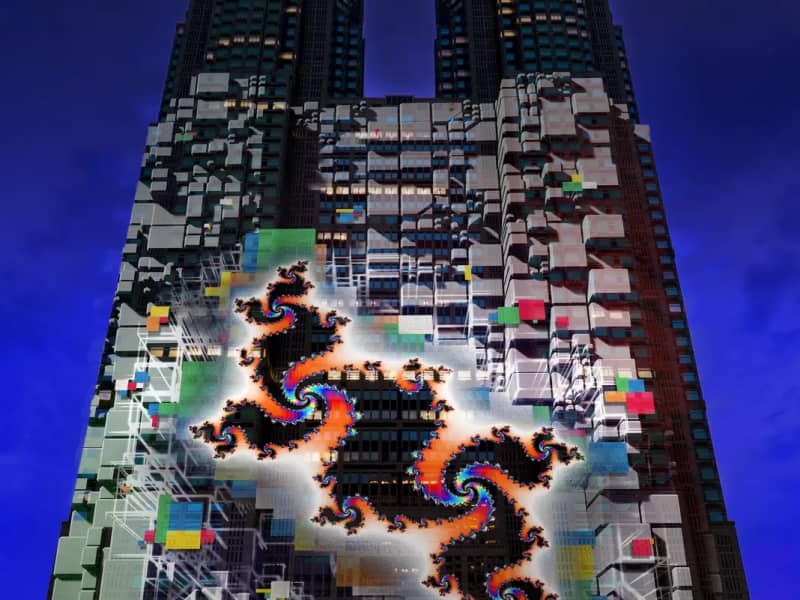

Conceived through a collaboration between the Tokyo Metropolitan Government and leading visual artists, the display celebrates both Japanese creativity and global artistic exchange. The content rotates weekly, mixing iconic imagery—like Godzilla, Gundam, and scenes inspired by Japanese mythology—with original narratives created by international creators. Notably, student artists from local universities also contribute, offering bold, experimental works that explore everything from the rhythms of city life to mathematical abstractions and ethereal dreamscapes, injecting the project with fresh energy and vision.
The spectacle is powered by 40 state-of-the-art projectors that cast seamless, high-resolution visuals across the building’s towering 110-meter by 126-meter surface. These animations are further brought to life by a synchronized sound system playing everything from contemporary J-pop (such as YOASOBI) to ambient electronic beats layered with traditional Japanese instruments and performance art. The show is best enjoyed from Tomin Hiroba [都民広場], a large public plaza outfitted with synthetic grass where visitors gather freely to watch the unfolding visual symphony.
As night falls, the plaza becomes an open-air amphitheater of color and sound. Weekends and holidays feature especially elaborate programming, including alternating shows every 30 minutes and fan-favorite segments like “Tokyo Gundam in the Future.” Weeknights take a subtler approach, with refined visuals that emphasize the architectural form of the building and cater to passersby and office workers unwinding after hours. This initiative is part of a broader strategy by the city to enrich Tokyo’s nightlife and cultural identity through accessible, high-impact public art.

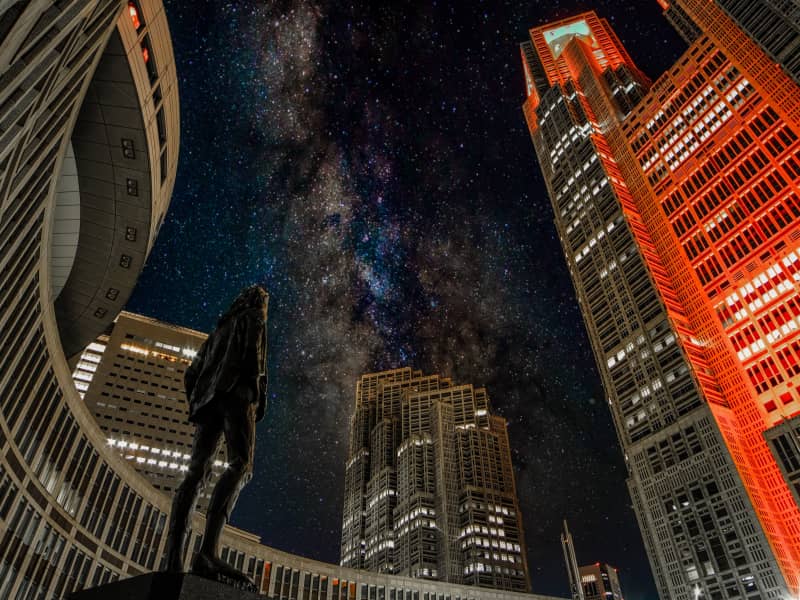
From a photography standpoint, TOKYO Night & Light is a rare chance to document large-scale digital art against the glittering backdrop of Shinjuku. The best angles are directly from the plaza, where you can shoot full façades or crop into detailed scenes. Tripods are generally allowed, especially on less crowded weekdays, but consideration of space and fellow viewers is advised. Because the show varies by the half hour and includes ever-changing visuals, photographers can capture multiple moods and moments in a single visit.
TOKYO Night & Light is more than a spectacle—it’s a symbol of Tokyo’s forward-looking urban culture. Blending architectural grandeur, creative innovation, and public accessibility, it reimagines how the city engages with its own skyline, offering a luminous new tradition for both residents and global visitors alike.
Before you go
Comfortable footwear is recommended, as visitors may stand for extended periods. Public toilets and several cafés are nearby. Tripods are generally allowed but should be used considerately, especially during busy periods. The event is held outdoors, so dress appropriately for the season, and note that shows may be canceled in severe weather. Starting times vary depending on season but usually start after sunset.
Open daily during scheduled hours; occasional closures for maintenance or events may apply. Closed during severe weather conditions such as heavy rain or storms, when the event may be canceled for safety reasons.
When to go
The best time to visit is during spring and autumn, when the weather is mild and the skies are clear, enhancing the visual impact of the projections. Shows run nightly from sunset (typically 7:30pm in summer, 6:30pm in winter) until around 9:45pm, with special themed content on weekends and holidays. Arriving early in the evening ensures a good viewing spot and a more relaxed atmosphere, while later shows offer a livelier crowd and more dramatic city lights. Check the official website for seasonal event updates and special performances.
Public review summary
The light show consistently receives praise for its impressive visual displays and free admission. Visitors appreciate the comfortable synthetic grass seating area and convenient location near Shinjuku. Some note that the sound quality could be improved and viewing angles can strain necks due to the building height. While the 15-minute shows are considered entertaining, a few visitors mention the projection quality appears slightly blurry at this large scale. The casual, outdoor atmosphere and rotating show content appeals to both tourists and locals.
What you'll find here
Location & access
- DirectionsAddress
2 Chome-8-1 Nishishinjuku, Shinjuku City, Tokyo 163-8001, Japan
- How to get there
By Public Transport: Tochomae Station on the Oedo Subway Line is located directly in the building’s basement, with Exit A4 leading to about a 6-minute walk to the viewing plaza. Shinjuku Station, a major transport hub, is approximately a 10-minute walk from its west exit or the Keio Department Store Exit. Similarly, Nishi-Shinjuku Station on the Marunouchi Subway Line is about a 10-minute walk from Exit E2.
Common questions
What is Tokyo Night and Light and where can I find it?
Tokyo Night and Light is a free projection mapping show displayed on the Tokyo Metropolitan Government Building in Shinjuku. It holds the Guinness World Record for largest permanent architectural projection-mapped display.
How long does each show last?
Each show runs for approximately 15-20 minutes. The program features multiple shows per evening, with different content shown on weekdays versus weekends. Visitors can watch multiple shows during their visit.
Do I need to make a reservation to see the light show?
No reservation is required for the light show. It's a free public attraction with open seating on benches and synthetic grass lawn areas. Visitors can simply arrive and find a spot to watch.
What's the best way to enjoy the show?
Many visitors recommend finding a spot on the synthetic grass lawn to watch. While comfortable for viewing, note that the building is quite tall, so you may want to position yourself at a good angle to avoid neck strain.
Can I combine this with other nearby attractions?
Yes, you can combine the light show with a visit to the Tokyo Metropolitan Government Building's observation deck, which is located in the same building and is also free to visit.

Bring this spot to life with a local photographer
Book a vetted local photographer who knows the best light, angles, and timing for this location.