

At a glance
The Tsurugaoka Museum is a minimalist cultural facility designed by renowned architect Junzo Sakakura, located within the grounds of Tsurugaoka Hachimangu Shrine in Kamakura. This museum showcases exhibitions related to the adjacent shrine's history, samurai culture, and Kamakura heritage through rotating displays of artifacts, swords, and historical documents in a tranquil modernist setting.
Photographs
Tsurugaoka Museum
The Tsurugaoka Museum sits quietly beside Heike Pond within the grounds of Tsurugaoka Hachimangu Shrine, housed in a refined modernist building designed by Junzo Sakakura. Originally opened in 1951 as Japan’s first public modern art museum, the structure itself is now recognized as a National Important Cultural Property. Its elevated pilotis design allows water and light to move beneath the building, and on calm days you’ll notice the soft reflections of the pond shimmering across the ceiling.
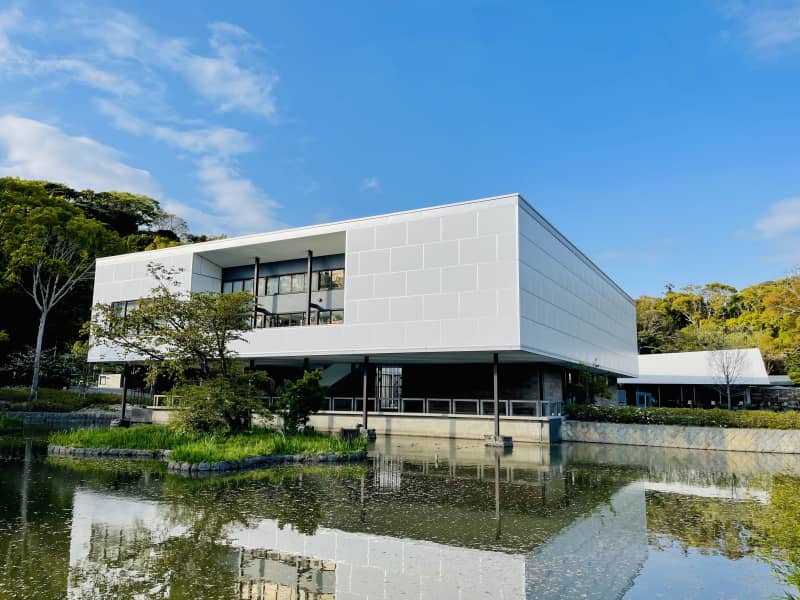

Inside, the museum keeps things intentionally simple. Exhibitions rotate throughout the year, often exploring Kamakura’s history, the cultural world of the shrine, and seasonal or artistic themes rather than sticking to one fixed narrative. It’s not a large space, but that’s part of the appeal. You can take everything in at a comfortable pace in about 30 to 40 minutes without feeling rushed or overwhelmed.
The atmosphere is noticeably calm compared to the busy shrine approach just outside. The open layout and natural light give the interior a quiet, almost meditative feel, making it a nice pause during a day of walking around Kamakura. It’s the kind of place where you slow down a bit, rather than move quickly from exhibit to exhibit.
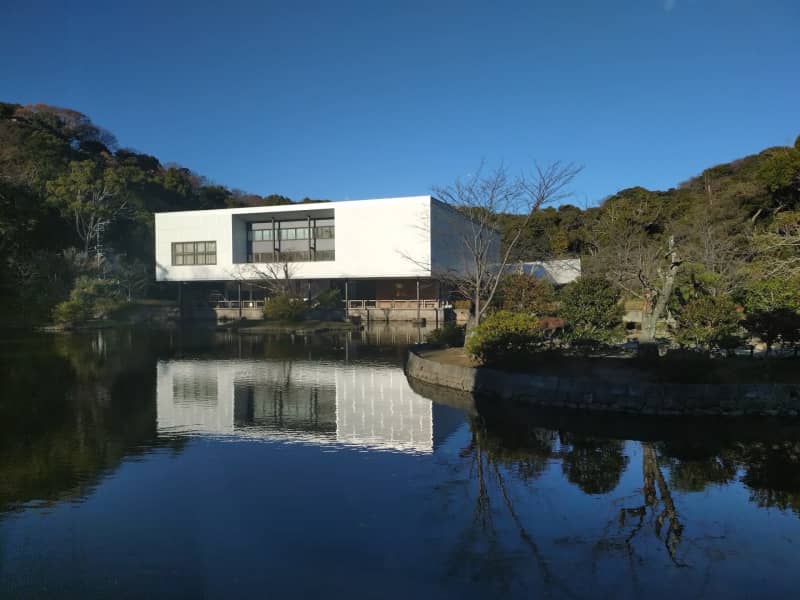
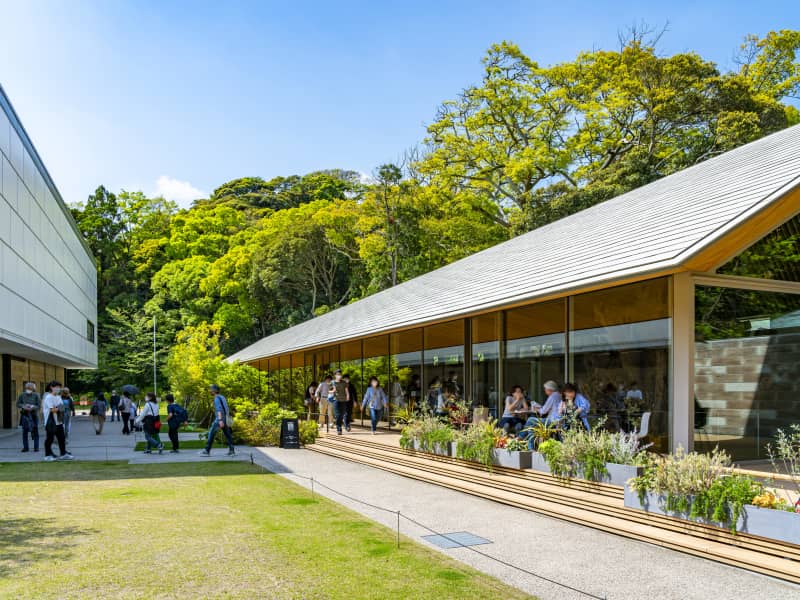
Just next door, the small café adds a thoughtful touch. It houses part of the trunk of the fallen sacred ginkgo tree, which once stood prominently at the shrine before it collapsed. Sitting here with a view of the pond, it’s easy to reflect on how the museum blends architecture, history, and nature into one subtle, cohesive experience.
Before you go
Entry fees vary depending on the exhibition, typically around ¥300-¥500 for adults, with discounts for students. The museum is compact and fully accessible, with elevators and multipurpose restrooms available. Lockers and luggage storage can be arranged at reception. Photography is not allowed inside exhibition rooms, though some outdoor areas are fine for personal use. There are no strict footwear rules, and the space is easy to navigate without much walking. A small café sits next door.
The museum is generally open daily except Mondays (or the following weekday if Monday is a holiday). Opening hours are usually around 10:00 to 16:30, but these may vary depending on exhibitions, so it’s best to check the official website before visiting.
When to go
Visit during spring when cherry blossoms frame the museum's modernist architecture and lotus flowers bloom in nearby Heike Pond, creating stunning reflections on the building's ceiling. Autumn also offers pleasant weather for appreciating Junzo Sakakura's design alongside the surrounding nature. The museum maintains consistent exhibits year-round, making it accessible regardless of season. Weekday mornings shortly after the 10 AM opening provide the most peaceful viewing experience, as most visitors concentrate on Tsurugaoka Hachimangu Shrine next door. The museum rarely experiences significant crowds even during peak tourist seasons, allowing visitors to comfortably explore the exhibits and architectural features at their own pace.
Public review summary
Visitors appreciate the museums striking modernist architecture by Junzo Sakakura, especially the beautiful water reflections on the ceiling from the adjacent pond. Many find the exhibits on Kamakura history and Tsurugaoka Hachimangu Shrine informative, though some note the collection is compact with limited displays. The peaceful atmosphere contrasts with the busy shrine grounds, offering a quiet retreat for thoughtful exploration.
What you'll find here
Location & access
- DirectionsAddress
2 Chome-1-53 Yukinoshita, Kamakura, Kanagawa 248-0005, Japan
- How to get there
By Public Transportation:
From Kamakura Station (JR Yokosuka Line or Enoden), take the East Exit and walk about 10 minutes straight along the main approach (Wakamiya Oji). The museum is located within the grounds of Tsurugaoka Hachimangu Shrine near Heike Pond.
By Car:
Driving into central Kamakura can be slow, especially on weekends. There is no dedicated parking for the museum, so visitors usually rely on nearby paid parking lots around Kamakura Station or the shrine area.
Common questions
What is the Tsurugaoka Museum and what can I see there?
The Tsurugaoka Museum is a minimalist art museum in Kamakura designed by architect Junzo Sakakura. It features rotating exhibits on Kamakura's history, culture, and Tsurugaoka Hachimangu Shrine, including displays of samurai culture, Japanese swords, traditional artifacts, local art, and calligraphy.
How much does admission cost at Tsurugaoka Museum?
Admission to Tsurugaoka Museum is free for the permanent collection. Special exhibitions may have varying admission fees, typically around 600 yen for adults. It's recommended to check current exhibition details before visiting as fees can change based on the special exhibits on display.
Is Tsurugaoka Museum wheelchair accessible?
Yes, Tsurugaoka Museum is wheelchair accessible. The facility features a wheelchair accessible entrance and wheelchair accessible restrooms. The building's piloti design on the first floor and elevator access to the second-floor exhibition rooms make it convenient for visitors with mobility needs.
How long does it take to visit Tsurugaoka Museum?
Most visitors spend approximately one hour exploring Tsurugaoka Museum. The exhibition space is compact, occupying primarily the second floor, so even taking time to view the displays, watch videos about Kamakura's history, and appreciate the modernist architecture, 30-60 minutes is sufficient for a thorough visit.
What are the opening hours of Tsurugaoka Museum?
Tsurugaoka Museum is open Tuesday through Sunday from 10 AM to 4:30 PM, with last entry at 4 PM. The museum is closed on Mondays, though it may open on national holidays. It's located within the grounds of Tsurugaoka Hachimangu Shrine, about 15 minutes walk from Kamakura Station.

Bring this spot to life with a local photographer
Book a vetted local photographer who knows the best light, angles, and timing for this location.