

At a glance
Usa Jingu Shrine in Usa City, Oita Prefecture, is a historic Shinto shrine established in the early 8th century and serves as the head shrine of approximately 44,000 Hachiman shrines throughout Japan. The shrine complex features vermilion buildings set within expansive grounds filled with ancient trees, and visitors perform worship using a distinctive ritual of two bows, four claps, and one bow, unique to this shrine and a few others in Japan.
Photographs
Usa Jingu Shrine
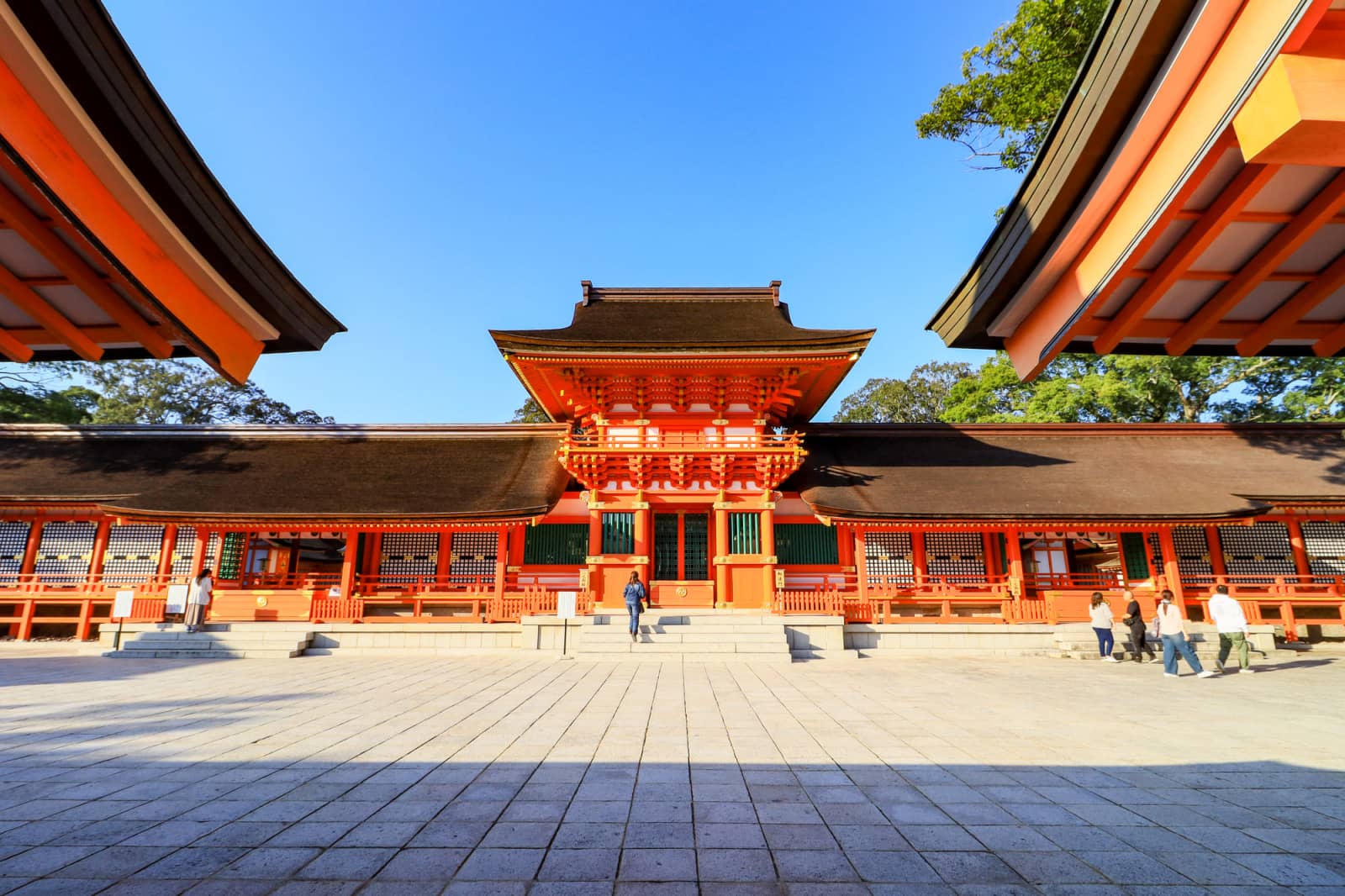
Usa Jingu Shrine stands as the head shrine of over 40,000 Hachiman shrines throughout Japan, making it one of the nation’s most historically significant Shinto sites. Founded in 725 AD during the Nara period, this sprawling sacred complex in Usa City, Oita Prefecture, is closely associated with Mount Omoto (御許山) and has served as a pioneering example of shinbutsu-shugo [神仏習合], the syncretism of Shinto and Buddhism. The shrine’s National Treasure main hall showcases distinctive vermilion Hachiman-zukuri architecture that contrasts beautifully with the surrounding ancient forest of centuries-old trees.


The shrine grounds encompass both an Upper Shrine (Jogu) and Lower Shrine (Gegu), requiring visitors to walk through extensive wooded pathways and stone approaches to properly complete their pilgrimage. Visitors practice a unique worship ritual involving two bows, four claps, and one bow, a tradition shared only with a small number of major shrines, including Izumo Taisha. The complex features Hishigata Pond, where visitors can observe and feed carp and turtles, numerous subsidiary shrines, sacred spring water, and a treasure hall displaying historical artifacts. The approach is lined with souvenir shops and restaurants offering local specialties.


With wheelchair-accessible facilities, restrooms throughout the grounds, and onsite services including goshuin stamp collection, the shrine accommodates diverse visitor needs while maintaining its sacred atmosphere. The vast precinct requires approximately two to three hours for thorough exploration, allowing time to absorb the spiritual energy emanating from the sacred camphor trees and experience the refreshing atmosphere that sets this location apart from everyday surroundings.
Seasonal and Event Highlights
- Spring: Cherry blossoms bloom around the shrine grounds and Hishigata Pond, creating a serene atmosphere from late March to early April.
- Summer: The Nagoshi Festival (夏越祭) and traditional Yabusame horseback archery performances take place in late July.
- Autumn: Vibrant autumn foliage colors transform the shrine’s sacred forest and walking paths from mid-November to early December.
- Winter: The shrine hosts traditional New Year celebrations and Hatsumode, attracting large numbers of worshippers.
- Event: The Hojoe Festival (放生会), one of Usa Jingu’s most important traditional ceremonies, is held annually in October.
Before you go
Admission to the shrine grounds is free, making it an accessible destination for all visitors. Allow at least 2 to 3 hours to fully explore both the Upper Shrine and Lower Shrine precincts. The pathways are mostly paved, but some areas include gentle slopes and stone steps, so comfortable walking shoes are recommended. Wheelchair-accessible routes and restrooms are available in the main areas. Goshuin stamps can be collected at designated counters, and there are souvenir shops and eateries near the entrance. Photography is generally permitted outdoors, but visitors should avoid photographing worshippers during prayer rituals and should refrain from using tripods in crowded or sacred areas.
Usa Jingu is open year-round and does not have regular closing days. The shrine grounds are accessible 24 hours a day, while the shrine offices, treasure hall, and goshuin reception counters generally operate from around 6:00 AM to 6:00 PM, with seasonal variations.
When to go
Early spring and autumn offer the most comfortable conditions for exploring Usa Jingu Shrine's extensive grounds, with pleasant temperatures ideal for the considerable walking involved. The lush greenery of early summer creates a particularly serene atmosphere as fresh leaves surround the shrine buildings and approach paths. Weekday mornings between opening at 6 AM and 9 AM provide the most peaceful experience, with minimal crowds and excellent natural lighting for photography. Sundays experience the heaviest visitor traffic, particularly between late morning and early afternoon when tour groups frequently arrive.
Average crowd levels throughout the day, based on historical data.
Public review summary
Visitors consistently praise the shrines vast, beautifully maintained grounds and solemn atmosphere that creates a deeply spiritual experience. Many appreciate the unique two bows, four claps ritual and the historic significance as head shrine of Japans Hachiman shrines. Some note concerns about parking fees and occasional crowding during peak times, while a few mention service considerations during busy periods could improve.
What you'll find here
Location & access
- DirectionsAddress
2859 Minamiusa, Usa, Oita 872-0102, Japan
- How to get there
By Public Transportation:
From JR Hakata Station, take the Sonic Limited Express to JR Usa Station (approximately 1 hour 40 minutes). From JR Usa Station, board an Oita Kotsu bus bound for Usa Jingu and get off at “Usa Jingu-mae” (approximately 10 minutes). The shrine entrance is a short walk from the bus stop.
By Car:
Usa Jingu is about 10 minutes from the Usa Interchange on the Higashi-Kyushu Expressway. The shrine provides several paid and free parking areas around the approach roads, making it convenient for visitors exploring northern Oita by car.
Common questions
What is the proper way to worship at Usa Jingu Shrine?
Usa Jingu Shrine follows a unique worship ritual of two bows, four claps, and one bow, which differs from the standard two bows, two claps, one bow used at most Shinto shrines. This special practice reflects the shrine's significance as the head shrine of approximately 44,000 Hachiman shrines nationwide.
How much does it cost to visit Usa Jingu Shrine?
Entry to Usa Jingu Shrine grounds is completely free. The shrine is wheelchair accessible with designated parking and entrance facilities. Only the Treasure Hall requires an admission fee of 300 yen for adults, 200 yen for junior and senior high school students, and 100 yen for elementary students.
What is the goshuin stamp cost at Usa Jingu?
The goshuin stamp at Usa Jingu Shrine typically costs 300 yen. Special commemorative goshuin stamps may be available for 500 yen during certain periods. The goshuin office begins accepting requests at 9 AM, and visitors are advised to submit their goshuincho before touring the grounds.
Should I visit both the Upper and Lower Shrines at Usa Jingu?
Yes, visiting both the Upper Shrine and Lower Shrine is recommended for complete worship. The shrines are located relatively close together within the grounds, making it convenient to visit both during a single trip. Plan approximately one hour for a thorough visit to experience the full spiritual significance of this historic site.
Is parking available at Usa Jingu Shrine in Usa City?
Multiple large parking lots are available around Usa Jingu Shrine with spaces for regular vehicles, large buses, and accessible parking. Parking costs approximately 400-500 yen per visit. Your license plate is photographed upon entry, and payment is made via machines near the torii gate accepting both cash and credit cards.
Bring this spot to life with a local photographer
Book a vetted local photographer who knows the best light, angles, and timing for this location.