

At a glance
Zojo-ji Temple stands as the historic family temple of the Tokugawa shogunate in central Tokyo, featuring ornate 17th-century architecture and offering iconic views of Tokyo Tower. This significant Buddhist temple complex combines spiritual heritage with modern city vistas.
Photographs
Zojo-ji
Zojo-ji Temple (増上寺), nestled in Tokyo’s Minato Ward near the base of Tokyo Tower, is one of the most historically significant temples in the capital. Founded in 1393, it became the head temple of the Jodo sect (浄土宗) in the Kanto region and rose to prominence during the Edo period as the family temple of the Tokugawa shogunate. Its deep connection to the Tokugawa clan is evidenced by the mausoleums of six shoguns, including Tokugawa Hidetada and Tokugawa Ienobu, resting on its grounds. These tombs were once part of a grander necropolis, though many were destroyed during World War II.


One of Zojo-ji's most iconic features is the Sangedatsumon (三解脱門), a stately two-story wooden gate built in 1622, surviving fire, war, and time. It is the oldest wooden building in Tokyo and a rare surviving example of early Edo architecture. Its name derives from the Buddhist teaching of "san gedatsu" — the release from three earthly desires: greed, anger, and ignorance. Visitors pass under the gate to symbolically purify themselves before entering the temple grounds, a ritual gesture layered with spiritual intent.
The temple complex offers an unusual but captivating juxtaposition of eras: the traditional architecture of Zojo-ji sits directly beneath the modern silhouette of Tokyo Tower, creating one of the city’s most photogenic contrasts. This fusion of the past and present makes it a favorite for photographers and history enthusiasts alike. Within the grounds are several smaller halls, a museum displaying temple treasures, and rows of Jizo (地蔵) statues, dressed in red bibs and caps, dedicated to the souls of unborn or lost children. These statues form a quiet and emotionally resonant corridor that many visitors find deeply moving.

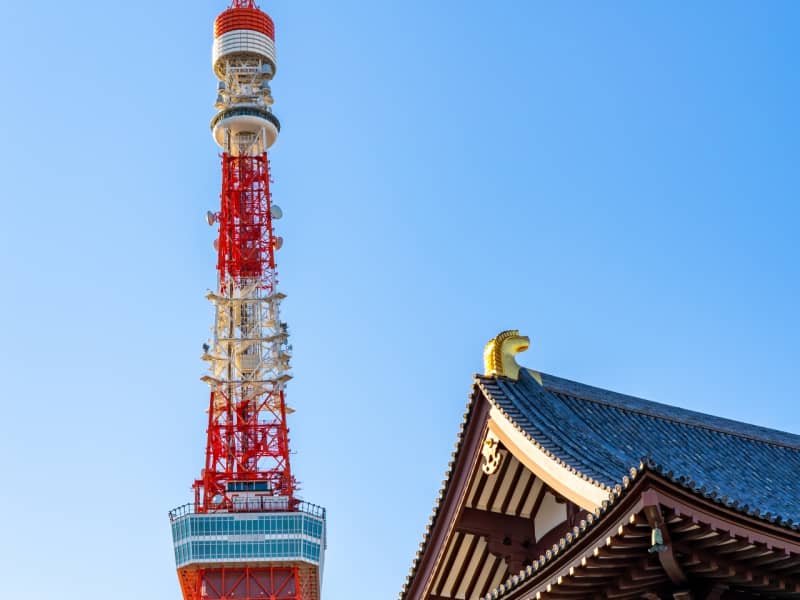
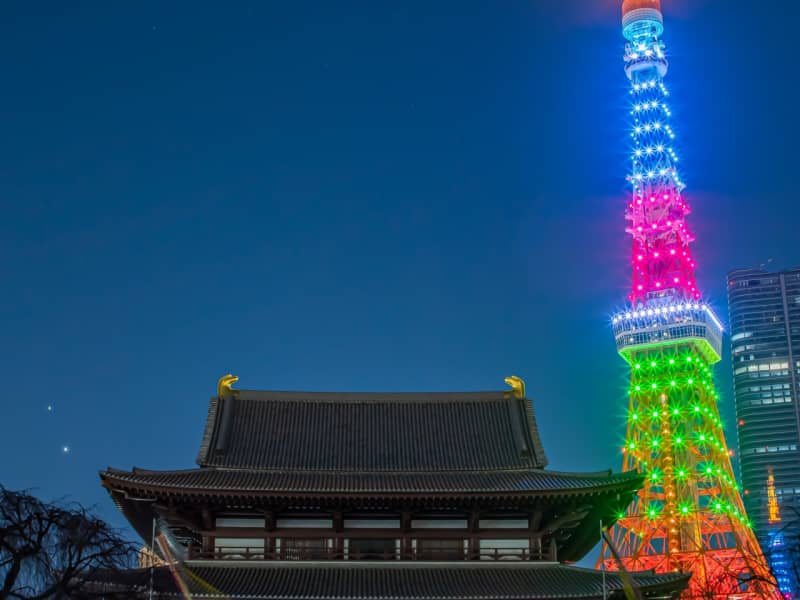
Despite its location in central Tokyo, the temple exudes a tranquil atmosphere. Cherry blossoms bloom in spring, and autumn brings vibrant koyo (紅葉), enhancing its reflective ambiance. The spacious grounds, though modest compared to other major temples, include accessible paths, benches for rest, and barrier-free facilities. Visitors may also stop by the Daibonsho (大梵鐘), a massive bronze bell cast in 1673 that rings out sacredly during New Year’s Eve.
Photography is welcomed throughout the temple grounds, with early mornings or late afternoons offering soft lighting and fewer crowds, ideal for capturing the contrast between the vermilion gate and the steel of Tokyo Tower. Tripods are allowed outdoors but may not be suitable inside halls or during ceremonies, so discretion is advised.
Before you go
Public toilets are available near the main hall, and there are vending machines and small cafés nearby for refreshments. While the temple has a small paid parking area, public transportation is recommended due to limited spaces and Tokyo traffic. Photography is allowed in outdoor areas, but tripods may be restricted inside buildings or during events, so use them respectfully. Silence is appreciated near the Jizo statues and during services, as the temple remains an active place of worship.
Open daily during scheduled hours; occasional closures for maintenance or events may apply.
When to go
Spring showcases spectacular cherry blossoms against the backdrop of Tokyo Tower, while autumn brings vibrant foliage to the temple grounds. The temple is particularly atmospheric during early morning hours when sunlight filters through the trees, making it ideal for photography. For the most serene experience, visit between 9:00 AM and 10:30 AM on weekdays when the temple first opens. The grounds are less crowded during these hours, allowing for peaceful exploration and unobstructed views of the historic buildings and Tokyo Tower.
Average crowd levels throughout the day, based on historical data.
Public review summary
Visitors praise the serene atmosphere and historic significance of Zojo-ji, particularly appreciating the unique juxtaposition with Tokyo Tower in the background. The temple grounds receive high marks for their peaceful ambiance and well-maintained gardens, though some mention that interior access to halls is limited or closed during certain hours or events. The Tokugawa family graves and Buddhist statues draw particular interest, while a few mention limited English signage affects the historical context for international visitors.
What you'll find here
Location & access
- DirectionsAddress
4 Chome-7-35 Shibakoen, Minato City, Tokyo 105-0011, Japan
- How to get there
By Public Transport: The closest stations are Onarimon Station on the Toei Mita Line and Daimon Station on the Toei Asakusa and Oedo Lines, both about a 5-minute walk from the temple. Hamamatsucho Station on the JR Yamanote Line is also nearby, approximately 10 minutes on foot.
Common questions
Can I visit the Tokugawa family graves at Zojo-ji Temple?
Yes, you can visit the graves of six Tokugawa shoguns at Zojo-ji Temple, including Hidetada, Ienobu, Ietsugu, Ieshige, Ieyoshi, and Iemochi. There is a separate entrance fee of 500 yen to access the Tokugawa family cemetery area.
What's the temple's connection to Tokyo Tower?
Zojo-ji Temple offers a unique photo opportunity with Tokyo Tower in the background, creating an iconic view that symbolizes the blend of traditional and modern Japan. The temple grounds provide excellent vantage points for capturing both structures together.
Is there parking available at Zojo-ji?
While there is a small on-site parking lot, it has very limited capacity with only 10 spaces. Most visitors are recommended to use public transportation as the parking fills up quickly. The lot opens at 9:00 AM along with the temple.
Do I need to pay an entrance fee?
Entrance to the main temple grounds is completely free. However, there is a 500 yen fee to visit the Tokugawa family cemetery and an additional fee for the treasure gallery. A goshuin (temple stamp) is available for 300 yen.
Can I photograph inside the temple?
Photography is allowed outdoors, including the gate and Jizo statues. Inside halls, photography may be restricted, especially during ceremonies or special events.

Bring this spot to life with a local photographer
Book a vetted local photographer who knows the best light, angles, and timing for this location.