Cultural ExperiencesHistorical SitesScenic ViewpointsUrban HighlightsRural Experiences

Eerie Ruins in Japan You Can Actually Visit

Forgotten places where history still lingers

LLensTokyoPublished Oct 1, 2026
Eerie Ruins in Japan You Can Actually Visit
Before you go📍

Overview

Japan’s historic landscape extends far beyond preserved temples, castles, and traditional streets. Scattered across the country are military fortifications, industrial complexes, aging infrastructure, and forgotten structures that reveal a very different side of its past. Weathered concrete, overgrown brickwork, empty tunnels, and machinery left behind create places that can feel strangely removed from the modern Japan surrounding them.


What makes these sites particularly interesting is that they can still be experienced firsthand. From island fortresses reclaimed by vegetation to the remains of once-important industrial facilities, these eerie yet historically significant ruins are accessible to visitors and offer a closer look at Japan’s military, industrial, and architectural history.

The guide🗼

The full guide

Spot 01/ 5
Kitazawa Flotation Plant
Niigata
Free Entry

Kitazawa Flotation Plant

北沢浮遊選鉱場跡

Industrial ruins reclaimed by nature and glowing after dark

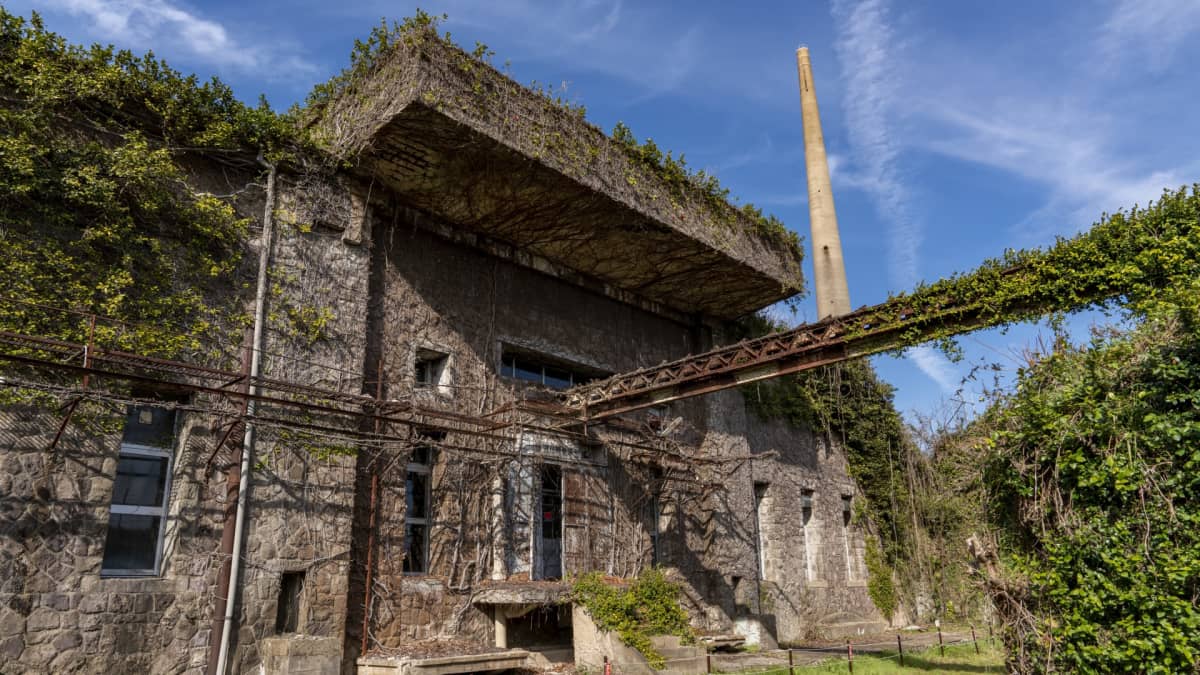
On Sado Island, the remains of the Kitazawa Flotation Plant preserve the monumental scale of Japan’s modern gold-mining industry. Developed during the rapid expansion of the Sado mines in the first half of the 20th century, the facility used flotation technology to separate valuable minerals from crushed ore. Its enormous concrete foundations and terraced structures have since been overtaken by moss and vegetation, creating an unusual landscape where industrial engineering gradually blends into the surrounding greenery.


Visitors can view the ruins from designated areas free of charge, with the vast concrete structures providing particularly striking photographic compositions. Seasonal nighttime illuminations reveal an entirely different side of the abandoned plant, lighting its weathered walls after dark and emphasizing its scale. Together with other mining heritage sites around Sado, Kitazawa offers an accessible way to explore the island’s long relationship with gold production and the industrial infrastructure that once supported it.

Lens Score8.2/10Highly Recommended

Combines visitor ratings, review volume, photo evidence, and expert assessment across 8 categories for Kitazawa Flotation Plant.

Experiential68%
Nature/Outdoor72%
Heritage Value72%
Photogenic62%
Learning70%
Budget Friendly62%
Design/Arch.68%
Crowd Free65%
Spot 02/ 5
Sarushima Island
Kanagawa
Free Entry

Sarushima Island

猿島

A mysterious island escape filled with military history

Just off the coast of Yokosuka, Sarushima Island combines overgrown military ruins with the unusual setting of an uninhabited island in Tokyo Bay. Reached by a short ferry ride from Mikasa Pier, the island preserves brick-lined tunnels, ammunition storage facilities, and former gun battery positions built as part of the defenses protecting the approaches to Tokyo Bay. Dense vegetation now surrounds many of these structures, giving the pathways through the old fortifications a distinctly atmospheric character.


Unlike many abandoned sites, Sarushima is officially open to visitors and easy to explore along maintained walking routes. The French-style brick tunnels and vegetation-covered fortifications are particularly interesting for photography, while the coastline offers a contrasting view of the surrounding bay. Visitors can also enjoy seasonal beach activities, fishing, and BBQ facilities, making Sarushima an accessible introduction to Japan’s military ruins without the risks associated with unauthorized urban exploration.

Lens Score8.1/10Highly Recommended

Combines visitor ratings, review volume, photo evidence, and expert assessment across 8 categories for Sarushima Island.

Experiential66%
Nature/Outdoor70%
Heritage Value70%
Photogenic65%
Learning70%
Budget Friendly60%
Design/Arch.66%
Crowd Free58%
Spot 03/ 5
Tomogashima Island
Wakayama
Free Entry

Tomogashima Island

友ヶ島

Brick ruins and tunnels reclaimed by coastal nature

Reached by ferry from Kada Port, Tomogashima combines an uninhabited island landscape with remarkably atmospheric military ruins overlooking the approaches to Osaka Bay. Beginning in the Meiji era, the island formed part of a coastal defense network designed to protect the strategically important bay. Today, brick fortifications, former gun battery positions, tunnels, and other military structures remain scattered through the forest, with vegetation gradually reclaiming many of the abandoned installations.


Exploring Tomogashima feels closer to a hike through a forgotten fortress than a conventional historical attraction. Walking trails connect the major ruins with viewpoints overlooking the sea, while weathered red-brick walls disappearing into dense greenery create some of the island’s most distinctive scenery. Sturdy footwear is recommended for exploring the uneven trails, and visitors should allow enough time to return for their scheduled ferry. Its combination of military history, coastal nature, and extensive ruins makes Tomogashima one of the most immersive sites in this collection.

Lens Score8.0/10Highly Recommended

Combines visitor ratings, review volume, photo evidence, and expert assessment across 8 categories for Tomogashima Island.

Experiential72%
Nature/Outdoor75%
Heritage Value70%
Photogenic62%
Learning74%
Budget Friendly60%
Design/Arch.68%
Crowd Free65%
Spot 04/ 5
Hario Transmission Station
Nagasaki
Free Entry

Hario Transmission Station

針尾送信所

Century-old engineering on an extraordinary monumental scale

Rising dramatically above the landscape of Sasebo, the three enormous concrete towers of Hario Transmission Station are striking remnants of Japan’s early radio communications infrastructure. Constructed between 1918 and 1922 for the former Imperial Japanese Navy, each tower reaches approximately 136 meters in height. Their immense scale and stark concrete surfaces create an imposing atmosphere, while their survival for more than a century offers a remarkable look at engineering from the Taisho period.


The site is preserved as an important cultural property and can be visited free of charge, making it considerably more accessible than its abandoned appearance might suggest. Visitors can step inside one of the hollow transmission towers and explore the former radio telegraph facility, where exhibits and volunteer guides provide context about the station’s construction and role in naval communications. Its combination of monumental architecture, military history, and quiet surroundings makes Hario particularly memorable among Japan’s surviving modern ruins.

Lens Score8.1/10Highly Recommended

Combines visitor ratings, review volume, photo evidence, and expert assessment across 8 categories for Hario Transmission Station.

Experiential62%
Nature/Outdoor65%
Heritage Value66%
Photogenic60%
Learning66%
Budget Friendly75%
Design/Arch.65%
Crowd Free60%
Spot 05/ 5
Kokudo Station
Kanagawa
Free Entry

Kokudo Station

国道駅

A haunting slice of early Showa-era railway history

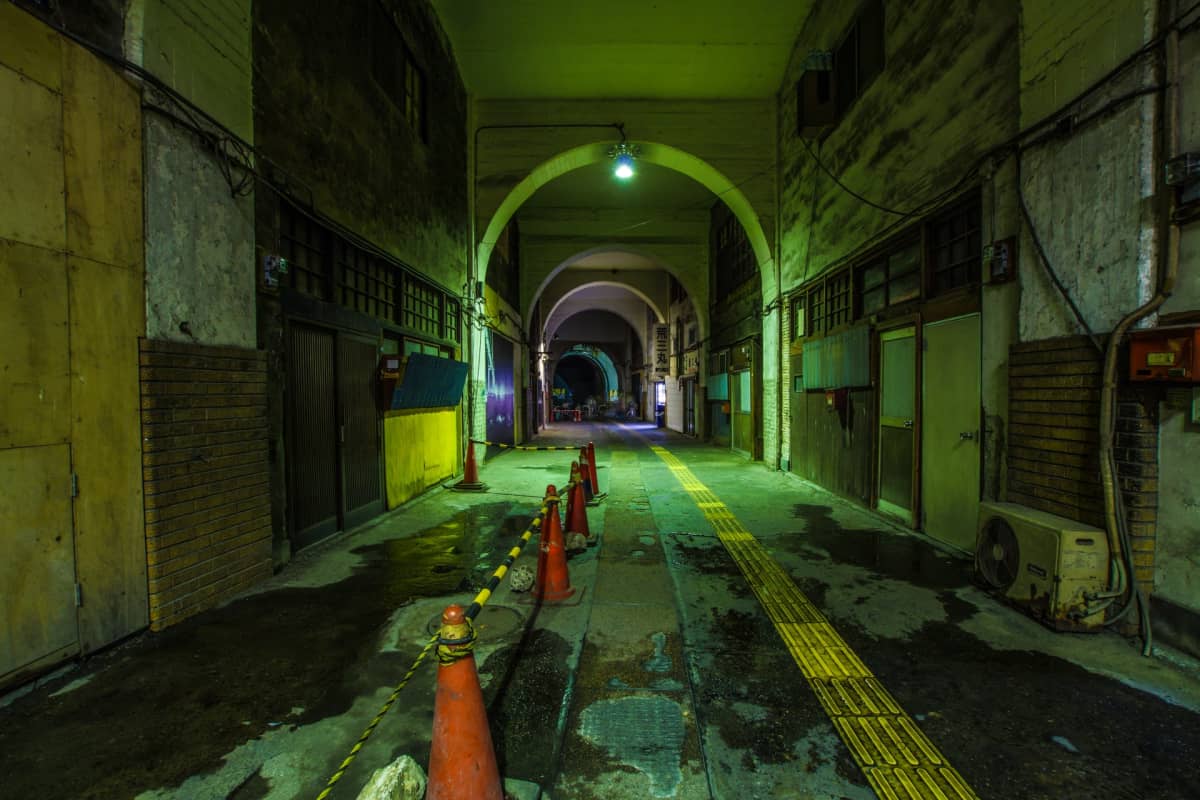
Hidden beneath the tracks of Yokohama’s JR Tsurumi Line, Kokudo Station preserves an unusually atmospheric piece of pre-war Showa-era architecture. Opened in 1930, the station is still in active use, yet its dim concrete passageways, arched openings, weathered walls, and shuttered former storefronts give parts of the structure the appearance of an abandoned urban ruin. The contrast with the surrounding modern city makes arriving here feel like briefly stepping into another period.


The most distinctive area lies beneath the elevated railway, where spaces once occupied by shops and other establishments remain embedded within the aging structure. Peeling surfaces, old architectural details, and subdued lighting make Kokudo Station especially appealing for atmospheric photography, while passing trains serve as a reminder that this is still functioning infrastructure rather than a preserved museum. Visitors should explore respectfully, avoid obstructing passengers, and remember that some areas are private or inaccessible.

Lens Score7.4/10Worth Visiting

Combines visitor ratings, review volume, photo evidence, and expert assessment across 8 categories for Kokudo Station.

Experiential55%
Nature/Outdoor46%
Heritage Value64%
Photogenic60%
Learning56%
Budget Friendly75%
Design/Arch.64%
Crowd Free55%
Wrapping up🎒

Final thoughts

Japan’s ruins preserve stories that are easy to overlook among the country’s better-known historic landmarks. Some were built for national defense, others supported industry or transportation, and each reflects a period when its original purpose was considered essential. Today, their aging structures and changing surroundings provide a tangible connection to those earlier chapters of modern Japan.


Visiting these places is as much about understanding their history as experiencing their unusual atmosphere. Explore carefully, respect restricted areas and preservation rules, and take the time to consider what these structures once represented. For travelers interested in history, photography, architecture, or simply seeing a less familiar side of the country, Japan’s surviving ruins offer plenty more to discover.

Shoot it properly

Want a photographer who knows every angle?

Book a local photographer who already knows which spots are quiet at which hour — and skip the guesswork.

Never miss what's next ✉️

Be the first to know
what we're framing next

By submitting your email, you'll be the first to know about upcoming updates for LensTokyo. You can unsubscribe at any time.