
At a glance
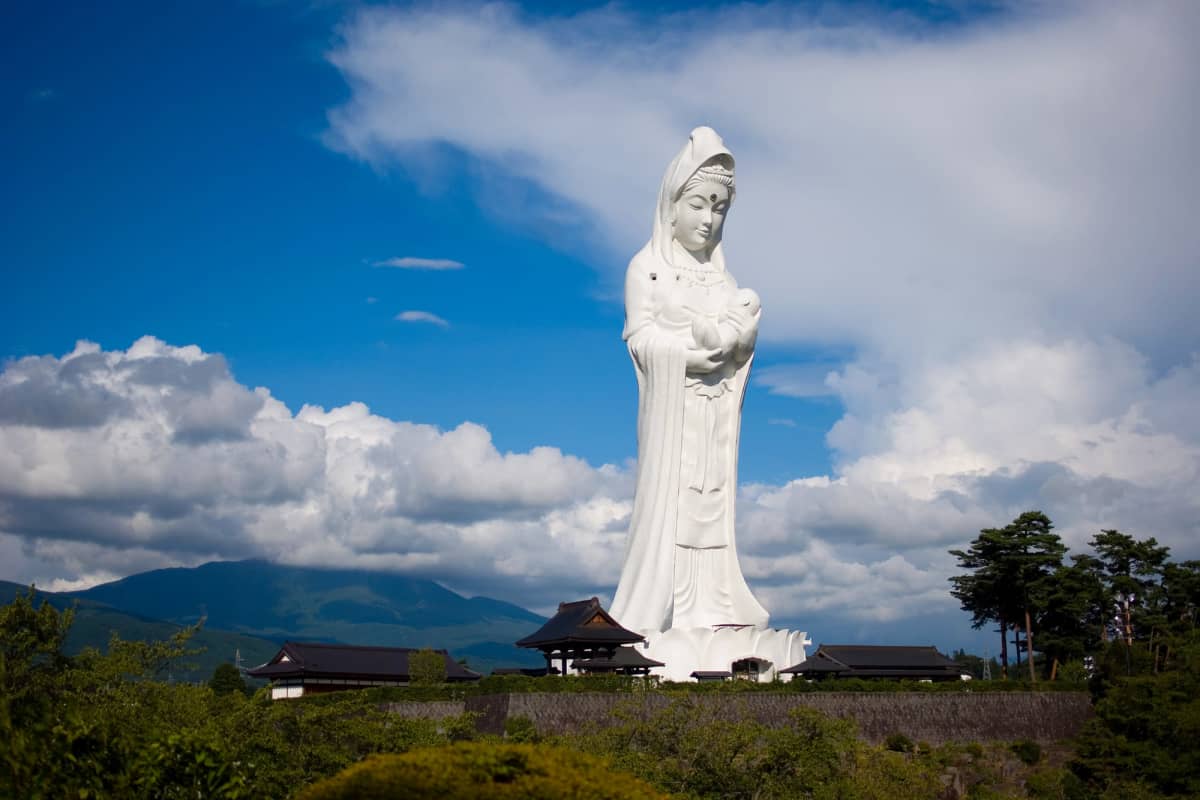
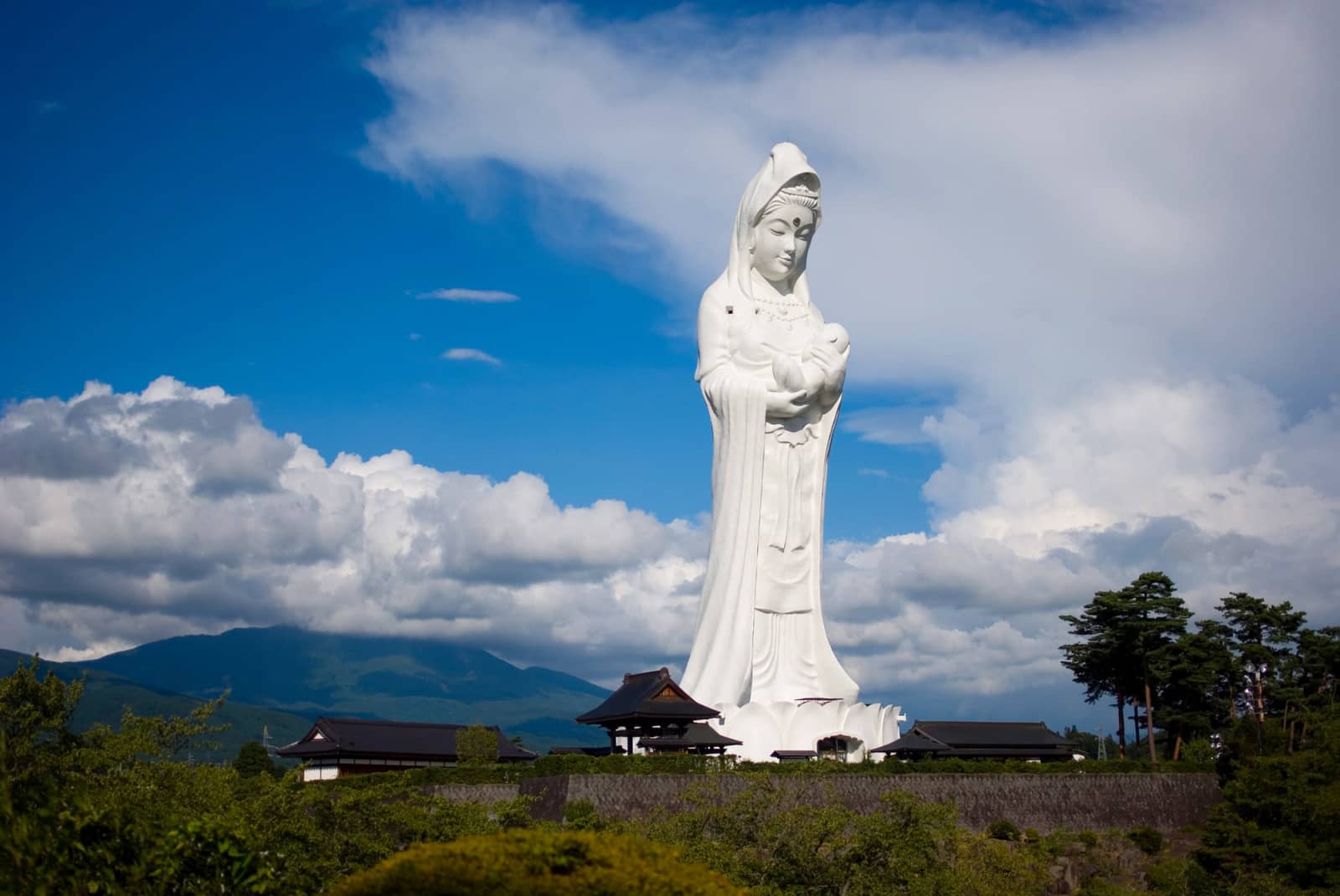
The Aizu Jibo Kannon is a striking 57-meter-tall pink Buddhist statue and place of worship in Aizuwakamatsu, Fukushima. Built in 1986, visitors can climb stairs inside to the 40-meter observation level for panoramic views of Mount Bandai and the Aizu Basin. The grounds feature maintained Japanese gardens, a three-story pagoda, and a large reclining golden Buddha statue.
Photographs
Aizu Jibo Kannon
Aizu Jibo Daikannon is a 57-meter-tall Kannon statue standing inside Inori no Sato Aizu Village, a large temple garden complex in Aizuwakamatsu. Built in 1986 as a prayer for world peace, the statue shows Kannon holding a child, giving it a softer, maternal presence than many other giant Buddhist statues in Japan. It is visible from Route 49 and the Ban-etsu Expressway, so it feels like a quiet landmark watching over the Aizu Basin.
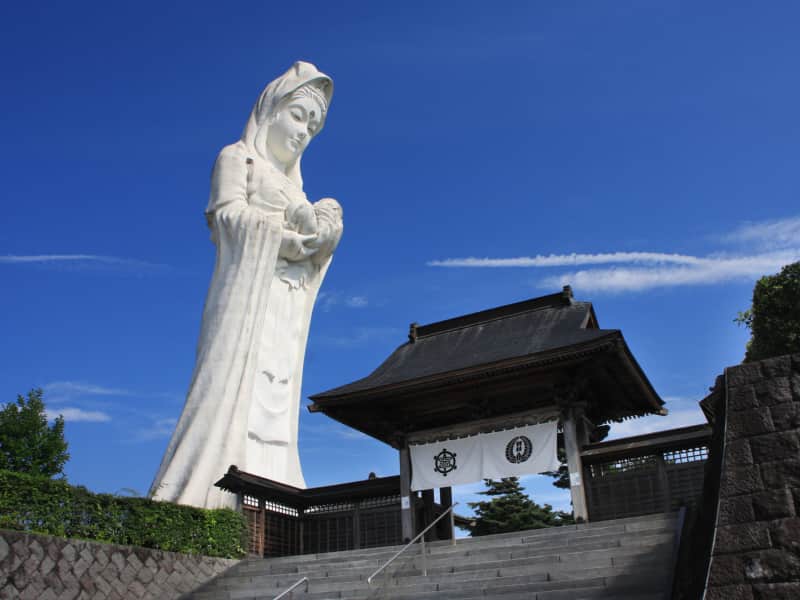
Visitors can enter the statue for a Buddhist tainai meguri, climbing the spiral stairway to around 40 meters above ground. Along the way are 10,000 small Buddha figures, a golden miniature Kannon, and guardian deities of the twelve zodiac signs. From the observation windows, the view opens toward Mount Bandai, the Iide mountain range, and the wide rural landscape of Aizu.
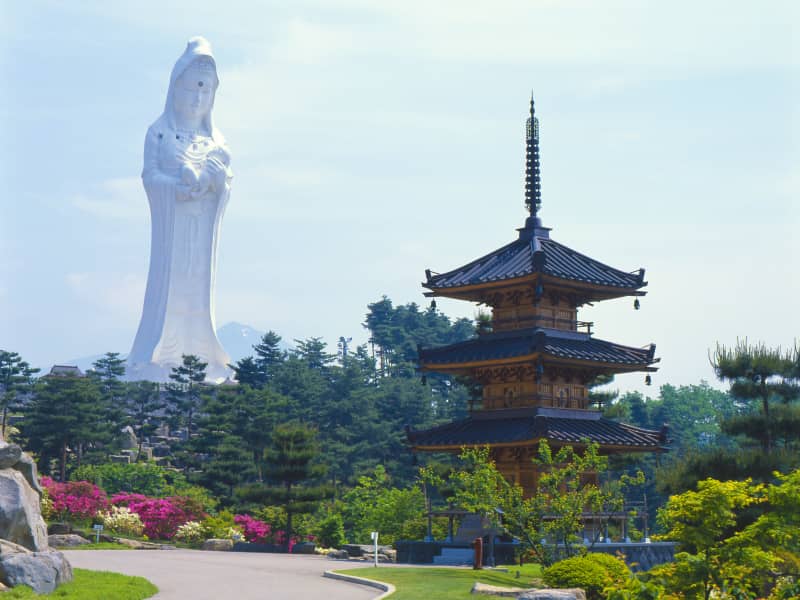
The statue is part of a much larger 60,000-tsubo Japanese garden, landscaped with pine trees, sakura, azaleas, stones, flowing water, koi ponds, and seasonal flowers. The grounds also include a three-story pagoda, old folk house, temple halls, and several small prayer spots, so the visit feels less like a single-photo stop and more like a slow walk through a spiritual garden.
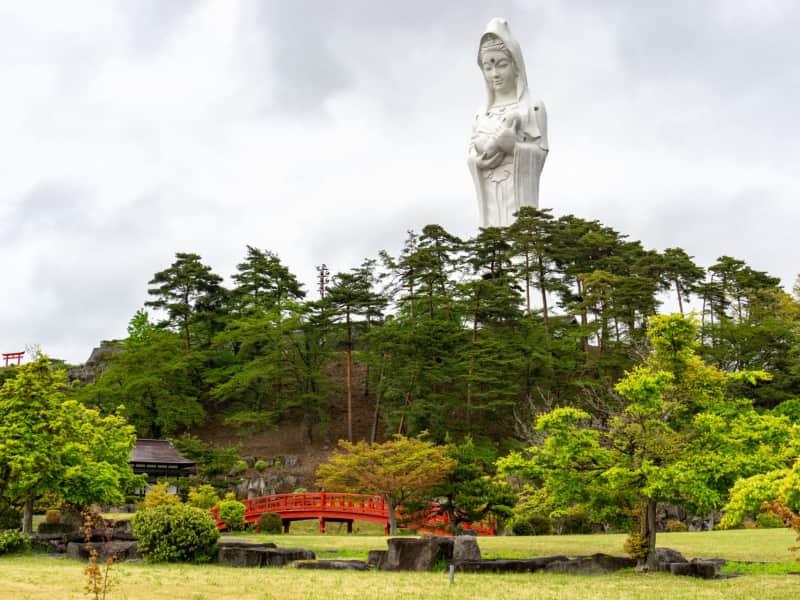
The atmosphere is calm, spacious, and slightly nostalgic, especially on clear days when the pale statue stands against the mountains. For photography, the best compositions are from the garden paths where you can frame the Kannon with trees, flowers, or the pagoda. Morning light is usually gentler, while late afternoon gives the statue more depth, though the interior stairs and observation windows are better treated as quiet worship spaces than photo spots.
Before you go
Admission to the grounds and statue interior is typically around ¥500 for adults, with discounted child tickets available. Visitors can enter the Kannon statue and climb the spiral staircase, though there are many steps and limited accessibility inside the statue itself. The grounds have toilets, free parking, rest areas, vending machines, souvenir shops, and goshuin services. English signage is limited but basic guidance is manageable for international visitors. Tripods may be discouraged inside prayer areas or narrow interior spaces, so it is best to ask staff before extended photography sessions. Comfortable walking shoes are recommended because the complex is larger than it first appears.
The complex is generally open year-round, though operating hours may change seasonally. Typical opening hours are around 9:00 AM to 5:00 PM, with slightly shorter winter schedules possible. Some facilities inside the grounds may close earlier during bad weather or low season, so checking official announcements before visiting is recommended.
When to go
Spring brings beautiful cherry blossoms to the grounds, making it an ideal time to visit when the pale pink statue harmonizes with the blooming sakura. The statue is particularly photogenic during sunset hours when the soft evening light enhances its gentle appearance, while autumn offers pleasant weather for exploring the expansive gardens and climbing the interior stairs. Weekday mornings provide the most peaceful experience with minimal crowds, allowing ample time to climb the 237 interior steps and explore the grounds at leisure. Reviews consistently note no wait times throughout most of the day, though arriving before 3PM ensures full access as last entry is at this time.
Public review summary
Visitors consistently praise the impressive 57-meter statue and well-maintained gardens, noting the peaceful atmosphere and panoramic views from inside. Many appreciate the climbing experience despite the stairs being challenging. Some mention the site feels unexpectedly quiet or empty. The friendly staff and beautiful seasonal scenery, especially during cherry blossoms and at sunset, receive frequent commendation.
What you'll find here
Location & access
- DirectionsAddress
東高野-178 河東町長原, Aizuwakamatsu, Fukushima 969-3461, Japan
- How to get there
By Public Transportation:
From JR Aizuwakamatsu Station, take a local bus toward Aizu Village or nearby Route 49 stops. The ride usually takes around 15 to 20 minutes depending on the route, followed by a short walk to the entrance. Taxis from the station are also convenient and relatively quick.
By Car:
Aizu Jibo Daikannon is easily accessible from the Ban-etsu Expressway and Route 49. It is roughly 15 minutes by car from central Aizuwakamatsu. Large free parking areas are available on-site, making it convenient for road trips around Fukushima and the Aizu region.
Common questions
Can I go inside the Aizu Jibo Kannon statue?
Yes, visitors can enter the statue and climb a spiral staircase up to 40 meters (the statue is 57 meters tall). Inside, you'll find 10,000 donated Buddha statues and viewing windows on multiple levels offering panoramic views of Mount Bandai, the Iide mountain range, and Aizu Basin. Note there is no elevator.
Is Aizu Jibo Kannon wheelchair accessible?
The site offers wheelchair accessible parking and the grounds feature a well-maintained garden that can be explored. However, the interior of the statue requires climbing stairs with no elevator access. A golf cart service is available for a fee to help navigate the extensive grounds.
What is the admission fee to enter?
Admission is 500 yen for adults, 400 yen for middle and high school students, and 300 yen for elementary school students. This ticket includes access to the grounds, garden, and interior of the Kannon statue. A golf cart tour of the grounds costs an additional 300 yen.
Are goshuin stamps available at Aizu Jibo Kannon?
Yes, goshuin stamps are available at the reception desk where you pay admission. The reception staff are known to be very kind and helpful in explaining the stamp collection process to visitors who are interested in obtaining them.
When was the Aizu Jibo Kannon statue built?
The Aizu Jibo Kannon statue was established in 1986. It was created by the president of a construction company as part of a larger religious complex called Aizu Village of Prayer, built to pray for world peace and benefit the community.
Bring this spot to life with a local photographer
Book a vetted local photographer who knows the best light, angles, and timing for this location.