

Nihon-ji Daibutsu is a monumental stone-carved Buddha nestled within the forested slopes of Mount Nokogiri in Chiba Prefecture. Standing 31 meters tall, the statue depicts Yakushi Rurikō Nyorai, the Medicine Buddha, and is one of Japan’s largest stone Buddha figures. Rather than standing apart from its surroundings, the Buddha appears to emerge directly from the mountainside, creating a powerful connection between nature and spirituality. The statue forms part of the historic grounds of Nihon-ji Temple, a temple with roots dating back to the 8th century. Visitors can combine their visit with scenic walks to nearby landmarks such as Hyakushaku Kannon and the dramatic Jigoku Nozoki [Jigoku Nozoki, 地獄のぞき] viewpoint, making the area one of the Kanto region’s most rewarding cultural and natural destinations.
Overview
Across Japan, giant Buddha statues have long served as powerful expressions of faith, artistic achievement, and local identity. Some stand within historic temple grounds that have welcomed pilgrims for centuries, while others were created more recently as symbols of peace, reflection, and community. Together, they represent a diverse aspect of Japan’s Buddhist heritage that can be found from Hokkaido in the north to Kyushu in the south.
These monumental figures vary greatly in age, scale, and setting. Visitors may encounter ancient stone carvings preserved in the landscape, towering bronze statues overlooking modern cities, or serene Buddhas nestled within forests and temple complexes. This collection introduces 12 remarkable Buddha statues and temples across Japan, each offering its own perspective on the country’s religious traditions, craftsmanship, and cultural history.
The full guide

Nihon-ji Daibutsu
日本寺大仏A colossal Buddha carved into a mountainside
Lens Score7.9/10Worth Visiting
Combines visitor ratings, review volume, photo evidence, and expert assessment across 8 categories for Nihon-ji Daibutsu.

Echizen Daibutsu
大師山清大寺 越前大仏Thousands of statues in silent harmony
Echizen Daibutsu is home to one of Japan’s largest seated Buddha statues, standing 17 meters tall within the vast temple complex of Seidaiji Temple in Fukui Prefecture. Completed in 1987, the site combines grand Buddhist architecture with influences from China’s Longmen Grottoes, creating a distinctive atmosphere unlike many traditional Japanese temples. Inside the Great Buddha Hall, visitors are surrounded by 1,281 smaller Buddha statues that rise along the walls, emphasizing the scale of the central figure. The grounds also feature a 75-meter five-story pagoda, traditional gardens, and the colorful Nine Dragon Wall. While relatively modern, the complex offers a serene and monumental experience, especially during spring greenery and autumn foliage, with panoramic views of the surrounding Katsuyama landscape available from the pagoda’s upper levels.
Lens Score7.8/10Worth Visiting
Combines visitor ratings, review volume, photo evidence, and expert assessment across 8 categories for Echizen Daibutsu.

Kotoku-in
鎌倉大仏殿高徳院A timeless bronze Buddha beneath open skies
Kotoku-in Temple is home to the iconic Great Buddha of Kamakura, one of Japan’s most celebrated Buddhist landmarks. Cast in bronze in the 13th century, the statue depicts Amida Buddha and has watched over Kamakura for more than 750 years. Standing in the open air, the Buddha is especially striking for its serene expression and enduring presence, having survived earthquakes, storms, and tsunamis that destroyed the temple hall that once sheltered it. Designated as a National Treasure, the statue remains a symbol of Kamakura’s historical importance as Japan’s medieval capital. Visitors can admire the monument from the temple grounds or step inside the hollow interior to gain a unique perspective on its construction. Despite its fame, the site retains a peaceful atmosphere that encourages quiet reflection.
Lens Score7.9/10Worth Visiting
Combines visitor ratings, review volume, photo evidence, and expert assessment across 8 categories for Kotoku-in.

Nanzo-in Temple
南蔵院Mountain temple paths beneath a sleeping Buddha
Nanzo-in Temple is one of Kyushu’s most important pilgrimage temples and the spiritual center of the Sasaguri Shikoku Pilgrimage. Nestled within a forested valley near Fukuoka, the temple is best known for its colossal reclining Buddha [Nehan-zō, 涅槃像], which stretches 41 meters in length and ranks among the largest bronze statues of its kind in the world. Completed in 1995, the statue enshrines sacred Buddhist relics and symbolizes the Buddha’s passage into nirvana. Visitors can explore peaceful pathways lined with temples, statues, and prayer sites before reaching the monumental figure. Seasonal highlights, including vibrant hydrangeas during the rainy season, enhance the tranquil atmosphere. More than a sightseeing destination, Nanzo-in remains an active place of worship where pilgrimage traditions, charitable work, and spiritual practice continue to shape the visitor experience.
Lens Score7.9/10Worth Visiting
Combines visitor ratings, review volume, photo evidence, and expert assessment across 8 categories for Nanzo-in Temple.
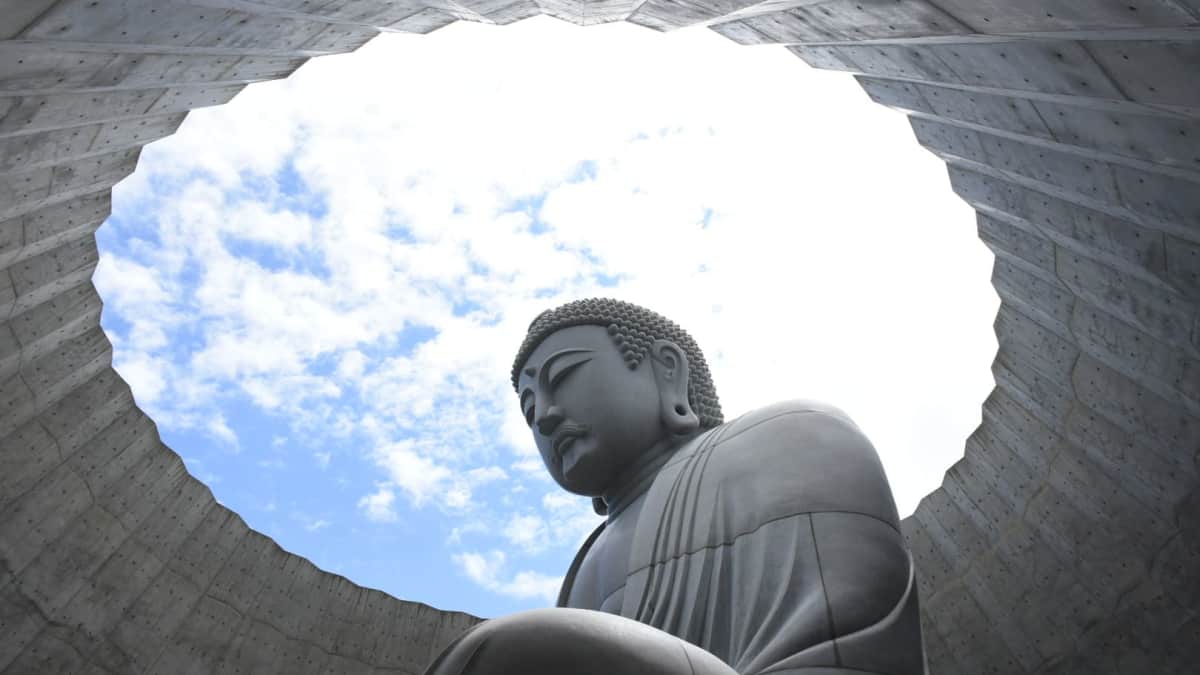
Hill of the Buddha - Takino Cemetery
真駒内滝野霊園Architecture, remembrance, and lavender in harmony
Hill of the Buddha is one of Hokkaido’s most distinctive architectural landmarks, located within Makomanai Takino Cemetery on the outskirts of Sapporo. Designed by renowned architect Tadao Ando, the site reimagines how visitors experience a monumental Buddha statue. The 13.5-meter Buddha is largely concealed within a grassy hill, revealing only its head from a distance before visitors enter through a long concrete passage that opens into a circular sanctuary. Surrounding the hill, seasonal landscapes transform throughout the year, with lavender blooming in summer and snow creating a serene winter scene. Beyond the Buddha, the cemetery grounds feature striking installations including giant Moai statues and a Stonehenge-inspired monument. Together, they create a unique setting where contemporary design, landscape architecture, and quiet reflection come together in an unexpected way.
Lens Score7.9/10Worth Visiting
Combines visitor ratings, review volume, photo evidence, and expert assessment across 8 categories for Hill of the Buddha - Takino Cemetery.
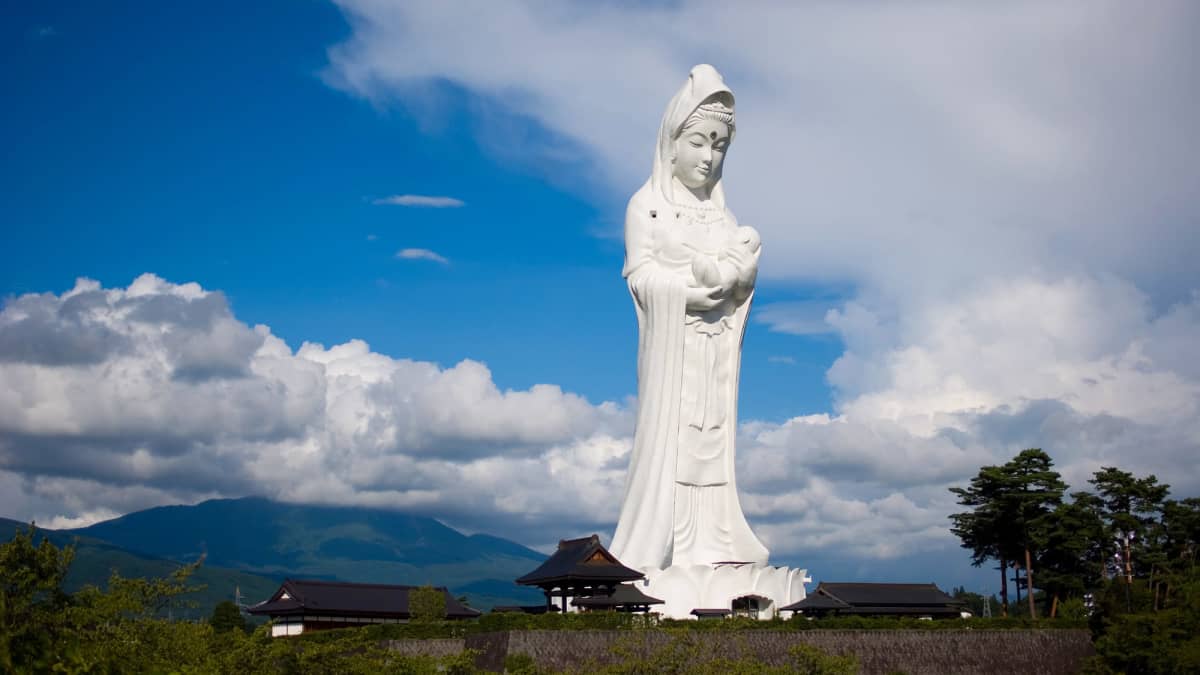
Aizu Jibo Kannon
会津慈母大観世音菩薩像A quiet giant watching over the Aizu plains
Aizu Jibo Kannon is a towering 57-meter statue located within Inori no Sato Aizu Village in Fukushima Prefecture. Completed in 1986, the statue depicts Kannon holding a child, symbolizing compassion, protection, and maternal care. Visitors can enter the statue and ascend a spiral passage lined with thousands of small Buddhist figures, leading to observation points with views across the Aizu Basin and surrounding mountains. Beyond the statue itself, the grounds feature traditional Japanese gardens, koi ponds, temple buildings, and a pagoda, creating a peaceful setting for a leisurely stroll. Surrounded by seasonal flowers, cherry blossoms, and carefully maintained landscapes, Aizu Jibo Kannon offers a quieter and more contemplative experience than many of Japan’s better-known giant Buddha and Kannon monuments.
Lens Score7.2/10Worth Visiting
Combines visitor ratings, review volume, photo evidence, and expert assessment across 8 categories for Aizu Jibo Kannon.

Showa Daibutsu Seiryuji Temple
全仏山 青龍寺A hidden Buddhist landmark beyond the city
Seiryuji Temple is home to the Showa Daibutsu, the tallest bronze seated Buddha statue in Japan. Completed in 1984, the statue represents Dainichi Nyorai, a central figure in Esoteric Buddhism, and rises above the tranquil temple grounds on the outskirts of Aomori City. One of the temple’s most distinctive experiences is the taigai meguri, a passage through the interior of the Buddha that offers a unique perspective on both its construction and spiritual symbolism. Beyond the Great Buddha, visitors can explore a large five-story pagoda, peaceful gardens, and halls dedicated to various Buddhist deities. Surrounded by seasonal greenery and autumn colors, Seiryuji combines monumental architecture with a calm atmosphere, making it one of northern Japan’s most remarkable Buddhist destinations.
Lens Score7.8/10Worth Visiting
Combines visitor ratings, review volume, photo evidence, and expert assessment across 8 categories for Showa Daibutsu Seiryuji Temple.

Usuki Stone Buddhas
臼杵石仏(臼杵磨崖仏)Centuries of Buddhist art carved into living rock
Usuki Stone Buddhas are among Japan’s most important Buddhist carvings and the country’s only stone Buddhas designated as National Treasures. Carved directly into volcanic rock between the Heian and Kamakura periods, the statues are spread across several groups nestled within the tranquil countryside of Usuki, Oita Prefecture. The most celebrated figure is the elegant Dainichi Nyorai, renowned for its refined expression and graceful proportions. Rather than standing within a temple hall, these centuries-old sculptures emerge naturally from the surrounding cliffs, creating a harmonious blend of art, spirituality, and landscape. Walking paths connect the different statue groups through wooded surroundings, offering a peaceful atmosphere that changes with the seasons. Combined with nearby lotus fields in summer, the site provides a rare opportunity to experience one of Japan’s most remarkable examples of medieval Buddhist craftsmanship in its original setting.
Lens Score7.7/10Worth Visiting
Combines visitor ratings, review volume, photo evidence, and expert assessment across 8 categories for Usuki Stone Buddhas.

Sendai Dai Kannon Statue
仙台大観音(仙台天道白衣大観音)A towering white guardian watching over Sendai
Sendai Daikannon is a towering 100-meter statue overlooking Sendai City and ranks among the tallest statues in the world. Completed in 1991 at Daikanmitsuji Temple, the monument depicts Kannon, the Buddhist embodiment of compassion. Visitors can enter the statue through a dramatic dragon-themed entrance and explore its multi-level interior, which houses numerous Buddhist figures including the Twelve Guardian Generals and representations of the 108 earthly desires. An observation level near the top offers sweeping views across Sendai and, on clear days, toward the Pacific coast. Rising unexpectedly above the surrounding neighborhoods, the brilliant white statue has become one of the city’s most recognizable landmarks, combining modern scale with traditional Buddhist symbolism in a uniquely urban setting.
Lens Score8.0/10Highly Recommended
Combines visitor ratings, review volume, photo evidence, and expert assessment across 8 categories for Sendai Dai Kannon Statue.

Rengein Tanjoji Temple
蓮華院誕生寺 奥之院Spiritual views above the forests of Tamana
Rengein Tanjoji Temple is a sprawling Buddhist temple complex in Kumamoto Prefecture, known for its impressive scale and tranquil mountain setting. Affiliated with the Shingon Ritsu sect, the temple features one of Japan’s largest five-story pagodas, rising approximately 50 meters above the surrounding landscape. Visitors enter through a distinctive circular gate before exploring expansive grounds filled with temple halls, stone lanterns, gardens, ponds, and forested pathways. One of the temple’s most remarkable features is the Hiryu no Kane, a colossal temple bell weighing 37.5 tons and regarded as one of the largest in the world. With panoramic views over Tamana and the Ariake Sea, as well as seasonal flowers and peaceful walking routes, the temple offers a rewarding blend of architecture, nature, and spiritual heritage.
Lens Score7.6/10Worth Visiting
Combines visitor ratings, review volume, photo evidence, and expert assessment across 8 categories for Rengein Tanjoji Temple.
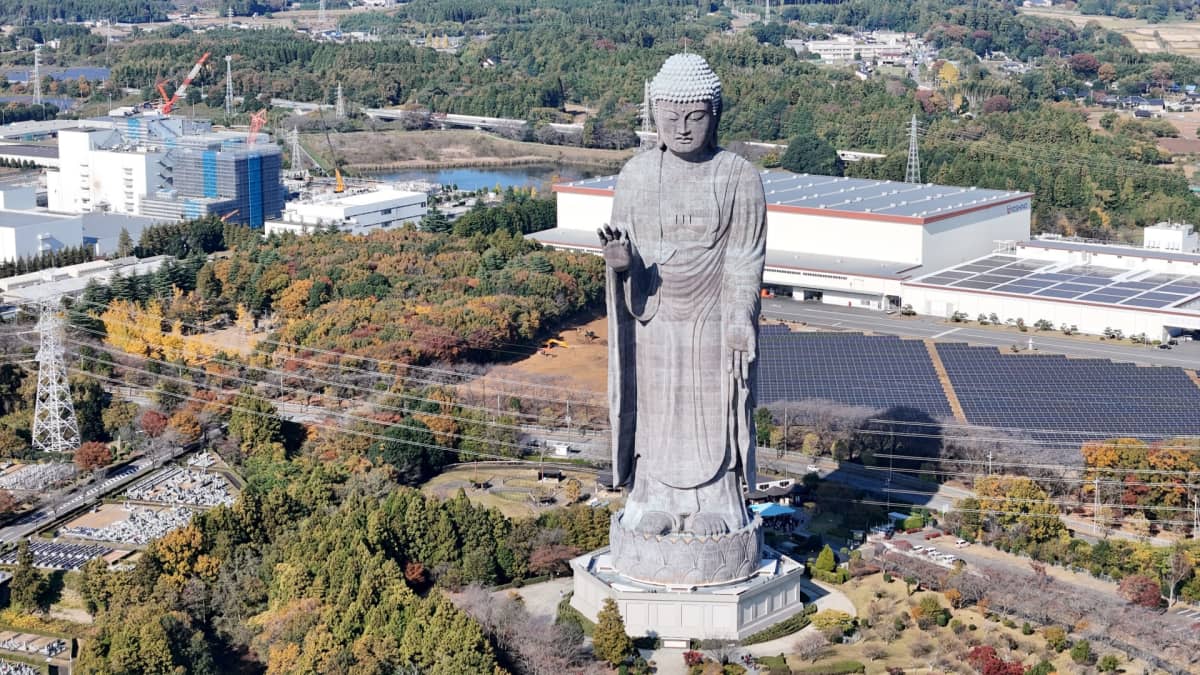
Ushiku Daibutsu
牛久大仏Giant bronze Buddha towering above flower gardens
Ushiku Daibutsu is one of Japan’s most extraordinary landmarks and among the tallest Buddha statues in the world. Standing 120 meters tall, including its base and lotus pedestal, the bronze statue depicts Amida Nyorai and dominates the surrounding landscape of Ibaraki Prefecture. Completed in 1993, it was recognized by Guinness World Records as the world’s tallest bronze Buddha statue at the time. Visitors can enter the statue and explore multiple levels featuring Buddhist exhibits, memorial spaces, and a vast hall lined with thousands of small Buddha figures. An observation floor near the statue’s chest provides views across the Kanto Plain on clear days. Surrounding gardens, ponds, and seasonal flower displays create a peaceful setting that balances the monument’s immense scale with a sense of tranquility and reflection.
Lens Score7.8/10Worth Visiting
Combines visitor ratings, review volume, photo evidence, and expert assessment across 8 categories for Ushiku Daibutsu.

Tsubosaka-dera Temple
壷阪山 南法華寺 (壷阪寺)Mountain temple where Kannon meets sakura magic
Tsubosaka-dera Temple is a historic Buddhist temple in Nara Prefecture and the sixth sacred site of the Saigoku Kannon Pilgrimage. Founded in 717, the temple is celebrated for its unique blend of Japanese and Indian Buddhist influences, reflected in its architecture and monumental stone statues. The grounds feature a towering Thousand-Armed Kannon [Senju Kannon, 千手観音], large stone Buddha figures gifted through cultural exchanges with India, and an expansive relief illustrating the life of Buddha. Set on a hillside overlooking the Asuka region, the temple is particularly admired for its seasonal scenery, from cherry blossoms in spring and hydrangeas in early summer to vibrant maple foliage in autumn. Combining spiritual heritage, panoramic views, and impressive Buddhist art, Tsubosaka-dera offers one of Nara’s most distinctive temple experiences.
Lens Score8.0/10Highly Recommended
Combines visitor ratings, review volume, photo evidence, and expert assessment across 8 categories for Tsubosaka-dera Temple.
Final thoughts
Whether carved into cliffs, cast in bronze, or surrounded by carefully designed temple grounds, Japan’s great Buddha statues continue to inspire visitors through their scale, craftsmanship, and enduring cultural significance. While each site has its own history and atmosphere, they all reflect the important role that Buddhism has played in shaping communities and landscapes throughout the country.
For travelers interested in history, architecture, photography, or spiritual traditions, these destinations provide opportunities to experience a different side of Japan beyond its cities and famous landmarks. From quiet mountain temples to some of the tallest Buddha statues in the world, each location offers a meaningful connection to centuries of faith, artistry, and local heritage.
