
At a glance
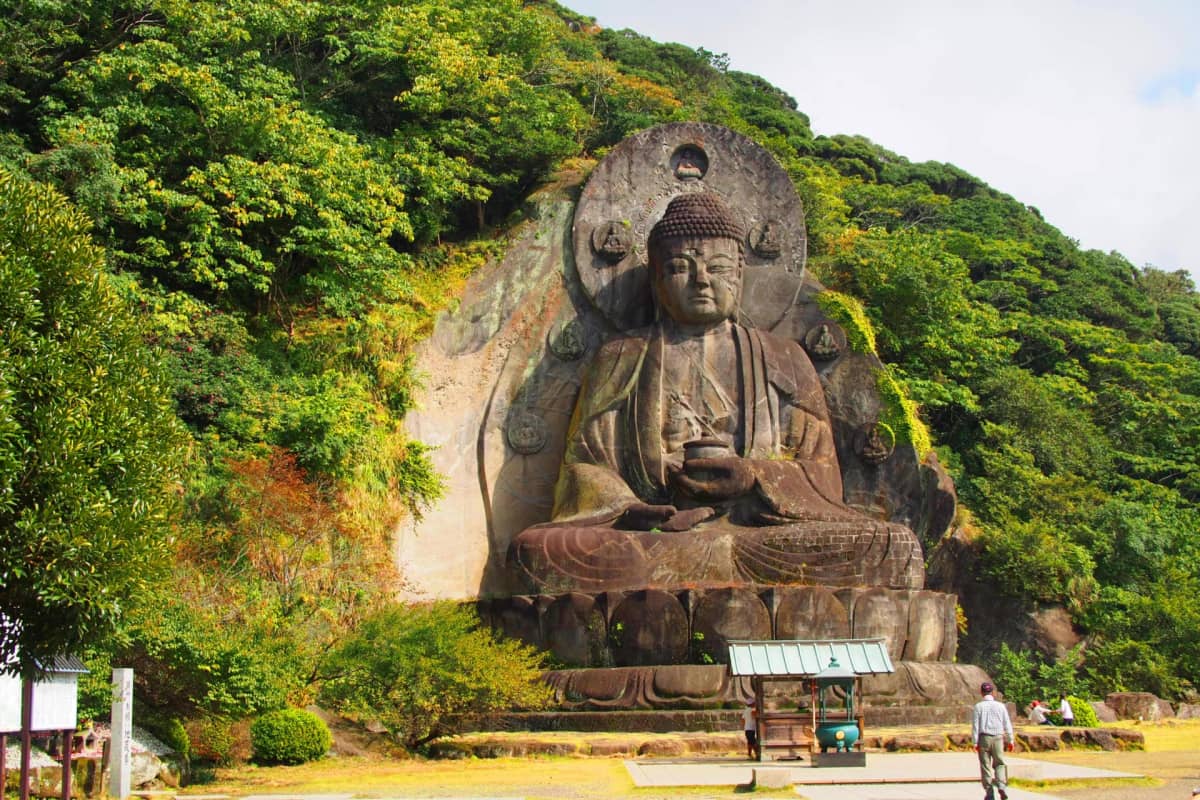
Nihon-ji Daibutsu in Kyonan, Chiba is a Buddhist temple featuring Japan's largest stone-carved Buddha statue at 31 meters tall. This cliff-carved Yakushi Nyorai statue sits within the grounds of Nihonji Temple on Mount Nokogiri, accessible via free parking lot with a short walk involving stairs, offering visitors an impressive outdoor religious monument with restroom facilities available nearby.
Photographs
Nihon-ji Daibutsu
Nihon-ji Daibutsu sits deep within the mountain grounds of Nihon-ji Temple, on the southern slope of Mount Nokogiri in Chiba Prefecture. Carved into the rock face, this 31-meter seated Buddha is officially known as Yakushi Rurikō Nyorai [薬師瑠璃光如来], the Medicine Buddha associated with healing and protection. Its scale feels even more powerful because it does not stand apart from the mountain. It seems to rise quietly out of the stone itself.
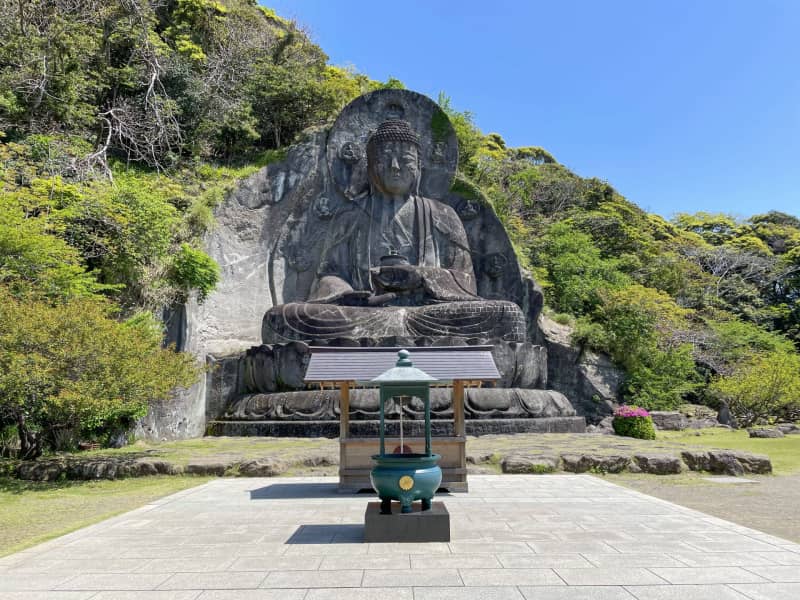


Nihon-ji is one of the Kanto region’s oldest imperial prayer temples, traditionally said to have been founded in 725 by the monk Gyōki under the order of Emperor Shōmu. The Great Buddha’s original form was carved in the late Edo period, then restored in the 20th century after years of weathering. Around the plaza, small Jizō figures and votive offerings add a softer, more personal feeling to the site.
The surrounding temple grounds are much larger than many visitors expect. Beyond the Daibutsu, paths climb through forested slopes toward Hyakushaku Kannon [百尺観音], the stone-carved guardian of travel safety, and Jigoku-nozoki [地獄のぞき], the dramatic cliff viewpoint overlooking Tokyo Bay, the Boso Peninsula, and, on clear days, Mount Fuji. The landscape still carries traces of Nokogiriyama’s old quarry history, with sharp rock walls, mossy stone steps, and sudden open views between the trees.

The serene plaza surrounding the Great Buddha provides rest areas with benches and nearby facilities, making it an ideal spot to pause during exploration. While the full temple circuit involves considerable stair climbing and can take over two hours, visitors focused solely on viewing the Great Buddha can enjoy a more relaxed experience, particularly when entering from the eastern parking lot. For photography, the Daibutsu is best captured from the front of the plaza with a wide lens, especially when soft morning or late afternoon light brings out the texture of the stone.
Before you go
An admission fee of around ¥700 is required to enter Nihon-ji Temple grounds, where the Great Buddha is located. The site includes steep slopes, stone stairways, and uneven mountain paths, so comfortable walking shoes are strongly recommended. Visitors focused on the Daibutsu may prefer the East Entrance, which provides the shortest and easiest access. Toilets, resting areas, vending machines, and souvenir shops are available within the temple grounds. Free parking is available near the East Entrance, while additional parking options exist around Mount Nokogiri. English information is limited but basic signage is available. Tripods may be used with consideration for other visitors, though they are best avoided during busy periods and at narrow viewpoints. Bringing water is recommended, especially during warmer months.
Nihon-ji Temple is generally open throughout the year, including most national holidays. Operating hours may vary slightly during special events, severe weather, or maintenance periods. Major holiday weekends such as Golden Week and autumn holiday periods are typically the busiest times of the year.
When to go
Spring and autumn offer ideal conditions for visiting Nihon-ji Daibutsu, with comfortable temperatures making the mountain trails and stairways more manageable. Winter provides crystal-clear views of Tokyo Bay and Mount Fuji from the mountain, while summer's lush greenery creates a serene atmosphere around the Great Buddha, though the heat and humidity can make the climb challenging. Weekday mornings provide the most peaceful experience, with Tuesday through Thursday between 9 AM and 11 AM being particularly quiet. Arriving right at opening ensures minimal crowds and better photo opportunities of the massive stone Buddha without other visitors in the frame.
Average crowd levels throughout the day, based on historical data.
Public review summary
Visitors consistently praise the impressive 31-meter Buddha statue, with many expressing awe at its scale and peaceful atmosphere. The site receives appreciation for accessibility via free parking and relatively easy approach compared to other temple areas. Some note the challenging stairs and steep terrain when exploring the full grounds. Several mention timing considerations, as temple stamp services end at 3 PM and exploration requires good physical stamina.
What you'll find here
Location & access
- DirectionsAddress
Motona, Kyonan, Awa District, Chiba 299-1901, Japan
- How to get there
By Public Transportation:
From Tokyo, take the JR Uchibo Line to Hama-Kanaya Station. From there, you can reach Mount Nokogiri by taxi, local bus, or on foot. Visitors may also take the Nokogiriyama Ropeway from the Hama-Kanaya area, which provides scenic views over Tokyo Bay before reaching the mountain summit area. From the ropeway station, walking is required to reach the temple attractions.
By Car:
From central Tokyo, the drive takes approximately 90 to 120 minutes via the Tokyo Bay Aqua-Line and Tateyama Expressway. Visitors heading directly to the Great Buddha often use the East Entrance parking area, which offers the shortest walk to the Daibutsu. Mountain roads are paved but can be winding, so extra caution is advised during rainy weather.
Common questions
What is Nihon-ji Daibutsu?
Nihon-ji Daibutsu is Japan's largest stone-carved Buddha statue, standing 31.05 meters tall in total height with a seated position of 21.3 meters. The statue, officially named Yakushi Nyorai, is located within the grounds of Nihon-ji Temple on Mount Nokogiri in Kyonan, Chiba Prefecture.
How do I access the Great Buddha?
The Great Buddha can be accessed from a free parking lot near the east entrance, requiring only a 5-10 minute walk with minimal stairs. Alternatively, visitors can take the Nokogiriyama Ropeway to the summit station and hike down, or drive via the toll road. An admission fee of 700 yen is required.
Can I bring my dog to Nihon-ji Daibutsu?
Pets are allowed at Nihon-ji Daibutsu. Several visitors have reported seeing dogs on the temple grounds. If using the ropeway, it's recommended to place your dog in a cage during the ride.
Is Nihon-ji Daibutsu accessible for elderly visitors?
The Great Buddha area from the east parking lot is relatively accessible with paved paths and minimal stairs, making it suitable for elderly visitors with moderate mobility. However, the full temple grounds involve steep mountain trails and approximately 800 steps, which may be challenging for those with limited stamina.
How long does it take to visit the Great Buddha?
If visiting only the Great Buddha from the east parking lot, plan for approximately 1 hour including the walk and time to appreciate the statue. To explore the entire Nihon-ji Temple grounds including Hell's Gaze viewpoint and Hyakushaku Kannon, allow 2-3 hours.

Bring this spot to life with a local photographer
Book a vetted local photographer who knows the best light, angles, and timing for this location.