Scenic ViewpointsNature/Parks

Best Autumn Foliage Spots in Tokyo: Where to See Fall Colors

Red maples, golden ginkgo, and peaceful seasonal walks

LLensTokyoPublished Aug 11, 2026
Kanto, Tokyo
Best Autumn Foliage Spots in Tokyo: Where to See Fall Colors
Kanto, Tokyo
Before you go📍

Overview

Autumn brings a gradual transformation to Tokyo, beginning in the forested mountains of the city’s western reaches before moving into its parks, temple grounds, and historic gardens. From golden ginkgo avenues and crimson Japanese maples to entire mountainsides covered in changing leaves, the season reveals a remarkably varied side of the capital. While colors vary each year with temperature and weather, Tokyo’s main foliage season generally stretches from November into early December.


This guide brings together 23 of the best places to see autumn foliage in Tokyo, ranging from classical gardens such as Rikugien and Koishikawa Korakuen to the natural landscapes of Mount Takao, Lake Okutama, and Akigawa Valley. Whether the aim is photography, a quiet garden walk, or a full day surrounded by nature, these locations show how autumn unfolds across Tokyo in distinctly different ways.

The guide🗼

The full guide

Spot 01/ 23
Showa Kinen Park
Kanto, Tokyo
Free Entry

Showa Kinen Park

国営昭和記念公園

Golden trees and endless cycling paths

Showa Kinen Park is one of Tokyo’s most varied autumn destinations, with its vast grounds offering both brilliant golden ginkgo avenues and vivid red Japanese maples. The park’s best-known seasonal scenes are its symmetrical rows of ginkgo trees, particularly the avenue near the Tachikawa entrance and the canal area, where the tall trees form golden corridors overhead. As the season progresses, fallen leaves cover the paths in yellow, creating an especially striking setting for walking and photography.


Autumn scenery extends well beyond the ginkgo avenues. The park’s traditional Japanese garden becomes particularly beautiful as its maples turn red and orange, with foliage reflected across the pond and framing bridges, teahouses, and carefully landscaped shores. Because different trees change color at slightly different times, the autumn season here can feel longer and more varied than at smaller gardens. Ginkgo colors often become impressive from late October through November, followed by maple foliage into late November and early December. With extensive walking and cycling routes connecting the seasonal areas, visitors should allow several hours to explore the park rather than treating it as a single viewpoint.

Lens Score7.9/10Worth Visiting

Combines visitor ratings, review volume, photo evidence, and expert assessment across 8 categories for Showa Kinen Park.

Experiential64%
Nature/Outdoor75%
Heritage Value62%
Photogenic60%
Learning60%
Budget Friendly68%
Design/Arch.62%
Crowd Free58%
Spot 02/ 23
Otaguro Park
Kanto, Tokyo
Free Entry

Otaguro Park

大田黒公園

A peaceful escape beneath towering ginkgo trees

Otaguro Park offers a quieter and more intimate setting for autumn foliage, tucked within a residential neighborhood of Suginami City. The approach is one of its defining seasonal features, where towering ginkgo trees more than a century old turn brilliant yellow, forming a golden canopy above the pathway. Deeper inside, the scenery shifts to a traditional Japanese strolling garden arranged around a tranquil pond, with Japanese maples adding shades of crimson and orange alongside evergreen trees, bamboo, stone features, and gently flowing streams.


The combination of golden ginkgo and red maple foliage gives the compact garden surprising variety, while reflections of the changing leaves and Nishikigoi koi across the pond create particularly attractive photography opportunities. The grounds also preserve the former residence of music critic Motoo Otaguro, adding historical character to the visit. Autumn colors generally peak from late November into early December, and the park often holds a seasonal evening illumination when the maples, ginkgo trees, and waterside scenery take on a very different atmosphere after dark.

Lens Score8.0/10Highly Recommended

Combines visitor ratings, review volume, photo evidence, and expert assessment across 8 categories for Otaguro Park.

Experiential64%
Nature/Outdoor65%
Heritage Value62%
Photogenic62%
Learning62%
Budget Friendly75%
Design/Arch.58%
Crowd Free46%
Spot 03/ 23
Kuhonbutsu Joshin-ji Temple
Kanto, Tokyo
Free Entry

Kuhonbutsu Joshin-ji Temple

浄真寺

Nine Buddhas surrounded by quiet seasonal woodland

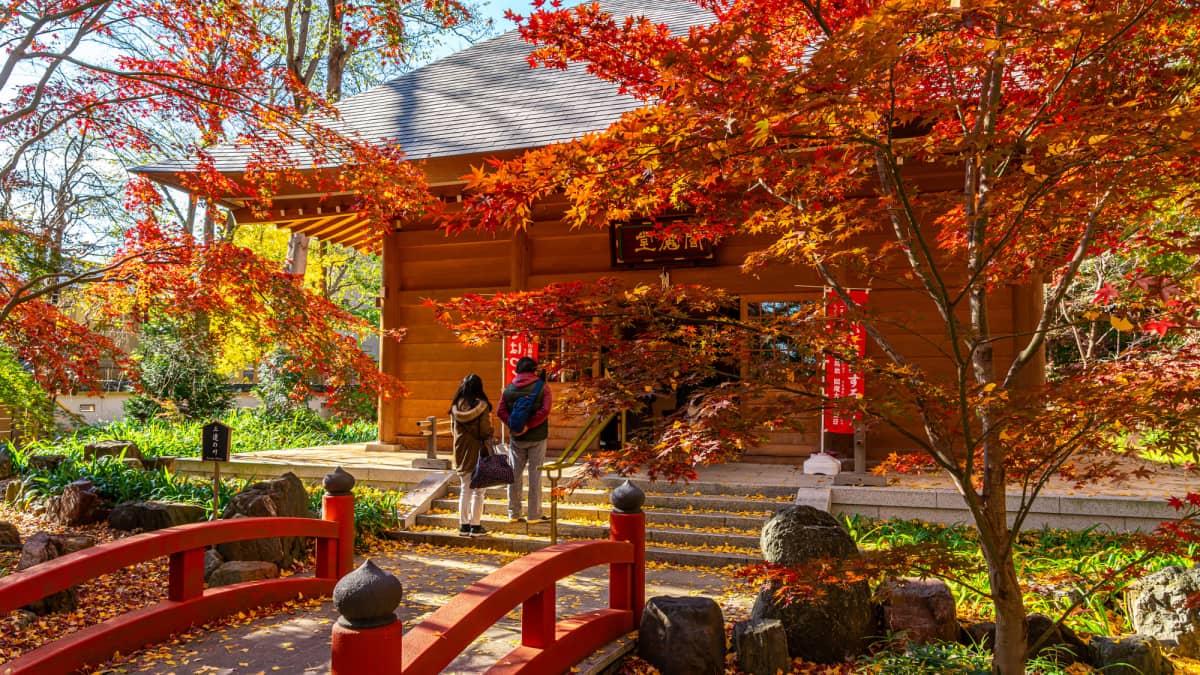
Kuhonbutsu Joshin-ji Temple offers a distinctly different autumn experience from Tokyo’s formal gardens, combining seasonal color with the quiet atmosphere of a historic Buddhist temple. Its spacious, wooded grounds contain towering ginkgo trees that turn brilliant yellow alongside Japanese maples in shades of red and orange, creating layers of color around the temple gates, stone paths, statues, and traditional wooden halls. Fallen leaves gradually carpet parts of the grounds, adding to the sense of stepping away from the surrounding residential streets of Setagaya.


Founded in 1678, the temple is particularly known for its nine Amida Buddha statues, housed across three separate halls and representing the nine levels of rebirth in Pure Land Buddhist belief. In autumn, these historic structures provide a subdued architectural backdrop to the foliage, making Joshin-ji especially appealing for photography and slower exploration. Colors are generally at their best from late November into early December, with the ginkgo and maple trees sometimes reaching their strongest colors at slightly different times. Located only a short walk from Kuhonbutsu Station, the temple is an accessible choice for travelers seeking autumn scenery with a stronger spiritual and historical character.

Lens Score8.1/10Highly Recommended

Combines visitor ratings, review volume, photo evidence, and expert assessment across 8 categories for Kuhonbutsu Joshin-ji Temple.

Experiential55%
Nature/Outdoor65%
Heritage Value66%
Photogenic62%
Learning56%
Budget Friendly75%
Design/Arch.62%
Crowd Free56%
Spot 04/ 23
Mejiro Garden
Kanto, Tokyo
Free Entry

Mejiro Garden

目白庭園

Quiet pondside escape in the heart of Tokyo

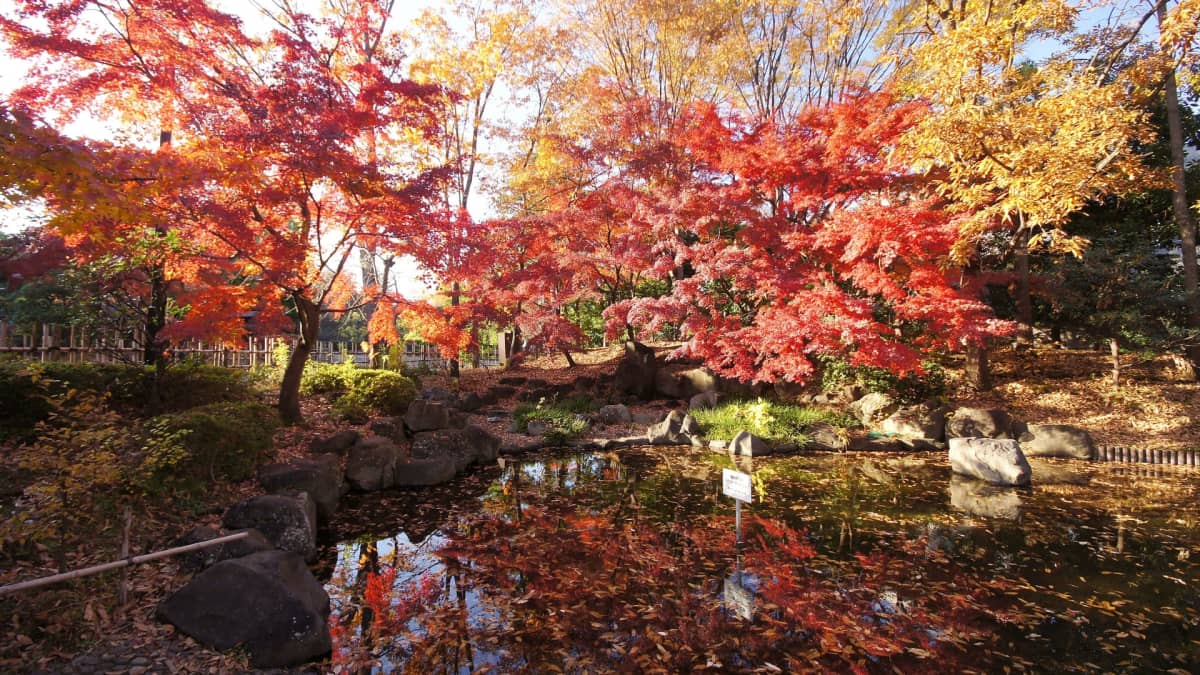
Mejiro Garden offers an intimate setting for enjoying autumn foliage away from Tokyo’s larger and busier seasonal destinations. The compact Japanese strolling garden is arranged around a central pond, where Japanese maples turn rich shades of red and orange and their colors are reflected across the water alongside colorful koi. A small waterfall, stone lanterns, stepping stones, and carefully positioned plantings add depth to the scenery, while the surrounding residential neighborhood gives the garden a surprisingly secluded atmosphere despite its central Tokyo location.


Autumn is particularly attractive around the pond and Sekicho-an, the garden’s traditional teahouse, where the warm tones of the wooden architecture complement the surrounding maple leaves. The garden’s small scale makes it easy to explore slowly, and photographers can find compositions incorporating reflections, bridges, koi, and foliage without covering a large area. Autumn colors generally become most impressive from late November into early December, and seasonal evening illumination events are sometimes held, offering a chance to see the garden’s maples reflected across the illuminated pond after sunset.

Lens Score8.0/10Highly Recommended

Combines visitor ratings, review volume, photo evidence, and expert assessment across 8 categories for Mejiro Garden.

Experiential55%
Nature/Outdoor70%
Heritage Value60%
Photogenic62%
Learning56%
Budget Friendly75%
Design/Arch.58%
Crowd Free54%
Spot 05/ 23
Koishikawa Korakuen
Kanto, Tokyo
Free Entry

Koishikawa Korakuen

小石川後楽園

A quiet Edo-era garden beside the city

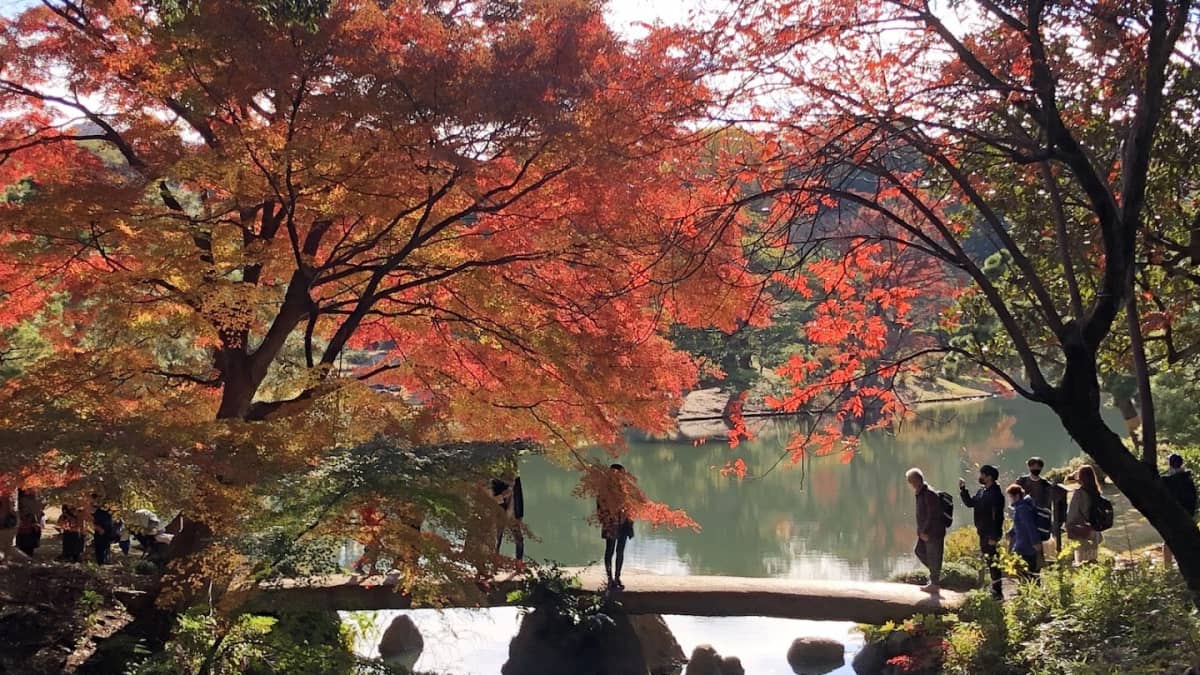
Koishikawa Korakuen is one of Tokyo’s oldest surviving daimyo gardens and an especially rewarding place to experience autumn foliage within a historic landscape. Created in the early Edo period for the Mito branch of the Tokugawa family, the garden combines Japanese scenery with elements influenced by Chinese landscapes and literature. In autumn, Japanese maples turn vivid shades of crimson, orange, and gold, framing ponds, streams, stone paths, and traditional bridges as visitors follow the garden’s winding walking route.


The foliage is particularly striking around the Oigawa River area and Tsutenkyo Bridge, where red maples surround a vermilion bridge and narrow stream, creating one of the garden’s most recognizable autumn scenes. Elsewhere, colorful leaves reflect across the central pond and contrast with evergreen pines, giving the landscape considerable variety despite its location beside Tokyo Dome. Peak foliage usually arrives from late November into early December, and visiting earlier in the morning is worthwhile during the busiest weeks. Its combination of seasonal color and Edo-period garden design makes Koishikawa Korakuen particularly appealing for travelers interested in both autumn scenery and Japanese landscape culture.

Lens Score8.0/10Highly Recommended

Combines visitor ratings, review volume, photo evidence, and expert assessment across 8 categories for Koishikawa Korakuen.

Experiential62%
Nature/Outdoor75%
Heritage Value70%
Photogenic64%
Learning66%
Budget Friendly64%
Design/Arch.66%
Crowd Free64%
Spot 06/ 23
Meiji Jingu Gaien Gingko Avenue
Kanto, Tokyo
Free Entry

Meiji Jingu Gaien Gingko Avenue

明治神宮外苑 いちょう並木

Symmetry and sunlight under golden ginkgo trees

Meiji Jingu Gaien is home to one of Tokyo’s most recognizable autumn scenes: a broad avenue framed by four rows of towering ginkgo trees that turn brilliant gold as the season reaches its peak. The carefully arranged trees form a symmetrical corridor leading toward the historic Meiji Memorial Picture Gallery, creating a striking combination of autumn color, urban landscaping, and early 20th-century architecture. As the leaves begin to fall, the pavement is gradually covered in yellow, extending the golden scenery from the canopy to the ground.


The Ginkgo Avenue (Icho Namiki) is the main attraction in autumn and is particularly popular with photographers, couples, and visitors taking a seasonal walk through central Tokyo. Colors generally develop through November, with the most impressive display often occurring from mid-November into early December, although timing varies with the weather. Crowds can be substantial during peak foliage, especially on weekends, so an early weekday visit offers a calmer view of the avenue and more space for photography.

Lens Score7.7/10Worth Visiting

Combines visitor ratings, review volume, photo evidence, and expert assessment across 8 categories for Meiji Jingu Gaien Gingko Avenue.

Experiential60%
Nature/Outdoor66%
Heritage Value60%
Photogenic76%
Learning50%
Budget Friendly60%
Design/Arch.50%
Crowd Free18%
Spot 07/ 23
Hamarikyu Gardens
Kanto, Tokyo
Free Entry

Hamarikyu Gardens

浜離宮恩賜庭園

A tidal pond oasis amid Tokyo skyscrapers

Hamarikyu Gardens offers a distinctive autumn landscape where traditional Japanese garden design meets the modern skyline of central Tokyo. Once associated with the Tokugawa shogunate, the spacious grounds are arranged around tidal ponds connected to Tokyo Bay, with historic teahouses, bridges, broad lawns, and carefully maintained pine trees. During autumn, Japanese maples, ginkgo trees, and other deciduous species introduce shades of red, orange, and gold, creating pockets of seasonal color against the garden’s darker evergreens and surrounding skyscrapers.


Rather than presenting one dense corridor of foliage, Hamarikyu is best enjoyed as a spacious autumn walk with changing views across water and landscaped grounds. Maple colors can be found around the garden’s ponds and waterways, while yellow ginkgo leaves provide a brighter contrast elsewhere. The reflections of foliage, teahouses, and high-rise buildings across the water are particularly appealing for photography and give Hamarikyu an atmosphere unlike Tokyo’s more enclosed gardens. Autumn colors generally become strongest from late November into early December, making the garden a convenient central option for combining seasonal scenery with the historical landscape of the former shogunal grounds.

Lens Score8.0/10Highly Recommended

Combines visitor ratings, review volume, photo evidence, and expert assessment across 8 categories for Hamarikyu Gardens.

Experiential55%
Nature/Outdoor80%
Heritage Value75%
Photogenic70%
Learning40%
Budget Friendly75%
Design/Arch.55%
Crowd Free50%
Spot 08/ 23
Ueno Park
Kanto, Tokyo
Free Entry

Ueno Park

上野恩賜公園

Seasonal beauty surrounding centuries of history

Ueno Park combines autumn foliage with one of Tokyo’s richest concentrations of museums, temples, and historic landmarks, making it an easy place to experience seasonal color alongside cultural sightseeing. Across its spacious grounds, ginkgo trees turn bright yellow while zelkova, cherry, and other deciduous trees develop warm shades of orange, red, and brown, bringing a very different character to the park after its famous spring cherry blossom season. Broad paths and open spaces make the foliage easy to enjoy while moving between the area’s major attractions.


Autumn scenery is especially pleasant around Shinobazu Pond, where changing leaves can be viewed beside the water and the historic Bentendo temple. Elsewhere, golden ginkgo trees and fallen leaves complement the traditional architecture of temples and shrines scattered through the park. Colors typically develop throughout November and into early December, although timing varies between species. Rather than being a dedicated foliage garden, Ueno works particularly well for travelers who want to combine an autumn walk with visits to the Tokyo National Museum, Ueno Zoo, or other nearby cultural attractions.

Lens Score8.0/10Highly Recommended

Combines visitor ratings, review volume, photo evidence, and expert assessment across 8 categories for Ueno Park.

Experiential55%
Nature/Outdoor70%
Heritage Value72%
Photogenic58%
Learning50%
Budget Friendly75%
Design/Arch.60%
Crowd Free48%
Spot 09/ 23
Tonogayato Garden
Kanto, Tokyo
Free Entry

Tonogayato Garden

殿ヶ谷戸庭園

A compact garden filled with classic Japanese scenery

Tonogayato Garden is particularly beautiful in autumn, when its natural slopes and layered woodland create a rich display of seasonal color within a relatively compact space. Unlike flatter landscape gardens, Tonogayato makes use of the natural elevation changes of the Kokubunji cliff line, with paths descending from open lawns into a shaded valley filled with springs, bamboo, and dense vegetation. Japanese maples growing along these slopes turn vivid shades of crimson and orange, contrasting with evergreen foliage and the deep green of the bamboo grove.


One of the garden’s most atmospheric autumn scenes surrounds Jiro Benten Pond and Koyo-tei, a traditional teahouse positioned above the spring-fed water. Red maple branches frame views toward the pond, while fallen leaves gather around stone paths, moss, and small streams below. The combination of foliage, bamboo, water, and changing terrain makes the garden especially rewarding for photography despite its modest size. Autumn colors generally peak from late November into early December, when the garden can become busier on weekends. Located only a few minutes from Kokubunji Station, Tonogayato is an accessible choice for travelers seeking a quieter autumn garden away from central Tokyo.

Lens Score7.8/10Worth Visiting

Combines visitor ratings, review volume, photo evidence, and expert assessment across 8 categories for Tonogayato Garden.

Experiential56%
Nature/Outdoor68%
Heritage Value65%
Photogenic58%
Learning52%
Budget Friendly70%
Design/Arch.62%
Crowd Free56%
Spot 10/ 23
Mukojima-Hyakkaen Gardens
Kanto, Tokyo
Free Entry

Mukojima-Hyakkaen Gardens

向島百花園

Edo-era garden filled with flowers, poetry, and tradition

Mukojima-Hyakkaen Gardens offers a quieter interpretation of Tokyo’s autumn scenery, combining seasonal foliage with the intimate character of a 19th-century garden created by merchants, writers, and artists. Rather than grand ponds and highly formal compositions, its compact grounds are filled with winding paths, flowering plants, traditional garden structures, and numerous haiku stone monuments. In autumn, Japanese maples and other deciduous trees introduce shades of red, orange, and yellow, while late-season flowers and grasses add texture to the changing landscape.


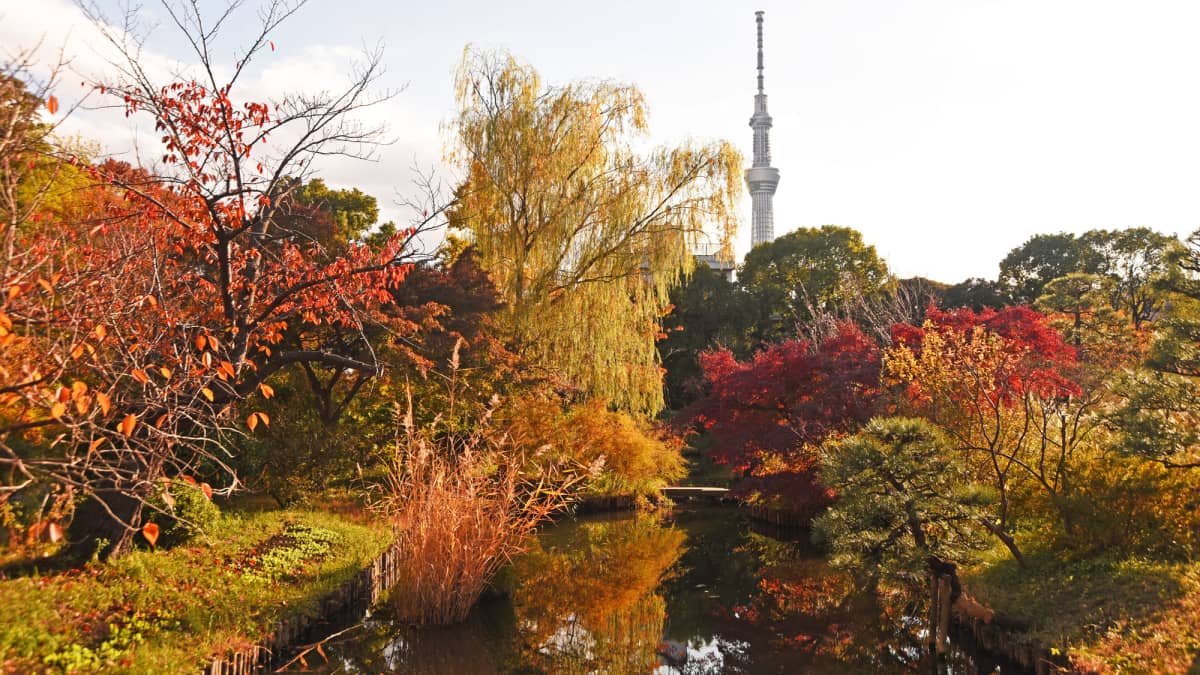
The garden is particularly appealing for travelers interested in traditional shitamachi scenery and seasonal plants, with autumn colors appearing among bamboo fences, small waterways, stone features, and rustic structures. From parts of the grounds, Tokyo Skytree rises beyond the foliage, creating an unusual contrast between the historic garden and contemporary Tokyo skyline that also works well for photography. Autumn colors generally become strongest from late November into early December, though individual plants change at different times. Its smaller scale and less formal atmosphere make Mukojima-Hyakkaen well suited to a relaxed seasonal walk while exploring the traditional neighborhoods of eastern Tokyo.

Lens Score7.5/10Worth Visiting

Combines visitor ratings, review volume, photo evidence, and expert assessment across 8 categories for Mukojima-Hyakkaen Gardens.

Experiential54%
Nature/Outdoor68%
Heritage Value55%
Photogenic60%
Learning52%
Budget Friendly70%
Design/Arch.58%
Crowd Free55%
Spot 11/ 23
Akigawa Valley
Kanto, Tokyo
Free Entry

Akigawa Valley

秋川渓谷

A peaceful river escape hidden within western Tokyo

Akigawa Valley offers a refreshing setting for autumn foliage along the clear waters of the Akigawa River, surrounded by forested hills in western Tokyo. As the season progresses, maples and other deciduous trees turn shades of red, orange, and yellow, creating colorful layers along the riverbanks and surrounding slopes. The combination of foliage, exposed rocks, flowing water, and wooded mountains gives the valley a distinctly natural character compared with Tokyo’s formal gardens, while remaining accessible enough for a day trip from the city.


One of the best-known autumn viewpoints is around Ishibune Bridge, a suspension bridge spanning the valley, where visitors can look across the river toward densely forested slopes covered in seasonal color. Riverside paths and nearby recreation areas provide additional places for walking and photography, while the surrounding Akiruno area offers hiking, camping, and other outdoor activities. Autumn foliage generally becomes most impressive from mid- to late November, although timing varies with elevation and weather. A visit can also be combined with nearby Seoto no Yu hot spring, making the valley particularly appealing for travelers who want to pair fall colors with a relaxed day in Tokyo’s countryside.

Lens Score7.9/10Worth Visiting

Combines visitor ratings, review volume, photo evidence, and expert assessment across 8 categories for Akigawa Valley.

Experiential62%
Nature/Outdoor80%
Heritage Value56%
Photogenic62%
Learning64%
Budget Friendly75%
Design/Arch.46%
Crowd Free55%
Spot 12/ 23
Todoroki Ravine
Kanto, Tokyo
Free Entry

Todoroki Ravine

等々力渓谷

A hidden forested retreat beside the city

Todoroki Valley offers an unusual setting for autumn foliage, with a wooded ravine cutting through the residential streets of Setagaya in southern Tokyo. Often described as Tokyo’s only natural ravine within the 23 central wards, the valley follows the Yazawa River beneath a dense canopy of trees, creating a landscape that feels remarkably removed from the surrounding city. In autumn, maples and other deciduous trees introduce shades of red, orange, and yellow among the remaining greenery, while fallen leaves gather beside the stream and along the walking paths.


The roughly one-kilometer route passes beneath bridges and through woodland toward Todoroki Fudoson Temple, where autumn foliage around the temple grounds adds a more traditional atmosphere to the walk. Small springs, stone features, and the valley’s steep wooded slopes provide additional scenery for photography. Following an extended closure after hazardous trees were identified, Todoroki Valley fully reopened in March 2026, making it accessible again for the autumn season. Colors are generally strongest from late November into early December, making the valley a convenient choice for combining foliage with a quiet nature walk without leaving central Tokyo.

Lens Score7.6/10Worth Visiting

Combines visitor ratings, review volume, photo evidence, and expert assessment across 8 categories for Todoroki Ravine.

Experiential60%
Nature/Outdoor78%
Heritage Value46%
Photogenic58%
Learning48%
Budget Friendly75%
Design/Arch.42%
Crowd Free55%
Spot 13/ 23
Inokashira Park
Kanto, Tokyo
Free Entry

Inokashira Park

井の頭恩賜公園

A poetic seasonal refuge by the pond

Inokashira Park offers a relaxed setting for autumn foliage around one of western Tokyo’s best-known ponds. Opened in 1917, the spacious park stretches between Kichijoji and Mitaka, with wooded paths, bridges, open areas, and cultural attractions arranged around Inokashira Pond. During autumn, Japanese maples, cherry trees, and other deciduous species turn shades of red, orange, yellow, and warm brown, creating colorful reflections across the water and giving the park a distinctly different atmosphere from its famous spring cherry blossom season.


The pond is at the heart of the autumn experience, and visitors can rent rowboats or pedal boats to view the foliage from the water, offering a different perspective from the surrounding walking paths. Bridges and waterside trails also provide attractive photography spots, particularly when fallen leaves begin covering the ground. Colors generally develop through November and can remain attractive into early December, depending on the weather and tree species. With Kichijoji’s shops and restaurants nearby and the Ghibli Museum on the park’s western side, Inokashira Park is particularly easy to combine with a broader day of sightseeing while enjoying Tokyo’s seasonal colors.

Lens Score7.8/10Worth Visiting

Combines visitor ratings, review volume, photo evidence, and expert assessment across 8 categories for Inokashira Park.

Experiential50%
Nature/Outdoor75%
Heritage Value52%
Photogenic65%
Learning44%
Budget Friendly75%
Design/Arch.54%
Crowd Free56%
Spot 14/ 23
Yoyogi Park
Kanto, Tokyo
Free Entry

Yoyogi Park

代々木公園

Tokyo’s green stage for gatherings and play

Yoyogi Park is one of central Tokyo’s most spacious places for a casual autumn walk, with broad lawns and mature woodland creating a welcome contrast to the surrounding streets of Shibuya and Harajuku. As temperatures cool, ginkgo trees turn brilliant yellow while zelkova and other deciduous trees develop shades of orange, red, and warm brown, producing a varied display across the park rather than a single concentrated foliage viewpoint. Fallen leaves gradually cover the paths and lawns, giving the park a distinctly seasonal atmosphere through late autumn.


The most attractive scenery can be found around the wooded walking paths, central field, ponds, and fountain area, where autumn colors can be combined with reflections and open park landscapes. Yoyogi is less formal than Tokyo’s traditional Japanese gardens, making it particularly well suited to picnics, relaxed walks, and photography without following a fixed sightseeing route. Autumn colors generally become most impressive from mid-November into early December, with ginkgo and other tree species reaching their peaks at slightly different times. With free admission and easy access from Harajuku, Shibuya, and Meiji Jingu, the park is a convenient foliage stop that can be incorporated into a wider day of exploring central Tokyo.

Lens Score7.7/10Worth Visiting

Combines visitor ratings, review volume, photo evidence, and expert assessment across 8 categories for Yoyogi Park.

Experiential48%
Nature/Outdoor75%
Heritage Value75%
Photogenic68%
Learning40%
Budget Friendly75%
Design/Arch.60%
Crowd Free50%
Spot 15/ 23
Mizumoto Park
Kanto, Tokyo
Free Entry

Mizumoto Park

水元公園

Wide waterside nature escape in Tokyo

Mizumoto Park offers one of Tokyo’s most distinctive autumn landscapes, combining expansive wetlands and ponds with woodland that feels far removed from the dense streets of the city. Its standout seasonal feature is the large grove of metasequoia, or dawn redwood, trees, whose tall, straight trunks and feathery foliage gradually change from green to warm shades of copper, orange, and reddish brown. Reflections of these trees across the surrounding waterways create some of the park’s most photogenic autumn scenes, particularly on calm days.


Beyond the metasequoia grove, the park’s broad paths, grassy areas, ponds, and other deciduous trees provide plenty of space for a relaxed seasonal walk. The extensive waterfront habitat also makes Mizumoto particularly rewarding for birdwatching and nature photography, with kingfishers and migratory birds found around the wetlands. Autumn colors tend to develop later than at Tokyo’s mountain destinations, with the metasequoia typically becoming most impressive from late November into early December, depending on the year’s weather. With free admission and far more space than many central gardens, Mizumoto Park is a worthwhile choice for travelers seeking unusual fall colors and a quieter, more natural atmosphere.

Lens Score7.9/10Worth Visiting

Combines visitor ratings, review volume, photo evidence, and expert assessment across 8 categories for Mizumoto Park.

Experiential55%
Nature/Outdoor75%
Heritage Value58%
Photogenic62%
Learning58%
Budget Friendly75%
Design/Arch.56%
Crowd Free70%
Spot 16/ 23
Fuchu no Mori Park
Kanto, Tokyo
Free Entry

Fuchu no Mori Park

府中の森公園

Spacious greenery for sports, picnics, and seasonal walks

Fuchu no Mori Park offers a relaxed and spacious setting for autumn foliage in western Tokyo, with broad lawns, wooded paths, and mature trees spread throughout the grounds. During the season, ginkgo trees turn vivid yellow while maples and other deciduous trees add shades of red, orange, and warm brown, creating colorful pockets around the park rather than a single concentrated viewing area. The open layout also allows autumn trees to stand out against wide lawns and blue skies, making the park particularly pleasant on clear November days.


The park is well suited to casual foliage walks, picnics, and family outings, with plenty of space to explore away from the heavier crowds found at Tokyo’s famous autumn gardens. Its Japanese garden provides a more landscaped setting for seasonal photography, while tree-lined paths offer quieter scenes among fallen leaves. Autumn colors generally develop through November and can remain attractive into early December, depending on the species and weather. The adjacent Fuchu Art Museum also makes it easy to combine seasonal scenery with a cultural visit, giving Fuchu no Mori Park particular appeal for travelers looking for a more local side of autumn in Tokyo.

Lens Score7.7/10Worth Visiting

Combines visitor ratings, review volume, photo evidence, and expert assessment across 8 categories for Fuchu no Mori Park.

Experiential56%
Nature/Outdoor75%
Heritage Value58%
Photogenic62%
Learning58%
Budget Friendly75%
Design/Arch.58%
Crowd Free54%
Spot 17/ 23
Mount Takao
Kanto, Tokyo
Free Entry

Mount Takao

高尾山

Tokyo’s easiest mountain escape with Fuji views

Mount Takao is one of Tokyo’s most popular destinations for experiencing autumn foliage in a natural mountain setting. Rising 599 meters in western Tokyo, its forested slopes gradually transform into a mixture of red Japanese maples, golden leaves, and warm orange tones, creating colorful scenery along the hiking trails and around the summit. Unlike Tokyo’s landscaped gardens, Takao offers the chance to experience the season while hiking through woodland, with changing elevations and viewpoints revealing different stages of autumn color.


Visitors can follow several routes to the summit, from the mostly paved Trail 1 via Yakuoin Temple to quieter forest paths with a more natural atmosphere. A cable car and chairlift provide alternatives for part of the ascent, with particularly attractive foliage around their routes. On clear days, the summit also offers distant views toward Mount Fuji, adding another reason to visit during the cooler autumn months. Colors generally become most impressive from mid-November into early December, when weekends can be extremely busy. For a quieter hike and clearer photography opportunities, arriving early in the morning or visiting on a weekday is strongly recommended.

Lens Score8.1/10Highly Recommended

Combines visitor ratings, review volume, photo evidence, and expert assessment across 8 categories for Mount Takao.

Experiential60%
Nature/Outdoor75%
Heritage Value64%
Photogenic66%
Learning62%
Budget Friendly75%
Design/Arch.48%
Crowd Free62%
Spot 18/ 23
Mitake Gorge
Kanto, Tokyo
Free Entry

Mitake Gorge

御岳渓谷

Riverside walks framed by mountains and seasonal color

Mitake Gorge brings autumn foliage to the banks of the Tama River, offering a more natural alternative to Tokyo’s landscaped gardens and city parks. Located in the mountainous western reaches of Tokyo, the gorge follows a clear, fast-flowing section of the river surrounded by forested slopes that gradually turn red, orange, yellow, and deep green as autumn progresses. The contrast between colorful trees, exposed rocks, and blue-green water makes the area particularly rewarding for photography and a relaxed seasonal walk.


A riverside walking trail extends for roughly four kilometers through the gorge, passing bridges, rocky banks, wooded sections, and viewpoints close to the water. Rather than concentrating around a single famous tree or viewpoint, the autumn scenery unfolds continuously along the route, making Mitake particularly enjoyable for travelers who want to combine foliage viewing with light hiking. Peak colors generally arrive from mid- to late November, slightly earlier than many central Tokyo gardens because of the area’s cooler mountain climate. With JR Mitake Station located close to the river, the gorge is also one of the more accessible places to experience Tokyo’s western countryside without requiring a car.

Lens Score7.7/10Worth Visiting

Combines visitor ratings, review volume, photo evidence, and expert assessment across 8 categories for Mitake Gorge.

Experiential58%
Nature/Outdoor78%
Heritage Value55%
Photogenic60%
Learning64%
Budget Friendly75%
Design/Arch.50%
Crowd Free65%
Spot 19/ 23
Jindai Botanical Gardens
Kanto, Tokyo
Free Entry

Jindai Botanical Gardens

神代植物公園

Stroll through Tokyo’s most beautiful botanical collections

Jindai Botanical Gardens offers a broad and varied setting for autumn foliage, with its extensive grounds allowing visitors to enjoy seasonal color alongside one of Tokyo’s largest collections of plants. As temperatures cool, Japanese maples, ginkgo trees, and other deciduous species shift through shades of yellow, orange, and deep red, creating pockets of color throughout the garden rather than a single concentrated foliage viewpoint. The spacious lawns and wooded sections also make it possible to appreciate the season at a slower pace than at many of central Tokyo’s compact gardens.


One of the most attractive areas in late autumn is the garden’s maple collection, where numerous varieties display different leaf shapes and shades of red and gold. The wider grounds add further seasonal interest, while the greenhouse and specialized plant collections provide plenty to explore beyond the autumn leaves. Colors generally become strongest from mid-November into early December, although the timing varies between species and individual sections. The botanical garden can also be combined with nearby Jindai-ji Temple, where traditional buildings and wooded approaches add a cultural dimension to an autumn day in Chofu.

Lens Score8.0/10Highly Recommended

Combines visitor ratings, review volume, photo evidence, and expert assessment across 8 categories for Jindai Botanical Gardens.

Experiential58%
Nature/Outdoor70%
Heritage Value56%
Photogenic62%
Learning64%
Budget Friendly70%
Design/Arch.66%
Crowd Free58%
Spot 20/ 23
Rikugien Gardens
Kanto, Tokyo
Free Entry

Rikugien Gardens

六義園

A serene stroll through poetic Edo‑era garden

Rikugien Gardens is one of Tokyo’s most celebrated places for autumn foliage, combining brilliant seasonal colors with the carefully composed scenery of a traditional Japanese landscape garden. Designed during the Edo period, its paths wind around a central pond through wooded hills, streams, stone bridges, and teahouses, allowing the scenery to gradually change as visitors explore. In autumn, Japanese maples turn deep red, orange, and gold, creating striking contrasts with evergreen trees and reflections across the water.


Some of the most atmospheric foliage can be found around Tsutsuji-no-Chaya teahouse and the maple-lined streams, where colorful leaves frame rustic structures, moss-covered stones, and flowing water. The garden is particularly rewarding for photography, as narrow paths and carefully placed viewpoints offer more intimate compositions than Tokyo’s larger parks. Peak autumn color typically arrives from late November into early December, when Rikugien can become busy, so weekday mornings are generally better for a quieter visit.

Lens Score8.1/10Highly Recommended

Combines visitor ratings, review volume, photo evidence, and expert assessment across 8 categories for Rikugien Gardens.

Experiential68%
Nature/Outdoor74%
Heritage Value65%
Photogenic68%
Learning52%
Budget Friendly68%
Design/Arch.58%
Crowd Free50%
Spot 21/ 23
Hibiya Park
Kanto, Tokyo
Free Entry

Hibiya Park

日比谷公園

Historic gardens beneath the city’s skyline

Hibiya Park offers an easy way to enjoy autumn colors in the heart of central Tokyo, just a short walk from the Imperial Palace and the Marunouchi business district. Opened in 1903 as Japan’s first Western-style modern urban park, its landscape combines tree-lined paths, fountains, ponds, flower beds, and open spaces with historic features. In autumn, mature ginkgo trees turn brilliant yellow while other deciduous trees introduce shades of orange and red, bringing seasonal color to a setting surrounded by some of Tokyo’s busiest streets and modern office towers.


The park is particularly attractive for a casual autumn walk rather than an intensive foliage-viewing trip, making it easy to include between nearby sightseeing stops. Fallen ginkgo leaves create golden carpets along sections of the pathways, while ponds and fountains provide additional compositions for photography. Autumn colors generally develop through November and can continue into early December, depending on the weather and tree species. With free admission and a convenient central location, Hibiya Park works especially well for travelers who want to experience Tokyo’s fall colors without traveling far from Ginza, Marunouchi, or the Imperial Palace area.

Lens Score7.8/10Worth Visiting

Combines visitor ratings, review volume, photo evidence, and expert assessment across 8 categories for Hibiya Park.

Experiential54%
Nature/Outdoor70%
Heritage Value68%
Photogenic62%
Learning52%
Budget Friendly75%
Design/Arch.62%
Crowd Free54%
Spot 22/ 23
Lake Okutama
Kanto, Tokyo
Free Entry

Lake Okutama

奥多摩湖

A mountain reservoir framed by forests and seasonal color

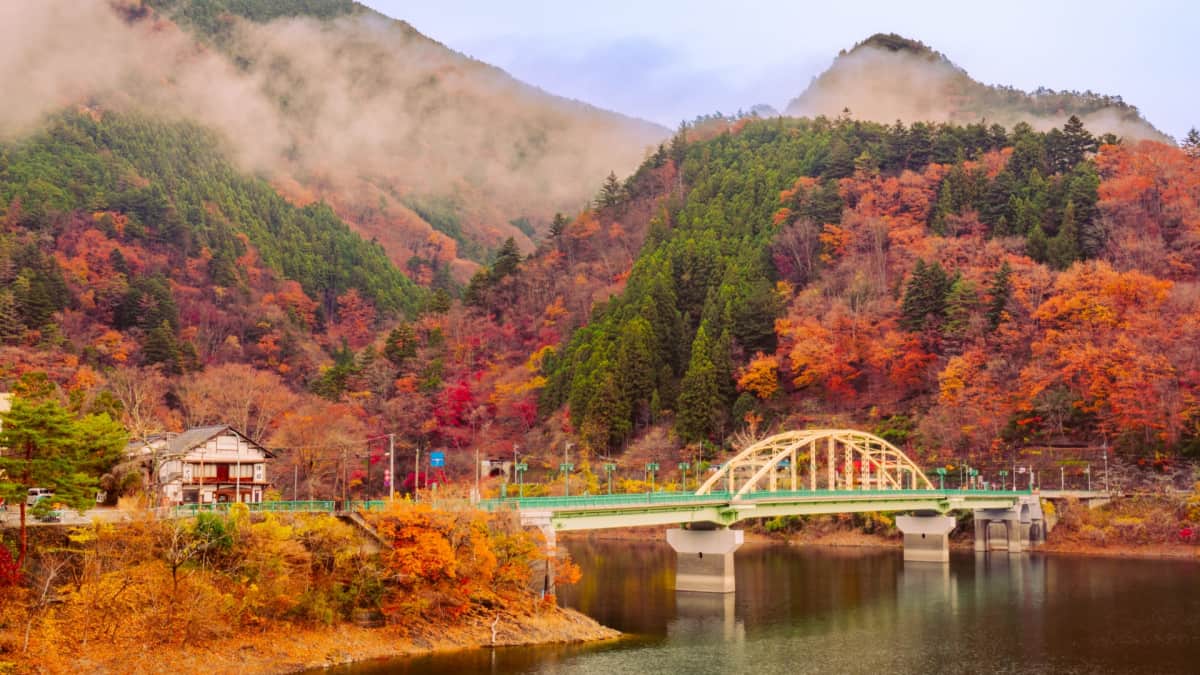
Lake Okutama offers one of Tokyo’s most expansive autumn landscapes, with forested mountains surrounding the calm waters of the Ogouchi Reservoir in the far west of the metropolis. As temperatures fall, the slopes gradually transform into broad layers of red, orange, yellow, and evergreen foliage, creating a scale of seasonal scenery that feels very different from central Tokyo’s landscaped gardens. The changing colors are particularly striking against the lake’s blue-green water, while viewpoints around the shoreline reveal autumn-covered mountains extending into the distance.


One of the most distinctive ways to experience the season is around the Mugiyama Floating Bridge, where visitors can cross part of the reservoir close to the water while surrounded by wooded slopes. Walking trails, roadside viewpoints, and the area around Ogouchi Dam provide further perspectives for photography and relaxed exploration. Because of its higher elevation and cooler mountain climate, autumn foliage generally arrives earlier than in central Tokyo, often becoming impressive from late October through mid-November. Lake Okutama is particularly suited to travelers looking to turn foliage viewing into a full-day trip, combining mountain scenery, walking, and the quieter atmosphere of Tokyo’s western countryside.

Lens Score7.7/10Worth Visiting

Combines visitor ratings, review volume, photo evidence, and expert assessment across 8 categories for Lake Okutama.

Experiential58%
Nature/Outdoor70%
Heritage Value60%
Photogenic64%
Learning64%
Budget Friendly75%
Design/Arch.56%
Crowd Free58%
Spot 23/ 23
Kinuta Park
Kanto, Tokyo
Free Entry

Kinuta Park

砧公園

Cherry blossoms and wide lawns in western Tokyo

Kinuta Park offers a spacious and relaxed setting for autumn foliage, with broad lawns and mature woodland creating a more open landscape than Tokyo’s traditional gardens. Although best known for its cherry blossoms in spring, the park takes on a different character in late autumn as zelkova, ginkgo, cherry, and other deciduous trees turn shades of yellow, orange, red, and warm brown. The changing leaves spread across wooded areas and the edges of the lawns, while fallen foliage gradually carpets the paths and grassy spaces.


The park’s scale makes it particularly suited to picnics, family outings, photography, and leisurely walks beneath the autumn canopy rather than viewing foliage from a handful of designated viewpoints. Tree-lined paths and open lawns provide plenty of space even during the seasonal weekends, and the neighboring Setagaya Art Museum can add a cultural stop to the visit. Colors generally develop throughout November and remain attractive into early December, with different tree species changing at different times. With free admission and a quieter residential setting in Setagaya, Kinuta Park is a good choice for travelers looking to experience Tokyo’s fall colors in an informal, local park atmosphere.

Lens Score7.9/10Worth Visiting

Combines visitor ratings, review volume, photo evidence, and expert assessment across 8 categories for Kinuta Park.

Experiential56%
Nature/Outdoor75%
Heritage Value54%
Photogenic60%
Learning60%
Budget Friendly75%
Design/Arch.55%
Crowd Free50%
Wrapping up🎒

Final thoughts

Tokyo’s autumn colors are not confined to a single week or type of landscape. Mountain valleys often change first, followed by parks and gardens in central Tokyo, while some maple and ginkgo displays continue into early December. This gradual progression makes it possible to experience several different stages of the season, from forest-covered mountainsides to fallen leaves carpeting temple paths and city parks.


For the best experience, check current foliage conditions before setting out, particularly when planning a longer journey to western Tokyo. Famous locations can become busy at peak color, but quieter neighborhood parks and gardens offer equally rewarding seasonal walks. Exploring several of these 23 locations provides a broader view of how autumn changes Tokyo—from its historic gardens and temple grounds to its rivers, forests, and everyday urban spaces.

Shoot it properly

Want a photographer who knows every angle?

Book a local photographer who already knows which spots are quiet at which hour — and skip the guesswork.

Never miss what's next ✉️

Be the first to know
what we're framing next

By submitting your email, you'll be the first to know about upcoming updates for LensTokyo. You can unsubscribe at any time.